 Feb, 2 2026
More than 1 in 5 adults under 30 in the U.S. don’t have health insurance. That’s not a small number-it’s 12 million people skipping doctor visits, delaying prescriptions, or paying out of pocket for emergencies. And it’s not because they’re reckless. It’s because insurance feels impossible to afford, especially when you’re just starting out in a job that doesn’t offer benefits.
Young adults are the most uninsured group
The data doesn’t lie: people between 19 and 29 are the most likely to be uninsured. In 2024, the U.S. Census Bureau found that 19.7% of this group had no health coverage. That’s nearly double the rate of people aged 30-44, and more than triple the rate of those over 55. Why? Because this is the age when people leave their parents’ plans, enter the workforce without employer coverage, and suddenly face premiums that can cost more than their rent.
Think about it: a 22-year-old working part-time at a coffee shop, making $15 an hour, might earn $2,000 a month. A basic health plan could cost $400-$600 a month before subsidies. That’s 20-30% of their income. Most choose to pay rent, buy groceries, or save for a car instead. Insurance? It’s a luxury they can’t justify.
Why does this gap happen?
The system assumes everyone has access to stable employment with benefits. But that’s not reality for millions. Gig work, freelance gigs, seasonal jobs, and entry-level positions rarely offer health insurance. Even when they do, the employee contribution can be too high. A 25-year-old might get offered insurance through their job, but if they have to pay $250 a month just to enroll, they’ll skip it.
Another reason? Many young adults believe they’re invincible. They don’t get sick often. They recover fast. They think, “I’m healthy-I don’t need this.” But health isn’t just about being sick. It’s about preventive care, mental health visits, birth control, dental checkups, and managing allergies. Without insurance, those things become expensive or disappear entirely.
What about Medicaid and ACA plans?
Some people assume Medicaid or Affordable Care Act (ACA) plans fix this. But eligibility is messy. In states that didn’t expand Medicaid, a 24-year-old earning $28,000 a year might make too much to qualify for Medicaid but too little to get meaningful subsidies. That’s the coverage gap. They’re stuck-too poor for private insurance, too rich for public help.
Even when subsidies are available, the process is confusing. Signing up for an ACA plan requires navigating a website, comparing dozens of plans, understanding deductibles and copays, and meeting deadlines. Many young people don’t have the time, energy, or support to figure it out. One study found that 43% of uninsured young adults said they didn’t enroll because they didn’t understand how to sign up.
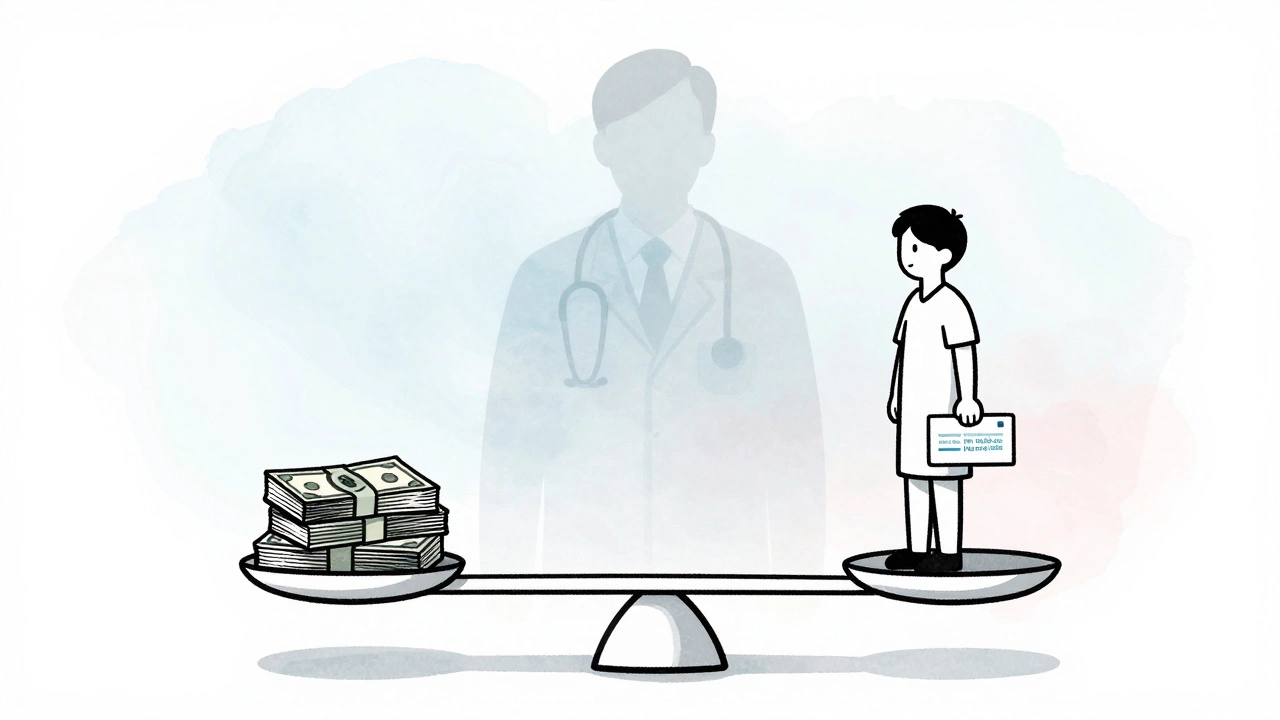
Real consequences of being uninsured
Being uninsured doesn’t just mean skipping a yearly checkup. It means:
- Paying $800 for a simple blood test because there’s no negotiated rate
- Delaying treatment for a persistent cough until it turns into pneumonia
- Choosing between insulin and rent
- Going without therapy for anxiety because a session costs $150
- Skipping dental care until a toothache becomes an emergency room visit-costing $1,200 instead of $150
Emergency rooms can’t turn people away, but they’re not designed for ongoing care. A broken arm gets fixed, but the underlying issue-lack of access to primary care-stays unresolved. And those ER bills? They become medical debt. The average uninsured patient owes $2,800 in medical debt after one ER visit.
Why older adults aren’t the problem
You might think older people are more at risk. After all, they need more care. But here’s the twist: people over 50 are far less likely to be uninsured. Why? Medicare kicks in at 65. Even before that, many have employer-sponsored plans, or they’ve stayed on a parent’s plan longer. Those who lost coverage often go back to work for companies that offer insurance or buy individual plans with higher subsidies.
Children under 18 are also largely covered through Medicaid or CHIP (Children’s Health Insurance Program). So the gap isn’t at the beginning or end of life-it’s right in the middle: when you’re old enough to be on your own, but not old enough to qualify for help.

What’s being done-and what’s not
Some states have created programs to help young adults. California offers a state subsidy that caps premiums at $10/month for people under 26 earning under $50,000. New York lets young adults stay on their parents’ plan until 30. But these are exceptions. Most states offer little to no targeted help.
Employers aren’t stepping up either. Only 41% of small businesses (under 10 employees) offer health insurance. That’s where most young workers start. Big companies? They’re better, but they don’t hire many 19-year-olds.
The federal government hasn’t closed the gap either. The ACA helped millions, but it never solved the problem for low-wage, non-benefits workers under 30. Proposals to lower the Medicare age or create a public option haven’t passed. So the system keeps leaving this group behind.
What can you do if you’re uninsured
If you’re uninsured and under 30, here’s what actually works:
- Check if you can stay on a parent’s plan. Federal law lets you stay until 26. Some states extend it to 30.
- Apply for ACA subsidies-even if you think you make too much. The income limits are higher than people think.
- Look for community health centers. They charge based on income. Many offer sliding-scale fees for primary care, mental health, and prescriptions.
- Use free clinics. They’re not glamorous, but they can handle vaccines, STI testing, and basic checkups.
- Ask about payment plans. Hospitals often let you pay medical bills over time with 0% interest if you ask.
Don’t wait for a crisis. Even a basic plan with a high deductible is better than nothing. It covers emergencies and gives you access to discounted rates on labs and medications.
The bigger picture
This isn’t just about young people. It’s about a system that treats health as a privilege, not a right. When a generation grows up without regular care, they develop chronic conditions earlier. They miss work. They fall behind. The cost doesn’t disappear-it just gets passed on.
Right now, the uninsured young adult is the invisible crisis in private healthcare. They’re not loud. They’re not lobbying. They’re just trying to survive. And until the system changes, they’ll keep choosing between rent and a doctor’s visit.
Why are young adults more likely to be uninsured than older people?
Young adults (19-29) are more likely to be uninsured because they often leave their parents’ insurance, enter jobs that don’t offer benefits, and face premiums that eat up a large portion of their income. Unlike older adults, they don’t qualify for Medicare, and many earn too much for Medicaid but too little for affordable subsidies. They also underestimate their need for care, thinking they’re healthy and don’t need insurance.
Can I stay on my parents’ health insurance after turning 26?
Yes-federal law lets you stay on your parents’ plan until you turn 26. In some states like New York and California, you can stay on until 30. Check your state’s rules. Even if you’re married, employed, or financially independent, you still qualify. This is one of the easiest ways to avoid being uninsured.
Do I qualify for Affordable Care Act (ACA) subsidies if I’m young and low-income?
You might qualify even if you think you don’t. ACA subsidies are based on income and household size. In 2024, a single person earning up to $55,560 could get help paying premiums. Many young adults get plans for under $50/month after subsidies. Use Healthcare.gov or your state’s exchange to run a quick estimate-it takes less than five minutes.
What if I can’t afford any insurance at all?
You still have options. Community health centers offer care on a sliding scale based on income. Free clinics provide vaccines, basic exams, and STI testing at no cost. Hospitals often have financial assistance programs and payment plans with 0% interest. Never assume you have no access-ask. Many people don’t know these services exist until they need them.
Does being uninsured affect my credit score?
Yes-if you get medical bills and can’t pay them, they can go to collections. Medical debt is the leading cause of bankruptcy in the U.S. Even small bills, like a $300 lab fee, can end up on your credit report if unpaid. But under new rules, medical debt under $500 won’t appear on credit reports, and you get a 12-month grace period before collections start. Still, it’s better to avoid it by negotiating payment plans upfront.
