 May, 31 2026
Chronic Pain Management Strategy Builder
Step 1: Define Your Goal
What is the most important activity you want to improve?
Step 2: Identify Barriers
Select the factors currently amplifying your pain (Biopsychosocial Model).
Your Personalized Strategy
Recommended Interventions
Success Metrics (Functional Scale)
Track progress from 0 (Unable) to 10 (Normal). Improvement is success, even if pain remains.
Select your goals and barriers to generate a multidisciplinary care plan.
Imagine living with a constant background noise that never stops. For millions of people, chronic pain is not just an occasional ache; it is a persistent condition that reshapes daily life, relationships, and mental health. If you have been told that your pain is 'all in your head' or simply handed a stronger dose of medication without explanation, you are not alone. The medical landscape for treating long-term pain has shifted dramatically in recent years. We now know that there is no single magic bullet. Instead, success comes from a layered, personalized strategy.
The old model of treating pain focused almost entirely on fixing the physical injury. But modern science tells us that chronic pain involves the brain, the nervous system, emotions, and social factors. Understanding this shift is the first step toward finding relief. This guide breaks down what actually works in 2026, moving beyond outdated myths to evidence-based strategies that help people regain their lives.
Key Takeaways
- Success means function, not zero pain: The goal of modern treatment is improving quality of life and activity levels, even if some discomfort remains.
- Multidisciplinary care is gold standard: Combining physical therapy, psychological support, and medical management yields better results than any single approach.
- Opioids are rarely the answer: Long-term opioid use often leads to increased sensitivity to pain (hyperalgesia) and carries significant risks without solving the underlying issue.
- Mind-body connection is real: Techniques like CBT and mindfulness change how the brain processes pain signals, reducing suffering.
- Patient agency matters: Active participation in self-management strategies leads to sustained improvement compared to passive treatments.
Redefining Success: What Does Effective Treatment Look Like?
Before diving into specific therapies, we need to reset expectations. Many patients enter treatment hoping for a complete elimination of pain-a score of zero on a scale of ten. While this might happen in rare cases, it is not a realistic benchmark for most chronic conditions like fibromyalgia, lower back pain, or neuropathy. In fact, chasing 'zero pain' can lead to frustration, depression, and risky behaviors.
In 2026, successful treatment is defined by functional improvement. Are you able to walk the dog again? Can you sleep through the night? Do you feel engaged in work or hobbies? These metrics matter more than the raw intensity of the sensation. Doctors who specialize in pain management now use tools like the Patient-Specific Functional Scale (PSFS) to track progress. You identify three activities pain limits, rate them from 0 to 10, and revisit those ratings over time. If your ability to climb stairs improves from a 2 to a 7, that is a clinical success, even if the pain level stays at a moderate 5.
This perspective shifts the power dynamic. You are not a broken machine waiting for a repair; you are a person learning to manage a complex signal. Accepting this concept reduces anxiety, which ironically lowers pain perception because stress amplifies nervous system firing.
The Biopsychosocial Model: Why Pills Alone Fail
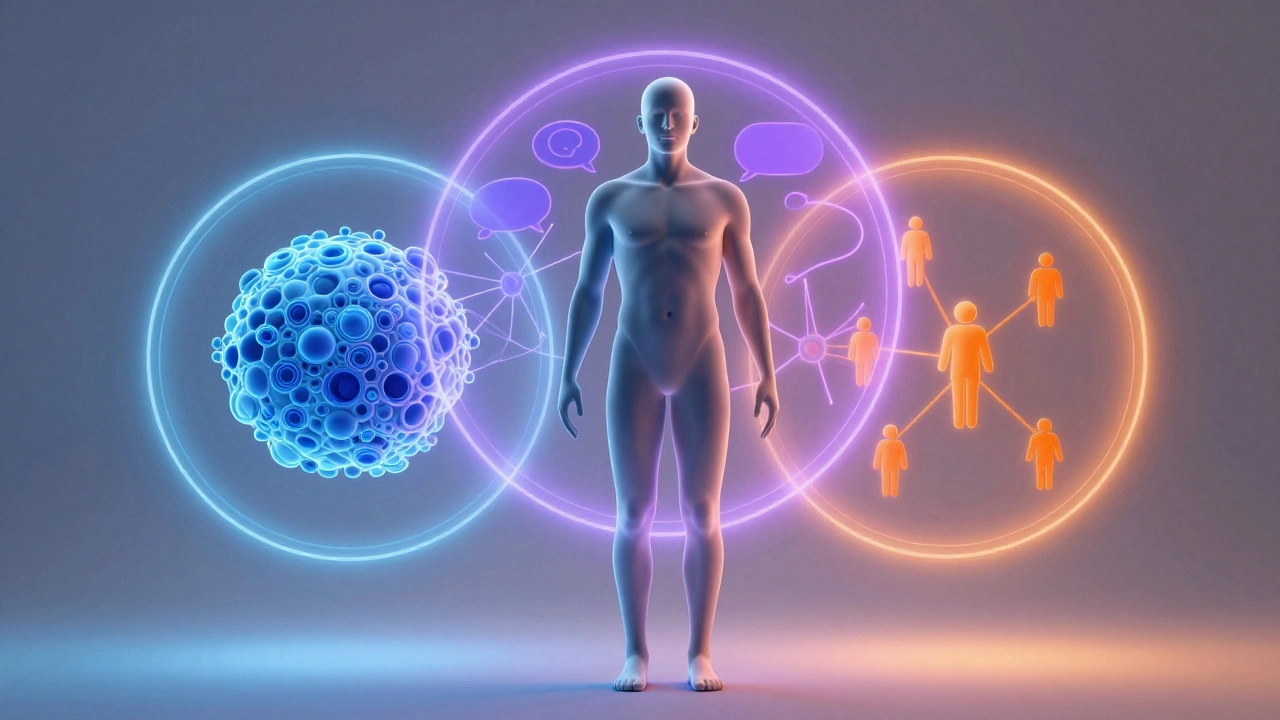
To understand why some treatments fail, we must look at the Biopsychosocial Model, which is a framework that views health as an interaction between biological, psychological, and social factors. Unlike the biomedical model, which looks only at tissue damage, this approach recognizes that pain is an output of the brain based on perceived threat.
- Biological: Tissue inflammation, nerve damage, genetic predisposition, and hormonal changes.
- Psychological: Stress, anxiety, depression, fear-avoidance beliefs, and past trauma.
- Social: Work environment, family support, financial stress, and cultural attitudes toward pain.
Consider two people with identical knee injuries. One has a supportive job, good sleep habits, and low stress. The other faces job insecurity, insomnia, and high anxiety. The second person is far more likely to develop chronic pain. Their brain interprets every signal from the knee as a major threat due to heightened central sensitization. Therefore, treating only the knee ignores the psychological and social drivers keeping the pain circuit active. Effective care addresses all three layers simultaneously.

Core Pillars of Multidisciplinary Pain Management
The most robust evidence supports a combination of therapies. Here are the primary components that form the backbone of successful treatment plans today.
1. Physical Rehabilitation and Graded Exposure
Rest used to be the default advice for pain. Now, we know that prolonged rest weakens muscles, stiffens joints, and increases pain sensitivity. Graded Exercise Therapy is a structured program that gradually increases physical activity to rebuild tolerance without triggering flare-ups. It starts small-perhaps five minutes of walking or gentle stretching-and slowly builds up. The key is consistency, not intensity. Physiotherapists design programs that keep you within a 'safe zone' where movement feels uncomfortable but not harmful. Over weeks, your brain learns that movement is safe, reducing the protective muscle guarding that often causes secondary pain.
2. Cognitive Behavioral Therapy (CBT) for Pain
CBT does not mean your pain is imaginary. It means your thoughts about pain influence your experience of it. Catastrophizing-thinking "this will never end" or "I am being damaged"-activates the amygdala, the brain's fear center, which amplifies pain signals. CBT helps you identify these thought patterns and replace them with balanced perspectives. For example, instead of "This pain means I'm broken," you might learn to think, "This is a flare-up, and I have tools to manage it." Studies show CBT can reduce pain interference by up to 30% when combined with physical therapy.
3. Pharmacological Management: Beyond Opioids
Medication still plays a role, but its purpose has changed. Drugs are now seen as aids to enable activity, not cures.
| Medication Class | Best For | Limitations/Risks |
|---|---|---|
| NSAIDs (e.g., Ibuprofen) | Inflammatory conditions like arthritis | Gastrointestinal issues, kidney strain with long-term use |
| Duloxetine/Amitriptyline | Neuropathic pain, fibromyalgia | Drowsiness, dry mouth; takes weeks to work |
| Lidocaine Patches | Localized nerve pain (post-herpetic neuralgia) | Only treats surface-level pain |
| Opioids | Acute crises or cancer pain | Addiction risk, hyperalgesia, hormonal disruption |
4. Mindfulness and Acceptance Commitment Therapy (ACT)
While CBT focuses on changing thoughts, ACT focuses on changing your relationship with pain. It teaches acceptance-acknowledging the presence of pain without fighting it or letting it dictate your values. Through mindfulness practices, you learn to observe sensations without judgment. This reduces the 'suffering' component of pain. Research indicates that mindfulness-based stress reduction (MBSR) can alter brain structure in areas related to pain processing, providing lasting relief for many patients.
Advanced Interventions: When First-Line Treatments Aren't Enough
If conservative measures do not provide sufficient relief, specialists may consider interventional procedures. These are not first-line options but can be crucial for specific diagnoses.
- Nerve Blocks: Injections of anesthetic near specific nerves to interrupt pain signals. Useful for diagnosing the source of pain as well as providing temporary relief.
- Spinal Cord Stimulation (SCS): A device implanted under the skin sends electrical pulses to the spinal cord, masking pain signals before they reach the brain. Newer waveforms offer better coverage and fewer side effects than older models.
- Radiofrequency Ablation: Uses heat to disable nerves transmitting pain from arthritic joints, particularly in the spine. Relief can last 6 to 12 months.
It is vital to approach these procedures with realistic expectations. They are tools to facilitate rehabilitation, not standalone cures. Without concurrent physical and psychological therapy, the benefits of SCS or ablation often fade over time.

The Role of Lifestyle Factors in Pain Regulation
Your daily habits act as either fuel or fire extinguishers for your nervous system. Small adjustments can have outsized impacts on pain levels.
Sleep Hygiene
Pain disrupts sleep, and poor sleep lowers pain thresholds. It is a vicious cycle. Prioritizing sleep hygiene-consistent bedtimes, cool dark rooms, and limiting screens before bed-is non-negotiable. Treating sleep disorders like sleep apnea can significantly reduce chronic pain severity.
Nutrition and Inflammation
While no specific diet cures pain, anti-inflammatory diets rich in omega-3 fatty acids, fruits, vegetables, and whole grains can help reduce systemic inflammation. Conversely, high sugar and processed food intake can exacerbate inflammatory markers, potentially worsening conditions like rheumatoid arthritis.
Social Connection
Isolation magnifies pain. Engaging with support groups, friends, or community activities provides distraction and emotional validation. Social support buffers against stress, which in turn dampens the nervous system's alarm response.
Building Your Personalized Pain Management Plan
There is no one-size-fits-all protocol. A successful plan requires collaboration between you and your healthcare team. Start by identifying your primary goals. Is it returning to work? Playing with grandchildren? Sleeping better? Write these down.
- Assess current barriers: What thoughts, fears, or physical limitations stop you from meeting these goals?
- Select modalities: Choose one physical, one psychological, and one lifestyle intervention to start. Adding too much at once leads to burnout.
- Track progress: Use a pain diary or app to log activities, mood, and pain levels. Look for trends, not daily fluctuations.
- Adjust regularly: Meet with your provider every 4-6 weeks to review what is working and tweak the plan.
Patience is essential. Neuroplasticity-the brain's ability to rewire itself-takes time. Consistent effort over months yields better results than intense bursts of activity followed by rest.
Can chronic pain ever go away completely?
For some conditions, especially those linked to acute injuries that heal fully, pain may resolve completely. However, for many chronic conditions like osteoarthritis or neuropathy, the goal is management rather than cure. Many people achieve periods of minimal pain or functional remission where pain no longer interferes with daily life.
Are opioids safe for long-term chronic pain?
Current guidelines strongly advise against long-term opioid use for non-cancer chronic pain. Risks include addiction, overdose, hormonal imbalances, and opioid-induced hyperalgesia, where the body becomes more sensitive to pain. They are typically reserved for short-term acute crises or palliative care.
How does psychology affect physical pain?
The brain processes pain signals. Stress, anxiety, and negative thoughts activate the sympathetic nervous system, lowering the threshold for pain perception. Psychological therapies like CBT help retrain the brain to interpret these signals less threateningly, effectively turning down the volume of pain.
What is the best exercise for chronic pain?
Low-impact aerobic exercises like walking, swimming, or stationary cycling are generally best. Strength training tailored by a physiotherapist is also crucial. The 'best' exercise is one you can do consistently without causing severe flare-ups. Graded exposure ensures you build tolerance safely.
When should I see a pain specialist?
If pain persists for more than three months, interferes with daily activities, or has not responded to initial treatments from your primary care doctor, consult a pain specialist. They can offer advanced diagnostics, interventional procedures, and coordinated multidisciplinary care.
