 Mar, 16 2026
Travel Medical Cost Calculator
Emergency Medical Costs in Europe
See how much emergency medical care could cost without travel insurance
Estimated Emergency Cost
Without travel insurance
Travel Insurance Cost
For same trip duration
$0Typical price for 2 weeks
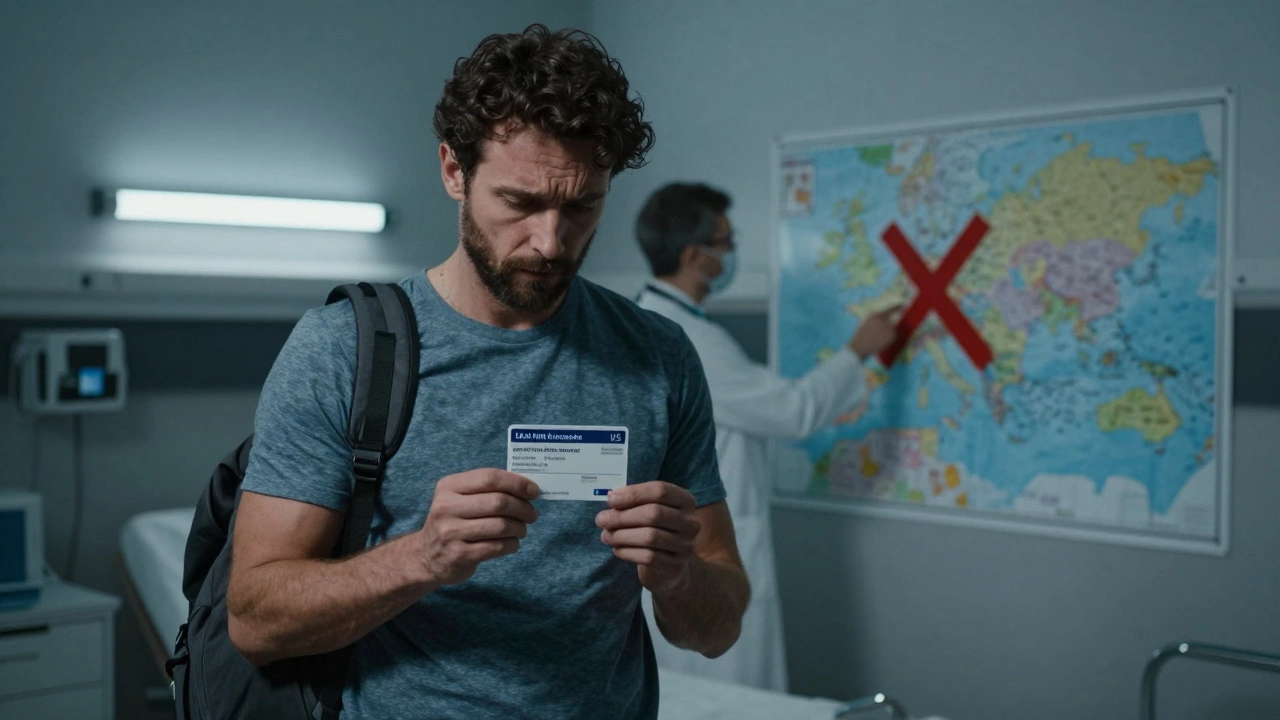
If you're planning a trip to Europe and you're wondering whether your U.S. health insurance will cover you, the short answer is: probably not. Most U.S. health plans - whether you're covered through an employer, Medicare, or a private plan - don't provide coverage outside the United States. That doesn’t mean you’re left completely unprotected, but it does mean you need to plan ahead.
Why U.S. health insurance usually doesn’t work in Europe
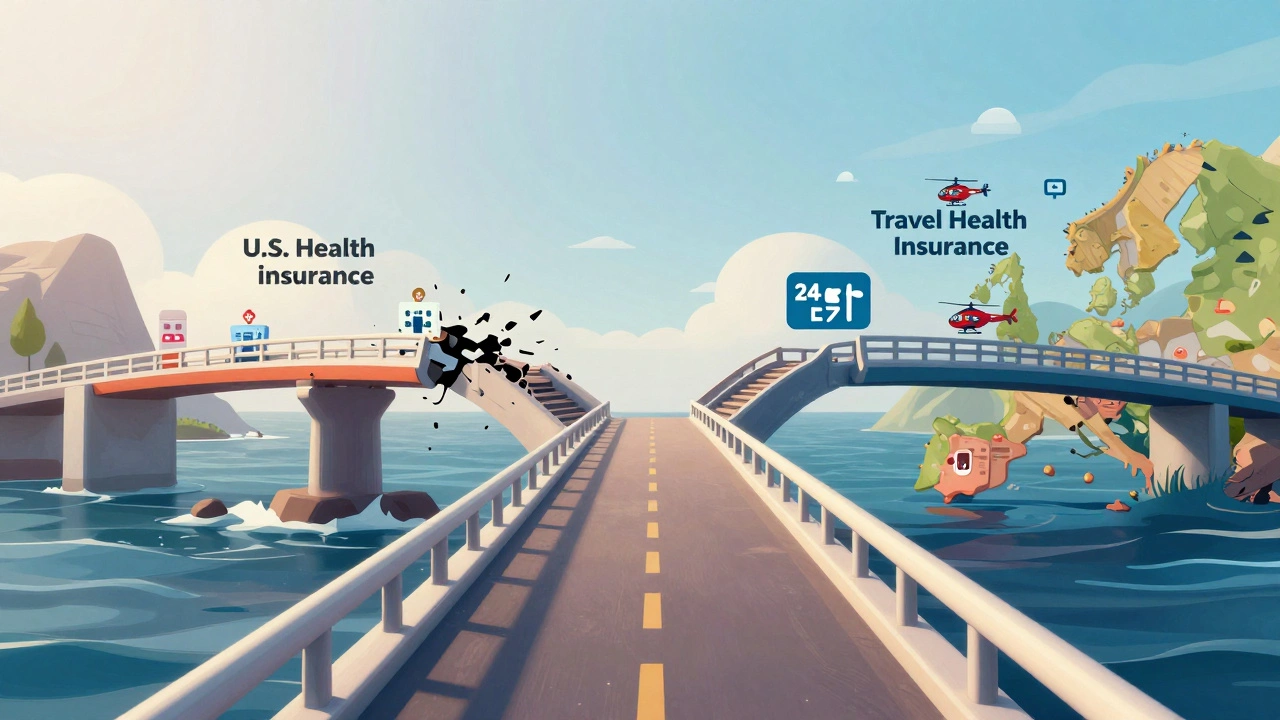
U.S. health insurance is built around a network of hospitals, doctors, and clinics located within the country. When you go overseas, those networks vanish. Even if your insurer has a partner hospital in Paris or Berlin, they rarely pay for care directly. Instead, you’ll likely have to pay out of pocket and then file a claim for reimbursement - if your plan even allows it.Medicare, for example, has almost no coverage outside the U.S. There are only a few rare exceptions - like emergency care on a cruise ship within six hours of a U.S. port - but none of those apply to travelers flying into Europe. Private insurers like Blue Cross, UnitedHealthcare, or Aetna might offer limited international benefits, but only if you specifically bought a plan with that feature. Most standard plans don’t include it.
What’s covered if anything?
Some high-end private plans do offer international coverage, but they’re not common. If you have one, check your policy documents for terms like “international emergency care” or “global medical evacuation.” Even then, coverage is often limited to emergencies only. Routine care - like a visit to the doctor for a cold, a prescription refill, or a dental checkup - won’t be covered.Emergency care is the one area where most plans might help. If you have a heart attack, break a leg, or get seriously ill while abroad, your insurer might reimburse you for hospitalization costs after you return home. But you’ll still need to pay upfront. That means having enough cash or credit to cover a €5,000 hospital bill in Spain before your insurance company even looks at your claim.
The real solution: travel health insurance
The best way to protect yourself isn’t to rely on your U.S. insurance. It’s to buy travel health insurance specifically designed for international trips. These policies are cheap, easy to get, and tailored for travelers.For under $50 for a two-week trip, you can get coverage that includes:
- Emergency medical treatment
- Emergency dental care
- Medical evacuation to a U.S. hospital
- Repatriation of remains (if tragically needed)
- 24/7 assistance services
Companies like Allianz Travel, World Nomads, and GeoBlue specialize in this. They work directly with hospitals in Europe. If you need care, you call their 24/7 hotline, and they arrange payment and care - no upfront cash needed. Some even cover pre-existing conditions if you buy the policy within 14 days of booking your trip.

What about the European healthcare system?
Europe doesn’t have a single healthcare system. Each country runs its own. But if you’re a U.S. citizen, you won’t get free care just because you’re in a country with universal healthcare. You’re treated as a foreign visitor.There is one exception: if you’re from a country that has a reciprocal healthcare agreement with a European nation, you might get reduced-cost care. The U.S. doesn’t have any such agreements with any European country. So even if you’re in Germany, France, or Sweden - places known for public healthcare - you’ll be billed as a private patient.
Some travelers mistakenly think their European Health Insurance Card (EHIC) or Global Health Insurance Card (GHIC) works for them. Those cards are only for citizens of EU countries, the UK, Norway, Iceland, Liechtenstein, or Switzerland. Americans can’t get them.
What happens if you don’t have coverage?
Without travel insurance, you’re on your own. A simple broken ankle in Italy could cost $10,000. A hospital stay for pneumonia in Spain? $25,000. You might not be able to get care at all if you can’t pay upfront. Some clinics will turn you away. Others will demand payment before treatment.Even if you’re young and healthy, accidents happen. A slip on wet cobblestones in Prague. A foodborne illness in Rome. A sudden allergic reaction in Amsterdam. These aren’t rare. Travelers get sick and injured every day. And without insurance, those moments can turn into financial disasters.
What about credit card travel insurance?
Some premium credit cards - like the Chase Sapphire Reserve or American Express Platinum - offer free travel insurance. But read the fine print. These often only cover emergencies and come with big limits. For example, they might cap medical coverage at $50,000, which sounds high until you realize a medical evacuation from the French Alps can cost $150,000.Also, these benefits usually require you to pay for the entire trip with that card. If you used a different card for your flight or hotel, you might not qualify. And many don’t cover pre-existing conditions or routine care. They’re better than nothing, but not enough.
How to buy the right policy
Here’s what to look for when shopping for travel health insurance:- Medical coverage limit - aim for at least $100,000
- Emergency evacuation coverage - $250,000 or more is ideal
- Pre-existing condition coverage - if you have any chronic issues
- 24/7 assistance - a real phone line, not just a chatbot
- Direct payment to providers - so you don’t have to pay upfront
Buy it before you leave. Most policies require you to purchase within 7 to 14 days of your first trip payment to qualify for pre-existing condition coverage. Waiting until you’re at the airport is too late.
What to do if you get sick overseas
If you need care while in Europe:- Call your travel insurance provider immediately - they’ll guide you to approved clinics
- Keep all receipts, medical records, and doctor’s notes
- Don’t rely on your U.S. insurance unless you’re certain it covers you
- Take photos of everything - especially if you pay out of pocket
Most travel insurers have partnerships with local providers. They’ll often pay the hospital directly. That’s the whole point - you don’t have to scramble for cash while you’re in pain.
