 Dec, 1 2025
If you're searching for medical advice online, you're not alone. Millions of people turn to the internet every day when they feel off, have a new symptom, or just want to understand a diagnosis. But not all websites are created equal. Some give you clear, science-backed answers. Others push pills, miracle cures, or fear-based claims. So what’s the most trustworthy medical website for online doctor consultation? The answer isn’t a single site-it’s a handful of sites that consistently follow the same rules: transparency, evidence, and accountability.
Why Trust Matters More Than Speed
You can get an answer in seconds from any chatbot or forum. But a wrong answer can cost you time, money, or even your health. A 2024 study from the University of Auckland reviewed over 2,000 health websites offering online consultation services. Only 12% met basic standards for accuracy and source disclosure. The rest either omitted sources, cited blogs as evidence, or promoted unapproved treatments.That’s why trust isn’t just nice to have-it’s the first filter you need. A trustworthy medical website doesn’t just tell you what to do. It shows you why. It tells you who wrote it, what credentials they hold, and where the data came from. It updates content regularly. And it doesn’t sell you supplements while giving you advice.
The Top 5 Trustworthy Medical Websites
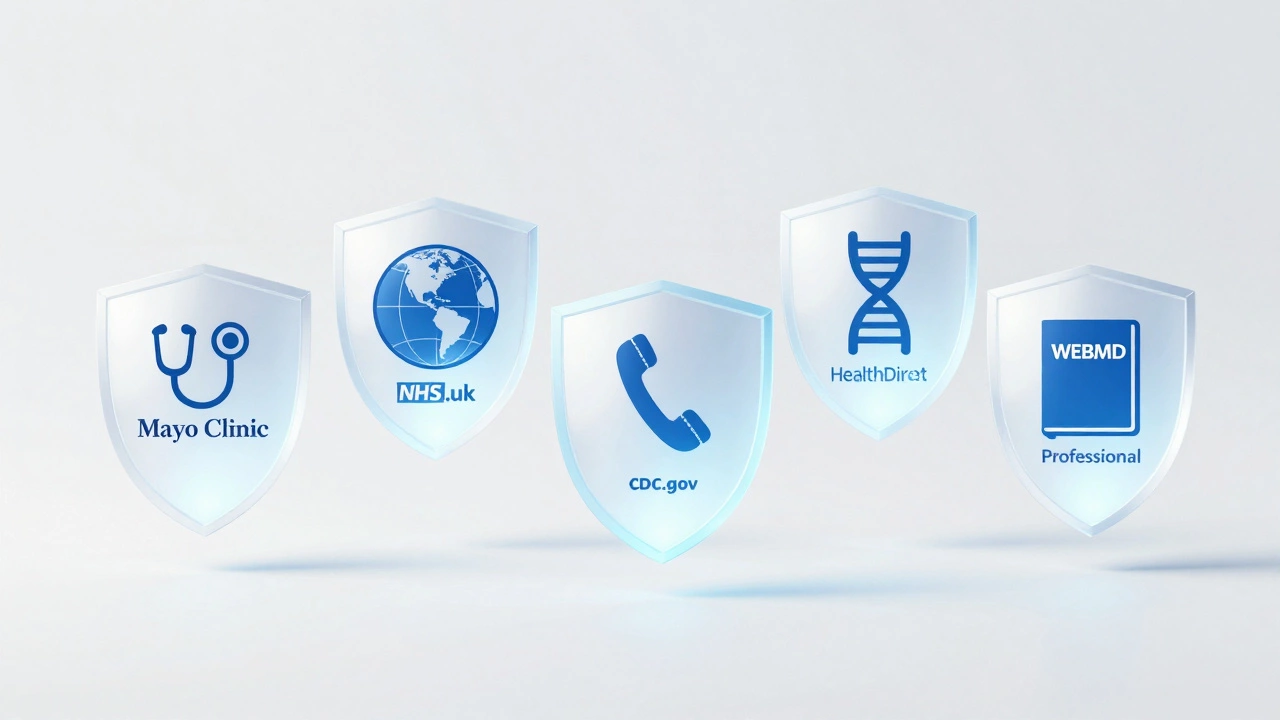
These five sites are used by doctors, nurses, and public health agencies around the world-including New Zealand’s Ministry of Health-to guide patients and professionals alike.
- Mayo Clinic (mayoclinic.org): Founded in 1864, this nonprofit runs one of the largest medical research centers in the U.S. Their symptom checker is updated monthly, every article lists the reviewing physician’s specialty, and they never accept advertising from drug companies.
- WebMD Professional (professional.webmd.com): While the consumer side of WebMD has ads, their professional portal is a trusted reference for clinicians. It pulls data from peer-reviewed journals, CDC guidelines, and FDA alerts. You’ll need to create a free professional account to access it.
- NHS Choices (now NHS.uk) (nhs.uk): Run by the UK’s National Health Service, this site is publicly funded and free of commercial influence. Every page includes a review date and references to clinical guidelines from NICE (National Institute for Health and Care Excellence).
- CDC.gov (cdc.gov): The U.S. Centers for Disease Control and Prevention doesn’t offer online consultations, but its disease and symptom pages are the gold standard for public health data. They update in real time during outbreaks and cite every statistic to official reports.
- HealthDirect (healthdirect.gov.au) (healthdirect.gov.au): Australia’s official health portal, used by over 10 million people annually. It connects users to verified telehealth providers and includes a symptom checker built with input from Australian medical schools.
These aren’t random picks. They’re all funded by governments, academic institutions, or nonprofit medical associations. None of them take money from pharmaceutical companies to influence content. That’s the biggest red flag to watch for.
What to Look for (and Avoid)
Here’s how to spot a trustworthy site in under 30 seconds:
- Check the domain: Look for .gov, .edu, or .org. Sites ending in .com are not automatically untrustworthy, but they’re more likely to be commercial.
- Look for author credentials: Does it say “Reviewed by Dr. Sarah Chen, Family Medicine, University of Melbourne”? Or just “Our Health Team”? The first is good. The second is a warning sign.
- Find the last update: Medical info changes fast. If a page says “Last reviewed: 2018,” walk away.
- See if they cite sources: A trustworthy site links to peer-reviewed journals, clinical trials, or official health guidelines. If they say “studies show” without naming any, they’re not being transparent.
- Watch for alarmist language: Words like “miracle cure,” “secret remedy,” or “doctors hate this” are marketing tricks. Real medicine doesn’t work that way.
Also, avoid sites that push you to buy something right away. If you land on a page about joint pain and the first thing you see is a $120 knee brace with a “limited time offer,” that’s not a medical resource-it’s a sales funnel.
How These Sites Handle Online Consultation
Some of these sites offer direct online consultations. Others connect you to verified telehealth providers. Here’s how they do it:
- Mayo Clinic offers video visits with licensed physicians in 40+ specialties. You pay upfront, no insurance needed. All providers are U.S.-licensed, but international patients can use the service.
- NHS.uk links to NHS-approved telehealth services in the UK. If you’re outside the UK, you can still use their symptom checker and find local clinics that follow NHS standards.
- HealthDirect has a free 24/7 nurse helpline you can call or chat with. They assess your symptoms and tell you whether you need a doctor, pharmacy, or ER.
- CDC.gov doesn’t offer consultations, but they list state and local health departments that do. If you’re in New Zealand, they’ll point you to Healthline (0800 611 116), which is the local equivalent.
The key takeaway? You don’t need a website that does everything. You need one that points you to the right next step-safely and clearly.
What About AI Chatbots and Apps?
You’ve probably tried chatbots like ChatGPT or Google’s Gemini asking for medical advice. They’re fast. But they’re not reliable.
A 2025 study in the Journal of Medical Internet Research tested 12 popular AI health assistants with 50 common symptoms. Only 3 of them consistently gave accurate advice. The rest gave harmful suggestions-like advising against antibiotics for strep throat, or recommending unapproved herbal mixtures for diabetes.
AI tools are great for summarizing info you already found on trusted sites. But they shouldn’t be your first stop. Always cross-check what they say with one of the five sites above.

Real-World Example: A New Zealand Case
Last year, a woman in Wellington noticed sudden dizziness and tingling in her hands. She Googled it and landed on a site selling “nerve detox” supplements. She bought them. Three days later, her symptoms worsened. She went to her GP, who found a vitamin B12 deficiency-something easily diagnosed with a blood test.
She later found the same symptoms on NHS.uk and Mayo Clinic. Both said: “See a doctor within 48 hours.” She didn’t need a supplement. She needed a test.
That’s the difference between a site that helps you and one that exploits you.
Bottom Line: Your Health Is Worth the Extra Click
The most trustworthy medical website isn’t the one with the flashiest design or the most ads. It’s the one that answers your question honestly, cites its sources, and doesn’t try to sell you something.
Start with Mayo Clinic or NHS.uk if you’re looking for symptom guidance. Use HealthDirect if you’re in Australia or want to find a telehealth provider. Check CDC.gov for outbreak alerts or travel health advice.
And if you’re unsure? Call your local health line. In New Zealand, it’s Healthline at 0800 611 116. They’re free, available 24/7, and staffed by registered nurses.
Don’t trust the internet. Trust the institutions behind it.
Can I get a prescription from a trustworthy medical website?
Yes, but only through verified telehealth services linked by trusted sites like Mayo Clinic or HealthDirect. These services require you to complete a full consultation with a licensed doctor, who can then issue a prescription if clinically appropriate. Never trust a site that offers prescriptions without a video or phone consultation.
Are .com health sites always unreliable?
Not always, but they require extra scrutiny. Some .com sites like WebMD Professional are credible when used in their professional mode. Others are designed to drive ad revenue. Always check for author credentials, update dates, and source citations. If you can’t find them, assume it’s not trustworthy.
Why isn’t Wikipedia on the list?
Wikipedia is well-referenced and often accurate, but it’s not a primary source. Anyone can edit it, and while medical pages are usually monitored, they’re not reviewed by clinicians before going live. Use Wikipedia to get a general idea, then verify with a site like Mayo Clinic or CDC.gov that cites peer-reviewed studies.
What if I can’t afford to see a doctor?
Trusted sites like NHS.uk and HealthDirect offer free symptom checkers and triage tools that tell you whether you need urgent care, a pharmacy visit, or can wait. In New Zealand, Healthline (0800 611 116) is free and can connect you to low-cost or free clinics based on your location and symptoms.
How often are these sites updated?
The most trustworthy sites update content every 3 to 12 months, depending on how fast medical guidelines change. CDC.gov updates within hours during public health emergencies. Mayo Clinic and NHS.uk review all content annually. If a page doesn’t show a review date, don’t trust it.
