 Jan, 29 2026
Recovery Timeline Calculator
Procedure Selection
Recovery Timeline
When people think about cosmetic surgery, they often picture quick fixes - a nose job here, a tummy tuck there. But some procedures aren’t just about aesthetics. They’re complex, high-risk, and demand months - sometimes years - of recovery. Among all the surgeries offered in the UK, one stands out as the most difficult: full facial reconstruction after trauma or cancer removal.
Why Facial Reconstruction Is the Hardest
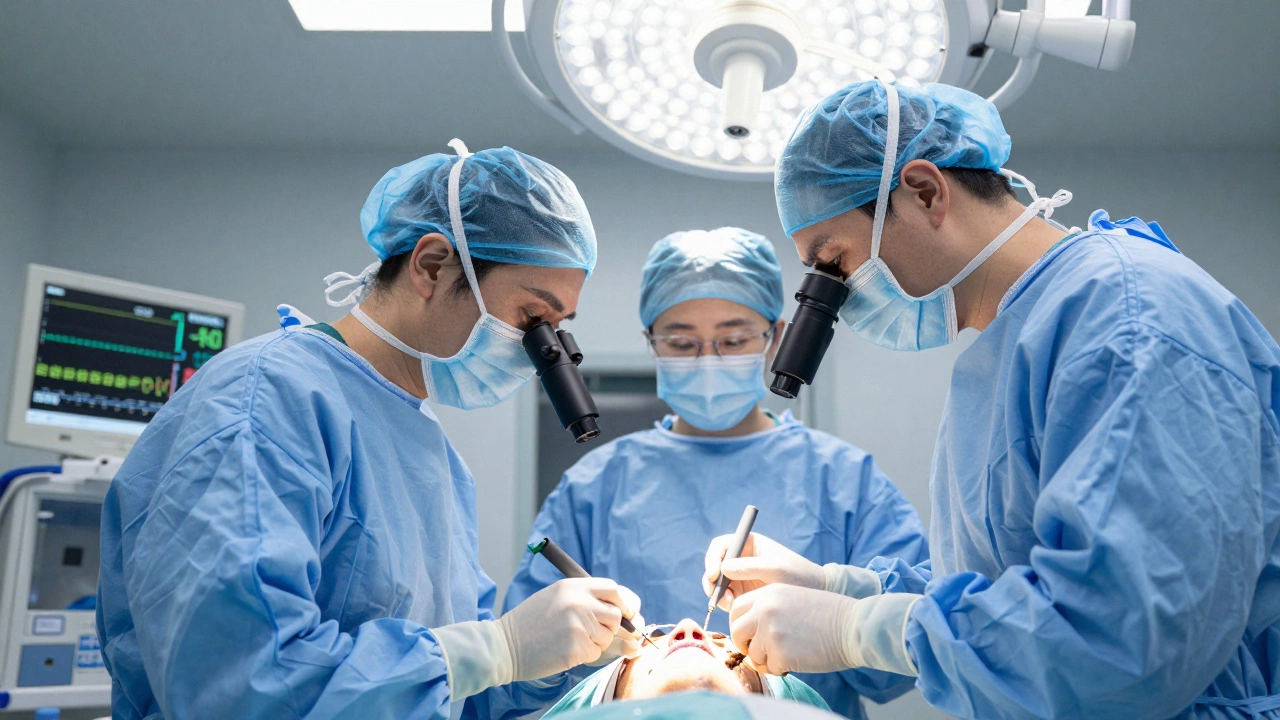
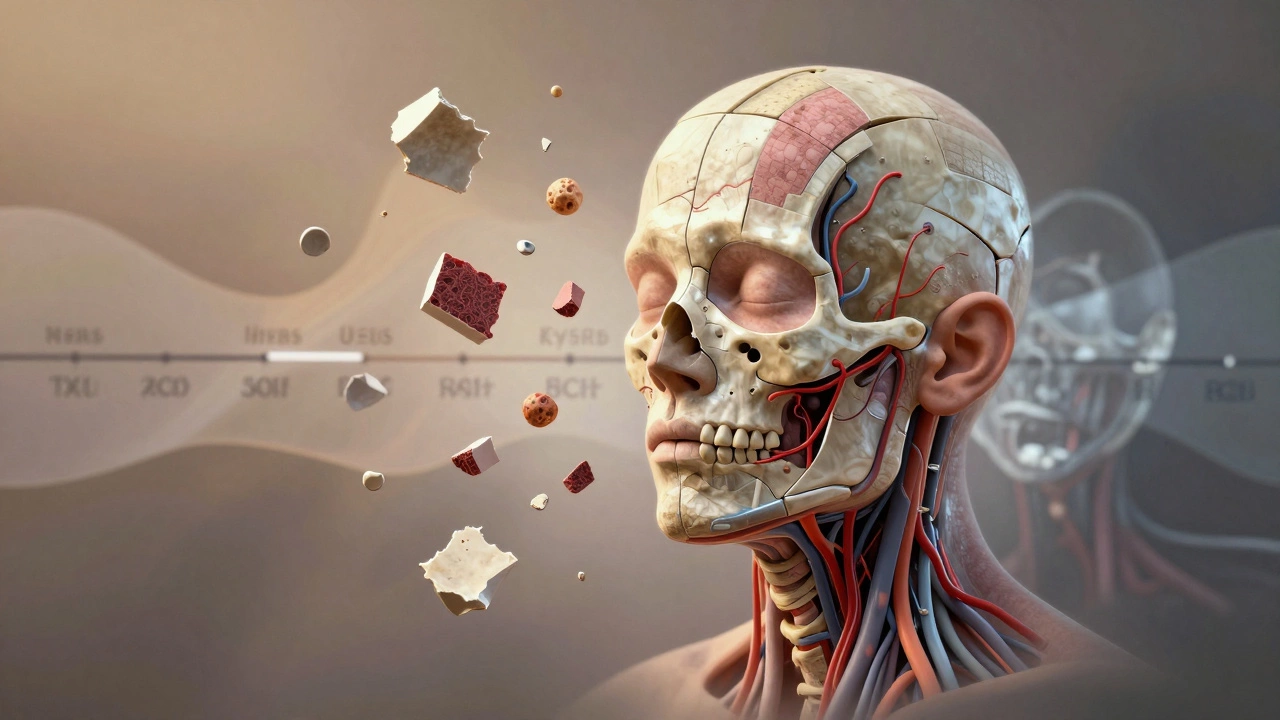
Facial reconstruction isn’t a single procedure. It’s a series of surgeries, often done over multiple years, that rebuild bone, muscle, skin, nerves, and even teeth. Surgeons might take bone from the hip or fibula to reconstruct a jaw. They graft skin from the back or thigh to cover exposed areas. Nerves are reconnected so patients can smile again. Blood vessels are microsurgically stitched together under a microscope.
This isn’t cosmetic in the way people think of it. It’s functional. Without it, patients can’t eat, speak, or breathe normally. The goal isn’t just to look better - it’s to restore basic human abilities. That’s why the complexity is so extreme. A rhinoplasty might take two hours. A full facial reconstruction can take 12 to 18 hours in one sitting - and may require five or more separate operations.
In the UK, these surgeries are mostly done in specialist centres like the Royal Marsden Hospital or the Manchester Royal Infirmary. They’re not offered by every clinic. Only a handful of teams have the training and equipment to do them safely. That’s part of why they’re so rare - and so difficult.
The Physical Toll
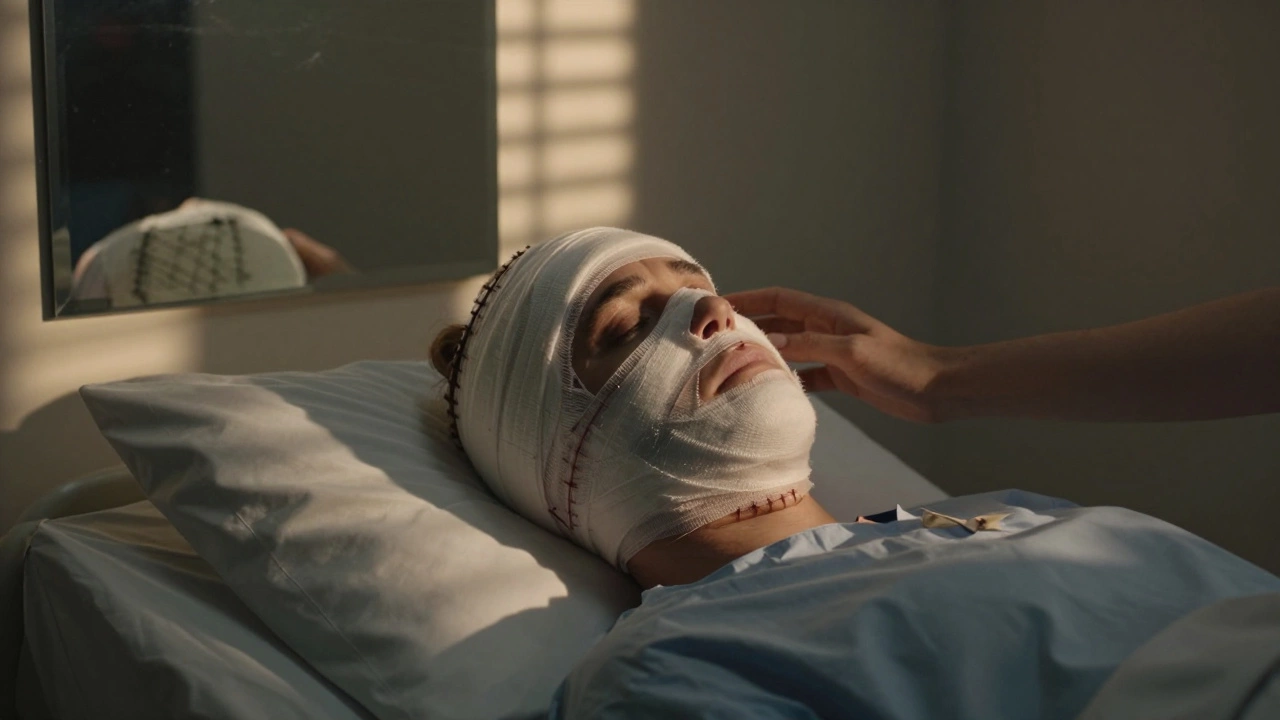
Recovery from facial reconstruction is brutal. Patients often spend days in intensive care. Swelling can last for weeks. Numbness isn’t temporary - it can be permanent in parts of the face. Some lose sensation in their lips, cheeks, or tongue. Others can’t blink properly, leading to dry eyes and corneal damage.
Pain isn’t the worst part. It’s the uncertainty. Will the graft take? Will the nerve regrow? Will the skin match? Even if the surgery succeeds, patients often need years of follow-up. Skin grafts can shrink. Bone can resorb. Scar tissue can tighten and pull the face out of alignment. One patient in Leeds told me she had six revision surgeries over seven years just to get her mouth to close properly.
Unlike a breast augmentation or liposuction, there’s no quick fix. No weekend off work. No Instagram before-and-after. This is a lifelong journey.
Psychological Impact
The mental strain is just as heavy. Many patients arrive after losing part of their face to cancer or an accident. They’ve already been through trauma. Now they’re staring at a mirror that doesn’t look like them - and won’t for a long time.
Depression is common. Anxiety spikes during recovery. Some avoid social situations for months. Others develop body dysmorphia, obsessing over small imperfections even when the results are medically successful. A 2024 study from King’s College London found that 42% of facial reconstruction patients reported clinically significant anxiety two years after their final surgery - even when their doctors called the outcome ‘excellent’.
Therapy isn’t optional here. It’s part of the treatment plan. But not every clinic offers it. And not every patient can afford private sessions. That gap leaves many struggling alone.
Other Challenging Procedures
Facial reconstruction is the hardest - but it’s not the only one.
Rhinoplasty sounds simple - fix the nose. But it’s one of the most technically demanding surgeries in all of cosmetic medicine. The nose has over 30 distinct anatomical structures. A millimetre off, and the result looks unnatural. Revision rhinoplasty? Even harder. Scar tissue makes it like trying to rebuild a house on a cracked foundation.
Body contouring after massive weight loss is another beast. Patients who’ve lost 100+ pounds often need multiple procedures: arm lifts, thigh lifts, breast lifts, tummy tucks. Each one carries risks of infection, poor healing, and deep vein thrombosis. Skin doesn’t always shrink evenly. Fat distribution changes unpredictably. One woman in Birmingham needed seven surgeries over three years just to get her body to feel ‘whole’ again.
Gender-affirming facial surgery is also incredibly complex. It’s not just about changing features - it’s about creating harmony. The forehead, jaw, chin, and nose all need to be adjusted together. A slightly too-wide jaw can ruin the illusion of femininity. A nose that’s too narrow can look artificial. Surgeons must balance aesthetics with function - and every change affects breathing, chewing, and speaking.
Why People Still Choose These Surgeries
Given all the risks, why do people go through with them?
For many, it’s not about vanity. It’s about dignity. A woman who lost her jaw to cancer doesn’t want to eat through a straw for the rest of her life. A trans man doesn’t want to be misgendered every time he walks into a room. A man who survived a car crash doesn’t want his children to be afraid of his face.
These surgeries aren’t chosen lightly. Patients spend months - sometimes years - researching, consulting, saving money. They talk to others who’ve been through it. They watch videos of recovery. They sit with the fear. And then they say yes.
It’s not about being brave. It’s about being human.
What You Should Know Before Considering Anything
If you’re thinking about any major cosmetic procedure - especially one this complex - here’s what you need to ask:
- Is the surgeon certified by the General Medical Council in plastic surgery? Not just ‘cosmetic surgery’ - real plastic surgery training.
- How many of these specific procedures have they done? Ten? Fifty? Two hundred?
- Can I speak to at least three past patients who had the same surgery?
- What’s the plan if something goes wrong? Is revision surgery included? Who pays?
- Do they offer psychological support before and after?
And don’t be fooled by flashy websites or TikTok influencers. Real results take time. Real recovery takes patience. Real healing isn’t Instagrammable.
The Hidden Cost
Most people focus on the price tag. But the real cost is hidden.
Time off work. Travel for follow-ups. Lost income. Therapy bills. Specialised clothing. Compression garments. Medications. Wound care supplies. Missed family events. Sleepless nights. The emotional weight.
In the UK, NHS-funded facial reconstruction is available - but waiting lists can be over two years. Private clinics charge £25,000 to £80,000 for full reconstruction. That’s not a surgery - it’s a life investment.
And yet, for those who need it, it’s worth every pound, every hour, every tear.
