 Dec, 28 2025
Anxiety Symptom Assessment Tool
How are you feeling?
This tool is for informational purposes only and does not provide a diagnosis. Always consult a healthcare professional.
Answer these 6 questions about your experiences in the last month. Select the option that best describes how often you've felt this way.
Your Results
Your score: 0/24
The American Psychiatric Association estimates that anxiety disorders affect 1 in 5 adults globally. This assessment helps you understand if your symptoms might indicate anxiety.
If you’ve ever felt overwhelmed by worry, had trouble sleeping because your mind won’t shut off, or avoided social situations just to escape the fear of being judged-you’re not alone. In fact, you’re part of a group that makes up nearly one in five adults globally. The most diagnosed mental disorder isn’t depression, bipolar disorder, or schizophrenia. It’s anxiety disorders. And while many people think of anxiety as just being "stressed out," the clinical reality is far more serious, persistent, and widespread.
Anxiety Disorders Are Everywhere
According to the World Health Organization, anxiety disorders affect over 300 million people worldwide. That’s more than depression, which comes in second at around 280 million. In the United States, the National Institute of Mental Health reports that nearly 20% of adults-about 50 million people-experience an anxiety disorder in any given year. In New Zealand, where I live, the Health Promotion Agency found that one in three people will have an anxiety disorder at some point in their life. These aren’t rare cases. They’re everyday realities.
Anxiety disorders don’t look the same in everyone. Some people have panic attacks that strike without warning. Others spend hours checking locks or washing hands because they can’t shake the fear of contamination. Some avoid driving on highways, while others can’t go to work because the thought of speaking in meetings makes them physically ill. These aren’t personality quirks. They’re diagnosable conditions under the DSM-5, the standard used by clinicians worldwide.
What Counts as an Anxiety Disorder?
Not all worry is anxiety disorder. Everyone gets nervous before a job interview or a doctor’s appointment. But when that nervousness becomes constant, uncontrollable, and starts interfering with daily life-that’s when it crosses into clinical territory. The main types include:
- Generalized Anxiety Disorder (GAD): Persistent, excessive worry about everyday things-work, health, money, family-often with no clear trigger.
- Panic Disorder: Sudden, intense episodes of fear that feel like heart attacks, complete with sweating, trembling, chest pain, and a feeling of losing control or dying.
- Social Anxiety Disorder: Extreme fear of being watched, judged, or embarrassed in social situations-even something as simple as eating in public.
- Specific Phobias: Intense fear of specific objects or situations like heights, spiders, flying, or needles.
- Separation Anxiety: Often seen in children, but also occurs in adults who experience extreme distress when separated from loved ones.
- Obsessive-Compulsive Disorder (OCD): Recurring unwanted thoughts (obsessions) that lead to repetitive behaviors (compulsions) to reduce anxiety.
- Post-Traumatic Stress Disorder (PTSD): Anxiety triggered by past trauma, including flashbacks, nightmares, and severe emotional distress.
What makes anxiety disorders the most diagnosed isn’t just how many people have them-it’s how often they’re identified. Unlike depression, which people sometimes hide or dismiss as "just feeling down," anxiety often shows up in physical symptoms that send people to the doctor. Chest pain? Heart racing? Dizziness? Many end up in emergency rooms thinking they’re having a heart attack. Only after tests come back normal do they get referred to a mental health professional. That’s how often anxiety is found.
Why Anxiety Beats Depression in Diagnosis Rates
Depression is the second most common mental disorder, and it’s just as debilitating. So why does anxiety top the list? One reason is visibility. Anxiety triggers physical reactions that are hard to ignore. You can’t just tell yourself to "snap out of" a panic attack. Your body goes into full alarm mode. That makes people seek help sooner.
Also, anxiety often starts earlier in life. Symptoms commonly appear in childhood or adolescence. A kid who refuses to go to school because they’re terrified of being called on? That’s social anxiety. A teenager who avoids parties and group chats because they fear saying the wrong thing? That’s social anxiety too. These behaviors are often flagged by teachers, parents, or pediatricians-leading to earlier diagnosis.
Depression, on the other hand, tends to creep in quietly. People might feel tired, unmotivated, or sad for months before they realize it’s not just a rough patch. They might blame themselves. Or they might think they’re just being lazy. That delay means depression often gets diagnosed later-or not at all.
Who Gets Diagnosed-and Who Doesn’t
Women are diagnosed with anxiety disorders about twice as often as men. That doesn’t mean men don’t experience it. It means men are less likely to talk about it. Cultural expectations around masculinity still make it hard for men to admit they’re struggling. They might bottle it up, turn to alcohol, or just push through. As a result, many cases go unreported.
Young adults between 18 and 34 have the highest rates of diagnosis. This makes sense. This age group faces major life transitions-starting careers, managing student debt, navigating relationships, dealing with social media pressure. The uncertainty is constant. And uncertainty is anxiety’s favorite fuel.
But here’s the thing: even with all the awareness campaigns and mental health resources available today, many people still don’t get diagnosed. A 2024 study in the Journal of Anxiety Disorders found that nearly 60% of people with a clinical anxiety disorder never receive treatment. Some can’t afford it. Some don’t know where to start. Others think they should just "get over it."
What Helps-And What Doesn’t
Treatment for anxiety disorders is highly effective. Cognitive Behavioral Therapy (CBT) is the gold standard. It doesn’t involve drugs or deep dives into childhood trauma. Instead, it teaches you how to recognize distorted thoughts, challenge them, and change your reactions. Studies show that 60-80% of people who complete a full course of CBT see major improvement.
Medication like SSRIs (selective serotonin reuptake inhibitors) can help too, especially when combined with therapy. But they’re not a quick fix. They take weeks to work. And they’re not for everyone. Some people prefer therapy alone. Others use mindfulness, exercise, or breathing techniques. What works depends on the person.
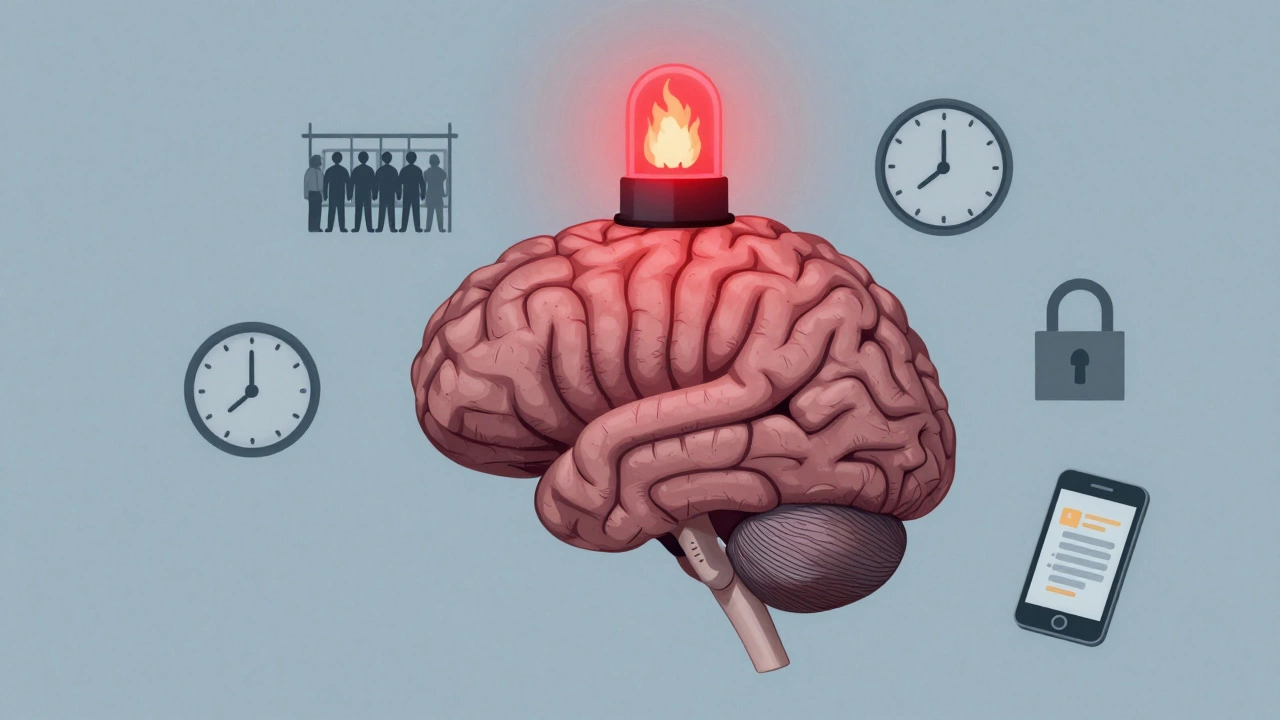
What doesn’t work? Telling someone to "calm down." Or assuming their anxiety is just "overthinking." Or dismissing it as "not that bad." Anxiety doesn’t care how logical you are. It’s not a choice. It’s a brain response that’s stuck on high alert.
It’s Not Just "Being Nervous"
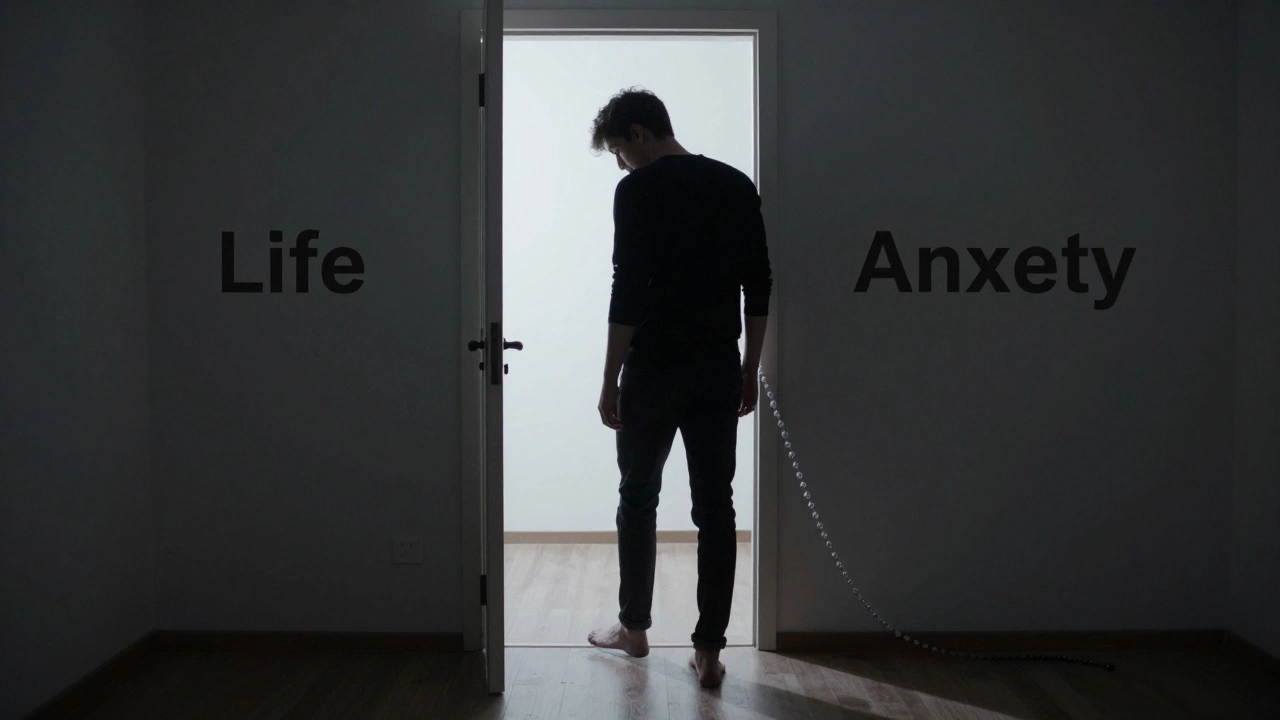
When you hear someone say, "I’m so anxious about my presentation," they’re probably just nervous. That’s normal. But when someone says, "I haven’t left my house in three weeks because I’m scared of having a panic attack in public," that’s not normal. That’s illness.
Anxiety disorders are not signs of weakness. They’re not caused by bad parenting or lack of willpower. They’re brain-based conditions with genetic, biological, and environmental roots. Brain scans show differences in the amygdala-the part that handles fear-in people with anxiety disorders. Their threat detection system is overactive. It’s like a smoke alarm that goes off every time someone lights a candle.
And here’s the hopeful part: that alarm can be recalibrated. With the right support, people with anxiety disorders go on to thrive. They become teachers, artists, engineers, parents, entrepreneurs. They don’t have to let anxiety define them.
What to Do If You Think You Have It
If you’ve been feeling this way for weeks or months, and it’s affecting your sleep, work, relationships, or ability to enjoy life-it’s time to reach out. You don’t need a crisis to get help. You don’t need to be "bad enough."
- Start with your GP or primary care provider. They can screen for anxiety and refer you to a psychologist or psychiatrist.
- Look for therapists trained in CBT. Many offer online sessions now, which can make access easier.
- Use free, evidence-based apps like Woebot or MoodTools. They’re not replacements for therapy, but they can help you track patterns and build skills.
- Join a support group. Knowing you’re not alone can be as powerful as any treatment.
Anxiety doesn’t have to be your life sentence. It’s the most diagnosed mental disorder-not because it’s the most severe, but because it’s the most common. And because it’s common, help is more available than ever. You just have to take the first step.
