 Dec, 18 2025
NHS Waiting Time Estimator
Estimate Your NHS Wait Time
Your Estimated Wait Time
How to Reduce Your Wait Time
- Ask for your position on the list Action
- Request referral to a different hospital Action
- Check NHS Choice Scheme eligibility Action
- Keep documenting your symptoms Action
- Consider private options if affordable Action
More than 7.5 million people in England are waiting for NHS treatment right now. That’s more than the population of Scotland. And while all waiting lists are long, one stands out as the longest-and it’s not the one you might think.
The Real Longest NHS Waiting List
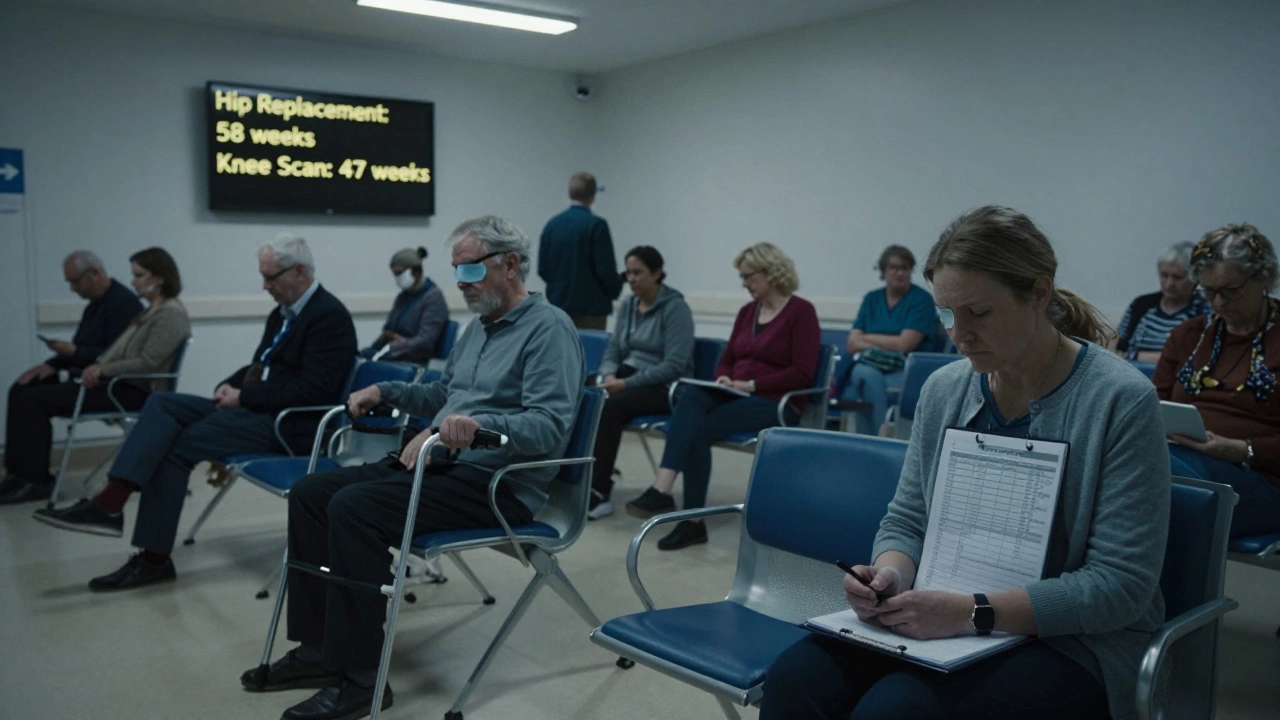
The longest NHS waiting list isn’t for cancer, heart surgery, or even mental health. It’s for elective care-non-urgent procedures like hip replacements, cataract surgery, hernia repairs, and knee reconstructions. These are treatments that don’t kill you immediately but make life unbearable. People wait months, sometimes over a year, just to walk without pain or see clearly again.
As of December 2025, the total number of people waiting more than 52 weeks for elective treatment in England hit 1.2 million. That’s up from just 12,000 in 2019. The average wait for a hip replacement is now 42 weeks. For some areas in the North East and West Midlands, it’s pushing 60 weeks. In parts of Wales and Northern Ireland, waits are even longer.
Why Is This List So Long?
The backlog didn’t happen overnight. It started with years of underfunding and staffing shortages, then exploded during the pandemic. When hospitals shifted focus to COVID-19 patients, elective surgeries were paused for months. Even after things returned to normal, the system never caught up.
There aren’t enough surgeons, nurses, or operating theaters. The NHS lost over 10,000 clinical staff since 2019. Many retired early. Others left for private hospitals or overseas jobs where pay and conditions are better. Meanwhile, demand keeps rising. An aging population means more people need joint replacements. Obesity rates mean more knee and back surgeries. Diabetes leads to more foot and eye procedures.
There’s also a hidden bottleneck: diagnostic tests. You can’t have a knee scan unless you’ve been seen by a specialist. And you can’t see a specialist unless you’ve waited months for an outpatient appointment. So even if a surgeon is ready, the patient is stuck in the pipeline.
Who Gets Hit the Hardest?
It’s not evenly spread. People in poorer areas wait longer. In Blackpool, the average wait for a hip replacement is 58 weeks. In Kensington and Chelsea, it’s 29 weeks. That’s nearly a two-year difference.
Younger people with chronic pain often wait longer than older patients. Why? Because hospitals prioritize those at higher risk of complications. A 70-year-old with a bad hip is seen before a 45-year-old with the same condition-even if the younger person can’t work or care for their kids. The system is designed to prevent death, not to restore quality of life.
Women also wait longer for many procedures. Studies show women with endometriosis wait an average of 8 years for diagnosis. Even after diagnosis, surgery waits are often double those for men with similar pain levels. The NHS doesn’t ignore women-it just doesn’t treat their pain as urgent.

What’s Being Done About It?
The government says it’s investing £10 billion to clear the backlog by 2027. That sounds big-but it’s not enough. The NHS needs about £15 billion just to return to pre-pandemic waiting times. And even if the money arrives, it won’t fix the staffing crisis overnight.
Some hospitals are trying new approaches. In Manchester, a pilot program uses private clinics to handle overflow. Patients get treated faster, and the NHS pays a fixed fee. It’s working-wait times dropped by 30% in six months. But it’s only available in a few areas.
Other places are using digital triage. Instead of seeing a doctor first, patients fill out an online questionnaire. AI flags who needs urgent care and who can wait. This cuts down unnecessary appointments. In Sheffield, it reduced outpatient visits by 22%.
But none of this solves the core problem: too few people to do the work. You can’t run more surgeries if there’s no one to run the machines, prep the patients, or recover them afterward.
What Can You Do If You’re Waiting?
If you’re on the list, you’re not powerless. Here’s what actually works:
- Ask for your position on the list. Hospitals track this. Know your exact wait time and where you stand.
- Request a referral to a different hospital. Some areas have shorter waits. Your GP can refer you to a provider outside your region.
- Check if you qualify for the NHS Choice Scheme. This lets you pick any NHS-approved provider in England, even if it’s far away. Many people don’t know this exists.
- Keep documenting your symptoms. If your pain worsens, your condition deteriorates, or you lose mobility, send updates to your GP. This can move you up the list.
- Consider private options if you can afford it. A hip replacement in private care costs £12,000-£18,000. But you’ll be seen in weeks, not months.
There’s no magic fix. But knowing your rights and options can shave months off your wait.

The Bigger Picture
The longest NHS waiting list isn’t just a statistic. It’s made up of real people: a teacher who can’t lift her students, a delivery driver who can’t get out of his van, a grandmother who can’t play with her grandkids. These aren’t edge cases-they’re the majority.
Waiting lists reveal what the NHS is really prioritizing: saving lives over restoring them. That’s not a failure of management. It’s a failure of values. We treat pain as secondary unless it’s life-threatening. But chronic pain destroys livelihoods, relationships, and mental health. It’s not just a medical issue-it’s a social crisis.
Until the NHS starts treating non-emergency care with the same urgency as emergencies, the waiting list will keep growing. And the people on it? They’ll keep waiting.
What is the longest NHS waiting list in 2025?
The longest NHS waiting list in 2025 is for elective procedures like hip and knee replacements, cataract surgery, and hernia repairs. Over 1.2 million people in England are waiting more than 52 weeks for these treatments, with some areas seeing waits of 60 weeks or longer.
Why are NHS waiting lists so long?
Waiting lists grew because of years of underfunding, staff shortages, and the pandemic’s disruption. Hospitals paused non-emergency surgeries during COVID, and they never fully recovered. There aren’t enough surgeons, nurses, or operating rooms to meet rising demand from an aging population.
How long do you wait for a hip replacement on the NHS?
The average wait for a hip replacement on the NHS in 2025 is 42 weeks. In some regions, especially in the North East and West Midlands, waits exceed 60 weeks. In contrast, private care can reduce this to 2-4 weeks.
Can you choose a different hospital to reduce your NHS wait?
Yes. Under the NHS Choice Scheme, you can be referred to any NHS-approved provider in England, even outside your local area. Many hospitals have shorter waiting lists, and your GP can help you find one. This is a legal right-not a privilege.
Are women waited on longer than men for NHS treatments?
Yes. Women often wait longer for conditions like endometriosis, chronic pelvic pain, and autoimmune disorders. Studies show women with similar symptoms to men wait twice as long for diagnosis and treatment. This reflects systemic bias in how pain is assessed and prioritized.
Is the NHS fixing the waiting list problem?
The NHS has pledged £10 billion to clear the backlog by 2027, but experts say £15 billion is needed just to return to 2019 levels. While some pilot programs using private clinics and digital triage are helping, the core issue-lack of staff-hasn’t been solved. Without more doctors, nurses, and support workers, the list will keep growing.
What Comes Next?
If you’re waiting, keep pushing. Document every symptom. Ask for updates. Know your rights. And if you can afford it, consider private care-even just for the initial consultation. It can speed up your NHS pathway.
The NHS was built on the idea that healthcare should be free at the point of need. But if you need to wait two years to walk again, is it still free? Or just delayed?
