 Sep, 7 2026
Mental Breakdown Early Warning Check
A mental breakdown rarely happens overnight. It is often preceded by subtle physical and cognitive changes. This tool helps you identify if you are experiencing the first stage of acute distress. Be honest with your answers for the most accurate reflection.
Select the checkboxes above and click assess to see your results.
You know that feeling when you’re running on fumes, but your brain refuses to hit the brakes? Most people think a mental breakdown hits like a lightning bolt-one minute you’re fine, the next you’re on the floor. But here’s the truth: it’s rarely sudden. It’s usually the end result of a slow, quiet accumulation of stress that starts long before you feel like you’re falling apart.
The first stage isn’t dramatic crying or screaming. It’s subtle. It’s the moment you stop sleeping properly because your mind won’t shut off. It’s snapping at a colleague for no reason and then feeling guilty about it. Recognizing this initial phase is critical because catching it early can prevent months of recovery time later. If you ignore these whispers, they eventually turn into screams.
Understanding the anatomy of a mental crisis
Before we pinpoint the first stage, let’s clear up some confusion. "Nervous breakdown" isn’t a formal medical diagnosis in the DSM-5 (the manual doctors use). Instead, clinicians view it as an acute episode of extreme distress where someone becomes temporarily unable to function in their daily life. This state often overlaps with conditions like severe anxiety, major depressive disorder, or acute stress reaction.
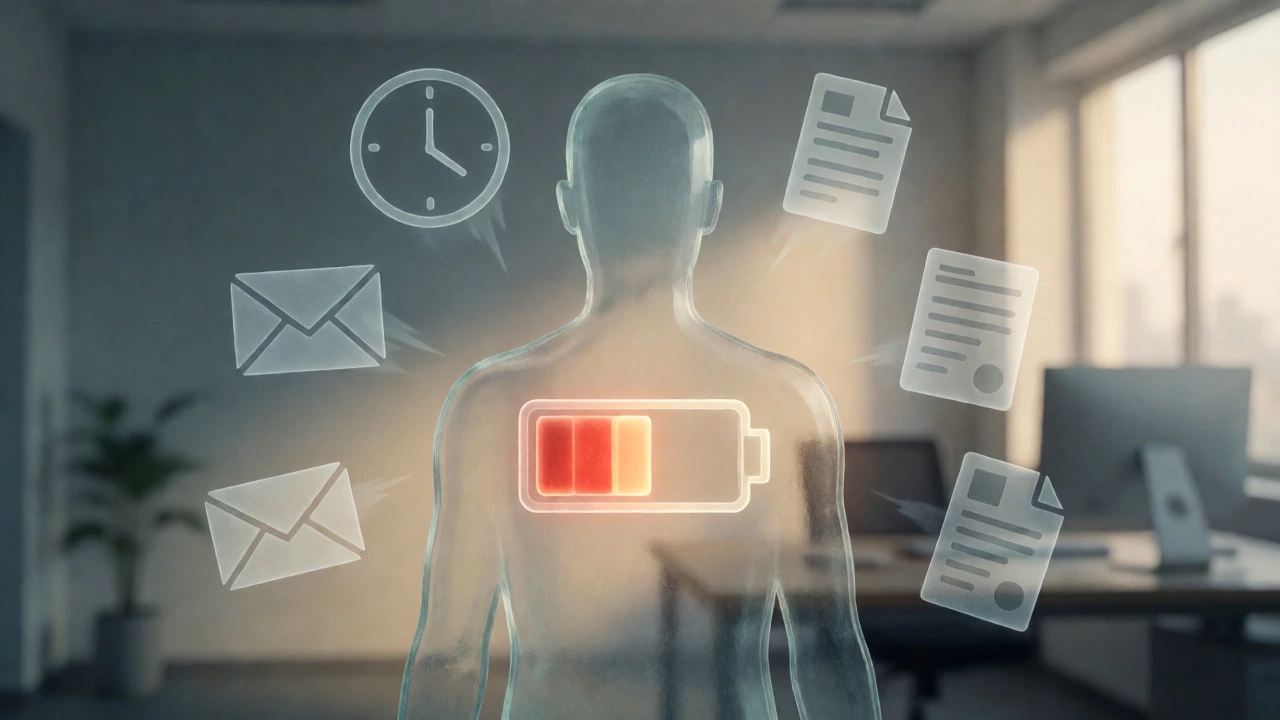
Think of your mental health like a bank account. Every stressful event-work deadlines, relationship issues, financial worries-is a withdrawal. Rest, therapy, and good sleep are deposits. The first stage of a breakdown happens when you’ve been making withdrawals faster than deposits for so long that your balance is dangerously low. You haven’t gone bankrupt yet, but you’re overdrawn, and the interest rates are killing you.
The first stage: Physical and cognitive exhaustion
The very first sign almost always manifests physically before it fully impacts your emotions. Your body keeps score even if your mind tries to pretend everything is okay. In this initial phase, often called the "alarm stage" of general adaptation syndrome, your nervous system stays stuck in fight-or-flight mode.
- Sleep disruption: You might lie awake ruminating, or conversely, sleep excessively but wake up unrefreshed. Your circadian rhythm gets thrown off by cortisol spikes.
- Physical tension: Unexplained headaches, jaw clenching (bruxism), or tight shoulders become chronic. You might notice digestive issues like nausea or irritable bowel symptoms without any dietary changes.
- Cognitive fog: Simple tasks take twice as long. You forget why you walked into a room. Reading a paragraph requires re-reading it three times. This isn’t laziness; it’s your prefrontal cortex struggling to maintain executive function under high load.
If you’re noticing these physical cues, pay attention. They are your body’s check-engine light. Ignoring them doesn’t make the problem go away; it just means the engine will stall sooner.
Emotional shifts and behavioral changes
Once the physical exhaustion sets in, your emotional regulation takes a hit. This is where the breakdown begins to look more recognizable to outsiders. You aren’t necessarily "sad." You might feel numb, irritable, or disproportionately angry.
A common pattern in this early stage is emotional detachment. You might find yourself withdrawing from friends or family not because you hate them, but because social interaction feels like too much effort. Answering texts feels heavy. Going out feels impossible. This isolation is a defense mechanism-your brain is trying to conserve energy by cutting non-essential inputs.
Another key indicator is loss of interest in things you used to enjoy. This is known as anhedonia. That hobby you loved? It feels pointless now. The food you crave tastes bland. This flattening of affect is a strong predictor that you’re moving from simple stress toward a full-blown crisis.
| Feature | First Stage (Early Warning) | Later Stages (Crisis) |
|---|---|---|
| Sleep | Difficulty falling asleep; waking up tired | Insomnia lasting days; nightmares; inability to stay in bed |
| Mood | Irritability; mild anxiety; feeling "on edge" | Panic attacks; deep despair; emotional outbursts |
| Function | Procrastination; minor errors at work | Inability to perform basic hygiene or job duties |
| Appetite | Stress eating or skipping meals occasionally | Significant weight change; forgetting to eat entirely |
Why high-functioning individuals miss the signs
Here’s a tricky part: many people in the first stage of a breakdown still appear perfectly functional to the outside world. They show up to work, meet deadlines, and smile in meetings. This is often called "high-functioning anxiety" or "smiling depression."
Because society rewards productivity, we often mistake endurance for health. If you’re pushing through exhaustion to keep up appearances, you’re masking the early stages. You might rely heavily on caffeine, alcohol, or sugar to get through the day. These substances provide temporary relief but ultimately worsen the underlying imbalance, accelerating the slide toward collapse.
Ask yourself honestly: Are you coping, or are you just enduring? Coping involves active management of stress. Enduring is passive suffering. The first stage is manageable with small adjustments. By the time you’re purely enduring, you likely need professional support.
Actionable steps to halt the progression
So, you’ve identified the early signs. What now? You don’t need to drop everything and move to a monastery. Small, consistent actions can reverse the trajectory.
- Prioritize sleep hygiene: Treat sleep as non-negotiable medicine. Set a strict bedtime. Remove screens an hour before bed. If you can’t sleep, rest quietly instead of forcing it.
- Reduce decision fatigue: Automate small choices. Eat the same breakfast. Wear similar clothes. Save mental energy for what truly matters.
- Move your body gently: High-intensity workouts might spike cortisol further. Try walking, yoga, or swimming. Movement helps metabolize stress hormones without adding extra strain.
- Talk to someone: You don’t need to solve your problems verbally. Just voicing them reduces their power. A trusted friend, partner, or therapist can help you gain perspective.
If these self-help strategies don’t stabilize your mood within two weeks, consider seeing a GP or a counselor. Early intervention is far less painful than crisis management.

When to seek professional help immediately
While the first stage is manageable, there are red flags that suggest you’re already past the point of self-care. If you experience persistent thoughts of self-harm, complete inability to function for more than three days, or psychotic symptoms like hearing voices, seek help right away.
In New Zealand, services like the Crisis Assessment and Treatment Team (CATT) or local DHB mental health services are available. For immediate support, contacting a helpline like 173 (Healthline) or text line 4304 can bridge the gap until you see a clinician. Remember, needing help isn’t a failure; it’s a smart strategic move.
Frequently Asked Questions
How long does the first stage of a mental breakdown last?
The duration varies significantly depending on individual resilience and external stressors. For some, the early warning signs may persist for weeks or months if left unaddressed. With proper intervention, such as stress reduction techniques or therapy, this stage can be resolved relatively quickly. However, if ignored, it typically progresses to more severe symptoms within a few weeks.
Can you have a mental breakdown without crying?
Yes, absolutely. Many people experience a mental breakdown as emotional numbness or dissociation rather than overt crying. Some may exhibit anger or agitation instead. The core feature is an inability to cope with daily demands, regardless of how the emotion presents itself.
Is burnout the same as a mental breakdown?
They are related but distinct. Burnout is specifically tied to work-related chronic stress and leads to exhaustion and cynicism. A mental breakdown is a broader term for acute psychological distress that can stem from any source. Burnout can lead to a breakdown if untreated, but a breakdown can occur without workplace involvement.
What is the best way to recover from the early stages?
Focus on restoring baseline physiological health first. Prioritize sleep, nutrition, and gentle movement. Reduce environmental stressors where possible. Engaging in mindfulness practices or cognitive-behavioral techniques can also help regulate the nervous system. Professional counseling provides tools to address underlying thought patterns.
Do men and women experience the first stage differently?
Research suggests gender differences in expression. Women may report higher levels of internalized anxiety and sadness, while men might display externalized behaviors like irritability, substance use, or withdrawal. However, the underlying physiological stress response is similar across genders. Social conditioning plays a significant role in how these symptoms are perceived and reported.
