 Dec, 8 2025
Fertility Treatment Speed Calculator
How Fast Can You Get Pregnant?
Answer a few questions to find the fastest fertility treatment path for your unique situation. Based on your medical profile, we'll show you the most efficient option.
When you’re trying to get pregnant and time is slipping away, the question isn’t just what treatment works-it’s how fast can it work? Many people assume IVF is the only fast option, but that’s not always true. The fastest path to pregnancy depends on your body, your diagnosis, and what’s been ruled out already.
What "fastest" really means in fertility treatment
"Fastest" doesn’t mean overnight. Even the quickest treatments take weeks, not days. But some options get you to a pregnancy test in under 3 months. Others can stretch out over a year if you’re doing multiple rounds. The fastest treatments are the ones that skip complex steps-no egg retrieval, no embryo freezing, no genetic testing. They work by helping your body do what it already knows how to do: ovulate and conceive naturally. The trick is making sure your body is ready to do it right.Option 1: Ovulation induction with IUI - the speed leader
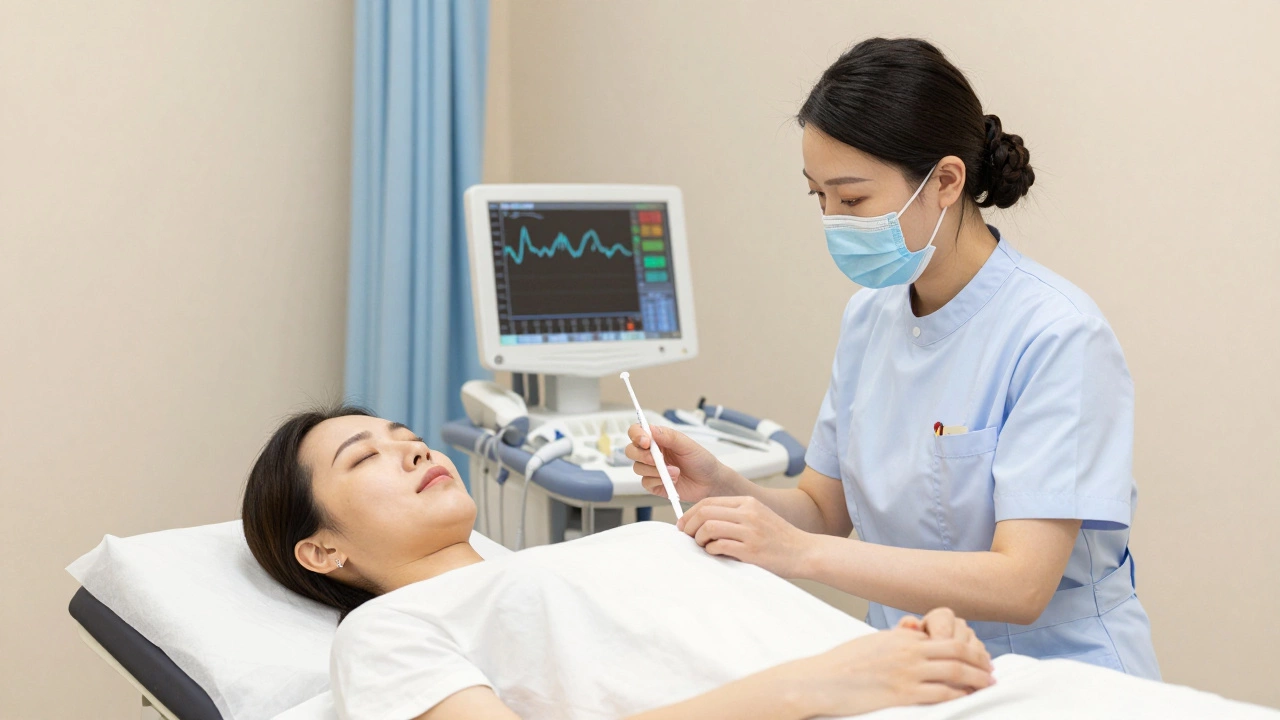
If you’re under 35, have regular periods, open fallopian tubes, and your partner has normal sperm, ovulation induction combined with intrauterine insemination (IUI) is often the fastest route. Here’s how it works:- Month 1: You take clomiphene citrate or letrozole for 5 days, starting on day 2 or 3 of your cycle.
- Day 10-12: You get an ultrasound and blood test to check if follicles are growing.
- Day 14: You get an hCG trigger shot to release the egg.
- Day 15: IUI is performed-sperm is washed and placed directly into the uterus.
- Day 28: Pregnancy test.
Option 2: IVF - faster than you think, but not always the first choice
IVF is often seen as the "last resort," but it’s actually the fastest way to get pregnant if you have blocked tubes, low ovarian reserve, or severe male factor infertility. The standard IVF cycle takes 4-6 weeks:- Days 1-10: Daily hormone injections to stimulate multiple eggs.
- Day 10-12: Monitoring scans and blood tests.
- Day 14: Egg retrieval (under light sedation).
- Day 15-16: Fertilization in the lab.
- Day 19-21: Embryo transfer.
- Day 33: Pregnancy test.
Why IUI beats IVF for speed (if you qualify)
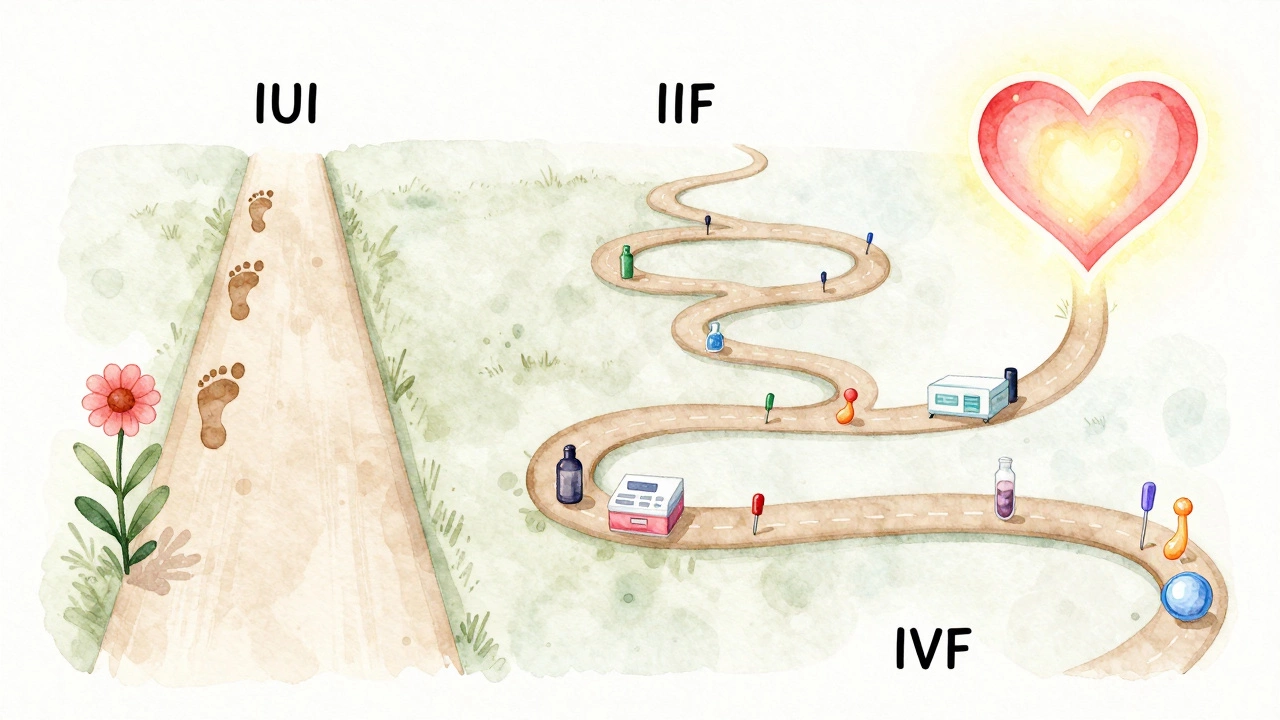
If you’re a good candidate for IUI, it’s faster, cheaper, and less invasive than IVF.| Factor | IUI | IVF |
|---|---|---|
| Time to pregnancy test | 26-30 days | 30-35 days |
| Cost per cycle (NZD) | $800-$1,500 | $8,000-$12,000 |
| Success rate per cycle (under 35) | 10-20% | 40-50% |
| Number of cycles to pregnancy | 3-4 | 1-2 |
| Invasive? (needles, surgery) | Minimal | Yes |
Who should skip IUI and go straight to IVF?
Not everyone is a candidate for IUI. If you have any of these, IUI is unlikely to work-and waiting to try IVF only wastes time:- Blocked or damaged fallopian tubes
- Severe male factor infertility (low count, poor motility)
- Diminished ovarian reserve (AMH under 1.0 ng/mL)
- Endometriosis Stage III or IV
- Age 38 or older
What about natural conception? Can it be faster?
Some people think "just relax and it’ll happen." But if you’ve been trying for 12+ months (or 6+ months if you’re over 35), natural conception isn’t likely to be faster than medical help. A 2024 study from the New Zealand Fertility Society found that couples under 35 with unexplained infertility had a 2-3% chance of conceiving naturally per month after 18 months of trying. With IUI, that jumps to 15% per cycle. Waiting for nature to catch up is not a strategy-it’s a delay.What slows down fertility treatment?
Even the fastest treatments can get delayed by things you can control:- Waiting too long to see a specialist
- Skipping basic tests (semen analysis, HSG, AMH)
- Choosing a clinic with long waitlists
- Not starting treatment on the right day of your cycle
- Trying too many natural remedies instead of evidence-based care
What about egg freezing or donor eggs?
Egg freezing isn’t a treatment-it’s insurance. If you’re not ready to conceive yet, it’s smart. But if you’re trying to get pregnant now, freezing eggs won’t help. Donor eggs are fast if you’ve exhausted your own eggs. A donor egg IVF cycle can take 6-8 weeks from start to test. But it’s not for everyone. It’s only considered when your own eggs are no longer viable.Real-world example: Sarah’s story
Sarah, 32, tried naturally for 14 months. Her AMH was 1.8, her husband’s sperm count was normal, and her tubes were open. She started IUI with letrozole. Cycle 1: negative. Cycle 2: negative. Cycle 3: positive. She got pregnant in 90 days. Total cost: $3,200. No surgery. No hospital stay. No emotional burnout from multiple IVF cycles. She didn’t need IVF. She just needed the right starting point.Bottom line: What’s the fastest fertility treatment?
If you’re under 35, have no major issues, and your partner’s sperm is normal: IUI with ovulation induction is the fastest, most affordable path. If you have blocked tubes, low egg count, or severe male factor: IVF is the fastest-even if it feels overwhelming. The key isn’t picking the "best" treatment. It’s picking the right one for your body-and starting it now.Don’t waste months waiting to see if it "just happens." Fertility doesn’t pause while you decide. Every week you wait is a week you can’t get back.
