 Mar, 15 2026
Private Health Insurance Cost Calculator
Estimate Your Health Insurance Costs
Input your details to see estimated costs based on 2026 insurance market data.
Your results will update once you click the button above
Choosing the best private health insurance isn’t about picking the most expensive plan or the one with the fanciest logo. It’s about matching your needs to what actually matters: speed, coverage, and cost - not just today, but for the long term. If you’re tired of waiting months for a specialist or paying out-of-pocket for treatments that should be covered, private health insurance can change that. But not all plans are created equal. Here’s what you need to know to make a smart choice in 2026.
What private health insurance actually covers
Most private health insurance plans in the U.S. and U.K. cover three main things: hospital treatment, specialist consultations, and diagnostic tests. Some include outpatient care like physiotherapy or mental health therapy. Others add dental, vision, or alternative treatments like acupuncture. But here’s the catch: not every plan covers everything. Many low-cost plans exclude chronic conditions, maternity care, or pre-existing illnesses. If you have a history of migraines, back pain, or diabetes, read the fine print. A 2025 survey by the Private Healthcare Information Network found that 68% of people who bought basic plans later discovered their condition wasn’t covered - and had to pay thousands out of pocket.
Top-tier plans typically include:
- Same-week access to consultants
- Choice of hospital and surgeon
- Cover for cancer treatments, including chemotherapy and radiotherapy
- 24/7 telehealth support
- Optional extras: mental health sessions, wellness check-ups, chiropractic care
Plan A might cover your knee surgery but not your therapist. Plan B might give you unlimited mental health visits but delay your MRI by six weeks. Know what matters most to you - and don’t assume everything is included.
How premiums work - and why they jump
Your monthly premium isn’t fixed. It changes based on three things: your age, your location, and your claims history. In 2026, a 35-year-old in London pays an average of £42/month for a mid-tier plan. A 55-year-old in Manchester pays £118. That’s not a mistake. Insurers use actuarial data to predict risk. Older people use more care. Urban areas have higher medical costs. And if you’ve filed a claim in the past two years? Your rate could go up 15-30%.
Some companies offer fixed-rate plans for 12 or 24 months. That locks in your price - useful if you’re planning to move or have a baby. But watch out for renewal clauses. Many insurers increase rates at renewal by 8-12% annually, even if you didn’t use the plan. One 2025 study by Health Affairs showed that 41% of policyholders didn’t realize their premium would rise that much until they got the bill.
Networks matter more than you think
Private insurance doesn’t mean you can go to any doctor. Most plans tie you to a network of approved hospitals and specialists. If you pick a plan that doesn’t include the hospital near your home or the surgeon you trust, you’ll either pay extra or go without.
For example, Bupa, AXA, and Vitality are the three largest providers in the U.K. Each has different hospital networks. Bupa covers 92% of private hospitals nationwide. AXA covers 87%. Vitality, focused on wellness, has fewer hospitals but includes gym discounts and health coaching. If you live in a rural area, check which providers have facilities nearby. A 2026 consumer report found that 30% of rural policyholders had to drive over 50 miles for basic scans because their insurer’s network didn’t extend to their town.
Also, ask about referral rules. Some plans require you to see a GP first - even if you’re paying out-of-pocket for private care. Others let you book directly with a specialist. That flexibility saves weeks.
Waiting times: the real advantage
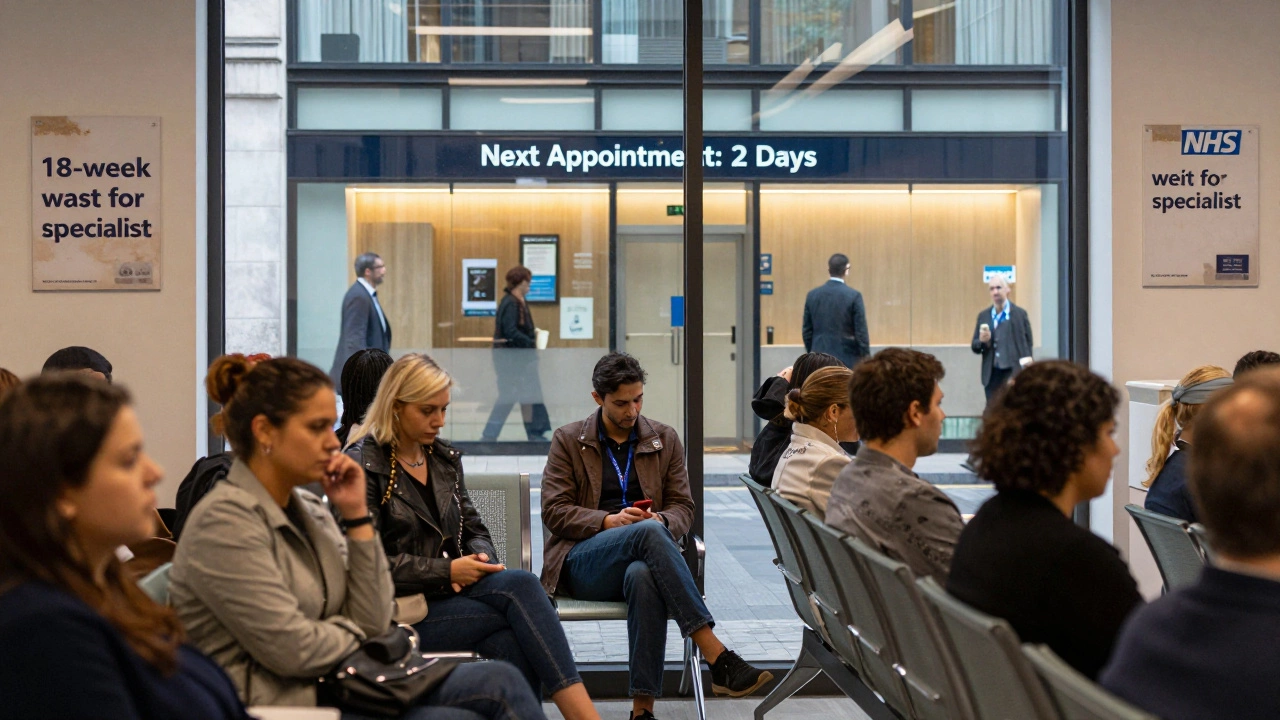
The biggest reason people buy private insurance isn’t luxury - it’s time. In the NHS, the standard wait for non-urgent surgery is 18 weeks. In private care? Often under two weeks. For cancer diagnostics, private patients get results in 48 hours. NHS patients wait 4-6 weeks on average.
A 2025 analysis by the King’s Fund showed that private insurance reduced time to treatment by 73% for conditions like hip replacements, cataracts, and hernia repairs. That’s not just convenience - it’s health outcomes. Early treatment for back pain, for instance, reduces the chance of long-term disability by 60%.
But not all insurers deliver on this promise. Some cut corners by using under-staffed clinics or outsourcing to third-party providers. Look for plans that guarantee wait times. Top providers now publish average wait data on their websites. If they don’t, ask for it.
Cost vs. value: what you’re really paying for
Let’s say you’re comparing two plans:
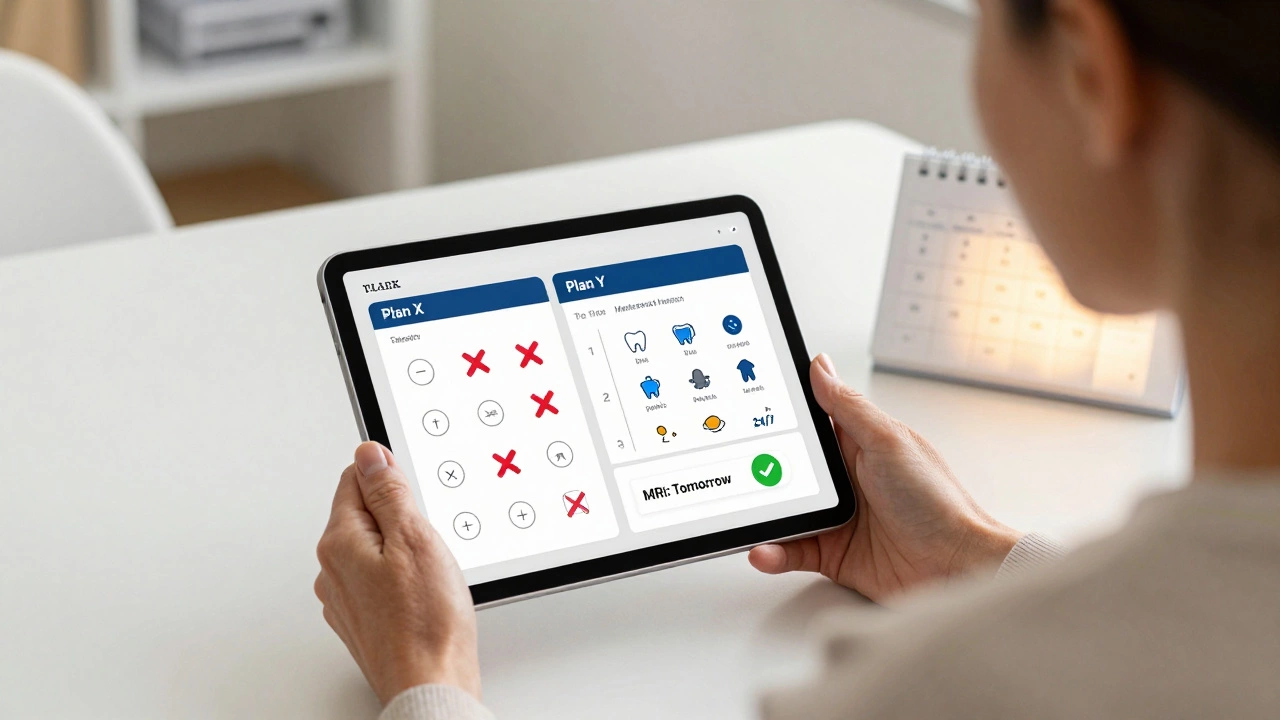
- Plan X: £35/month. Covers hospital stays, basic scans, no outpatient care, limited specialist access.
- Plan Y: £75/month. Includes all of Plan X, plus mental health, physio, dental, and direct access to specialists.
Plan X seems cheaper. But if you need a physio session after surgery - which costs £85 per visit - you’ll pay £340 in six weeks. That’s almost the difference in annual premiums. Plan Y might cost more upfront, but it covers the hidden costs.
Also, consider excess (deductible). A plan with a £500 excess might look cheaper, but if you have a minor surgery, you’ll pay that amount out of pocket. That’s not savings - it’s risk shifting.
Use this rule: Choose a plan where the total annual cost (premium + likely excess + uncovered services) is less than what you’d pay without insurance. If you’re healthy and rarely see a doctor, a basic plan makes sense. If you manage a chronic condition or have a family history of illness, go deeper.
Top 3 providers in 2026 (and who they’re best for)
Based on 2026 customer satisfaction scores, claims processing speed, and network coverage, here are the leaders:
| Provider | Best For | Average Monthly Premium (35yo) | Wait Time Guarantee | Key Perks |
|---|---|---|---|---|
| Bupa A global private healthcare provider with extensive hospital networks and strong mental health coverage | People who want choice and nationwide coverage | £68 | 14 days for non-emergency care | Free telehealth, 24/7 nurse line, mental health app |
| AXA Health A major insurer offering flexible plans with strong outpatient and dental coverage | Families and those needing dental/vision care | £59 | 10 days for diagnostics | Dental check-ups covered, gym discounts, wellness rewards |
| Vitality A wellness-focused insurer that rewards healthy behavior with premium discounts | Active, health-conscious individuals | £72 | 7 days for specialist referrals | Insurance discounts for fitness tracking, free health screenings |
Bupa leads in breadth. AXA leads in value. Vitality leads in incentives. Your choice depends on your lifestyle - not just your medical history.

What to avoid
- Plans with vague exclusions like “conditions not listed” - that’s a loophole.
- Short-term contracts (under 12 months). They’re often cheaper, but renewal terms are harsh.
- Plans that don’t let you change hospitals mid-treatment. You should be able to switch if your surgeon leaves or the clinic closes.
- Buying based on price alone. The cheapest plan is often the most expensive in the long run.
Also, don’t assume your employer’s plan is enough. Many corporate policies cover only basic hospital care. If you want mental health, physio, or dental, you’ll need a personal policy on top.
How to pick your plan
Here’s a simple checklist:
- Write down your top 3 health concerns (e.g., back pain, anxiety, annual check-ups).
- Check which hospitals and specialists are covered near you.
- Calculate your likely out-of-pocket costs: how many visits? How much do they cost?
- Compare total annual cost: premium + excess + uncovered services.
- Call three providers. Ask: “If I need an MRI tomorrow, how soon can I get it?”
If you’re unsure, use an independent broker. They don’t charge you - insurers pay them. A good broker will compare 10+ plans and show you what’s actually covered.
What happens if you don’t get insurance?
Without private coverage, you’re stuck with public system waits - and high costs if you pay privately. A hip replacement in the U.S. can cost $50,000 without insurance. In the U.K., it’s £12,000. Even a simple scan can run $800. If you need urgent care and can’t afford it, you risk delays that turn minor issues into major ones.
Private insurance isn’t a luxury. For millions, it’s the only way to get timely, predictable care. The best plan isn’t the one everyone else has. It’s the one that fits your body, your budget, and your life.
What’s the difference between private health insurance and NHS coverage?
The NHS provides free, universal care funded by taxes, but waits can be long - sometimes months for non-emergency treatment. Private health insurance lets you skip those waits, choose your doctor and hospital, and often includes services the NHS doesn’t cover, like mental health therapy, physiotherapy, or dental care. It doesn’t replace the NHS - it complements it.
Can I get private insurance if I have a pre-existing condition?
Yes, but coverage varies. Most insurers will exclude the condition for 2-5 years. Some offer partial coverage with higher premiums. A few, like Vitality and Bupa, now include pre-existing conditions after a waiting period or with a surcharge. Always disclose everything - hiding a condition can void your policy.
Are private health insurance premiums tax-deductible?
In the U.S., premiums may be deductible if you itemize and your total medical expenses exceed 7.5% of your income. In the U.K., they’re not tax-deductible for individuals - but employers can offer private health insurance as a tax-free benefit. Check your country’s rules - they change often.
Can I switch private health insurance providers?
Yes - but timing matters. Most insurers allow you to switch at renewal, usually once a year. If you switch mid-term, you might lose coverage for pre-existing conditions. Always compare new plans before canceling old ones. Never go without coverage - gaps can lead to exclusions later.
What’s the cheapest private health insurance I can get?
The cheapest plans start at £25/month in the U.K. and $100/month in the U.S., but they cover almost nothing - just hospital stays and basic diagnostics. You’ll pay out-of-pocket for almost everything else. A plan under £40/month is usually not worth it unless you’re young, healthy, and just want peace of mind for emergencies.
