 Feb, 15 2026
When your body hurts all the time - not just after a bad workout or a sprained ankle, but day after day, week after week, month after month - you’re not imagining it. There’s a name for this: chronic pain. It’s not just "feeling sore." It’s a medical condition that lasts longer than three to six months, even after an injury has healed. And it affects over 20% of adults worldwide, according to the World Health Organization. If you’re living with this, you’re not alone, but you might not know how to describe what’s happening to your doctor - or even to yourself.
Chronic Pain Isn’t Just "Aching" - It’s a System Failure
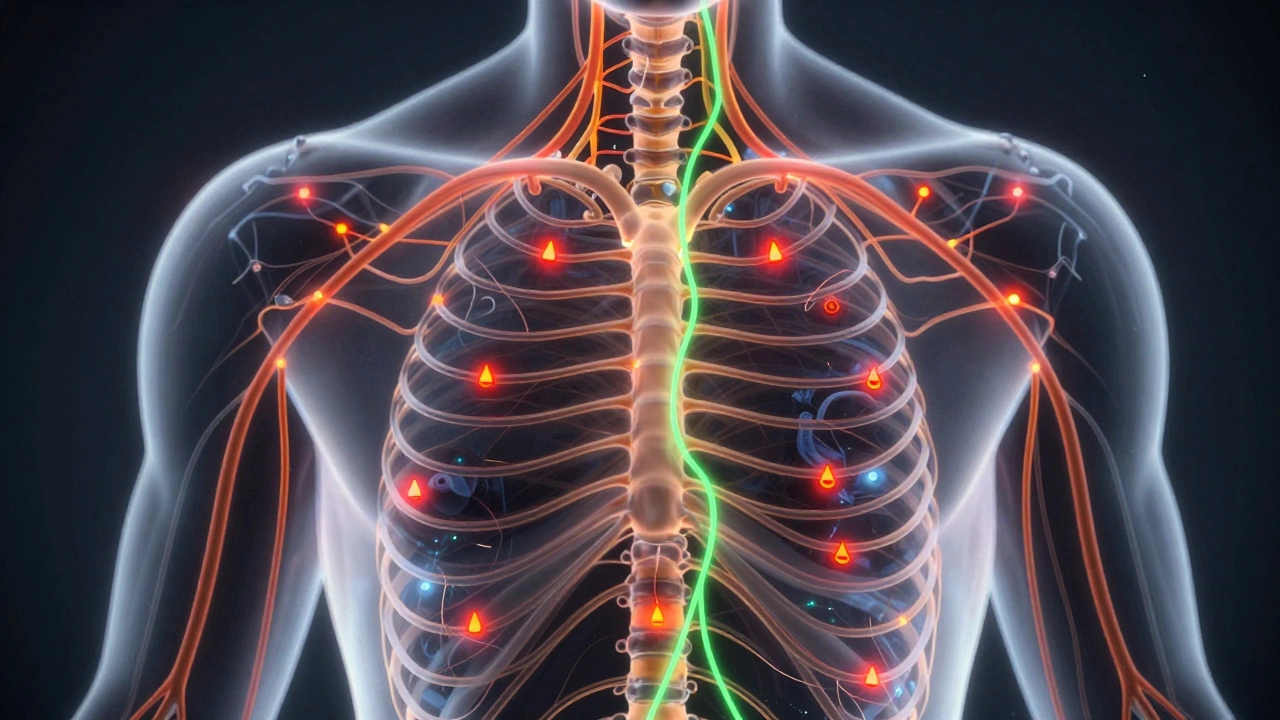
Most people think pain is a warning signal: something breaks, you feel it, you fix it, the pain goes away. That’s acute pain. Chronic pain is different. It’s like a broken alarm system that won’t shut off. Your nerves keep sending pain signals to your brain even when there’s no injury left to heal. This can happen after surgery, a car accident, or even without any clear trigger at all.
Studies show that in chronic pain, the nervous system changes. The spinal cord becomes more sensitive. The brain’s pain centers light up more easily. This is called central sensitization. It means your body’s pain threshold drops. A light touch, a breeze, or even walking across a room can feel unbearable. That’s why people with chronic pain often say, "I hurt everywhere," even though no one can see the damage.
What Does Chronic Pain Feel Like?
It doesn’t feel the same for everyone. Some describe it as a deep, burning ache. Others feel sharp, electric shocks. Some have a constant throb, like a toothache that never goes away. You might also feel:
- Stiffness in muscles or joints
- Tingling or numbness
- Fatigue so deep it feels like your bones are heavy
- Sleep that never feels restful
- Mood changes - irritability, anxiety, or sadness that doesn’t go away
These aren’t "side effects." They’re part of the condition. Chronic pain rewires your body’s energy use. Your nervous system is stuck in overdrive, and that drains everything - your muscles, your brain, your emotions.
Common Causes You Might Not Realize
Many assume chronic pain comes from obvious injuries. But it often starts from things you didn’t think were serious:
- Fibromyalgia: A condition where the central nervous system amplifies pain signals. No tissue damage, but the pain is very real.
- Chronic fatigue syndrome: Often overlaps with widespread pain and extreme tiredness.
- Autoimmune diseases: Like rheumatoid arthritis or lupus, where your immune system attacks your own tissues.
- Nerve damage: From diabetes, shingles, or even long-term poor posture.
- Post-surgical pain: Some people never fully recover from surgeries, even routine ones.
- Long COVID: Thousands report persistent body pain months after infection.
There’s no single test for chronic pain. Doctors rely on your description, medical history, and ruling out other conditions. That’s why so many people get told, "It’s all in your head" - not because it’s true, but because the cause isn’t visible on an X-ray or MRI.
Why It’s Hard to Treat
Most painkillers work on acute pain - the kind that comes from a cut or a broken bone. They don’t fix the broken signal system in chronic pain. Opioids? They might help for a few weeks, but long-term use makes the problem worse. Your body builds tolerance, and your nervous system becomes even more sensitive.
Physical therapy helps some, but not if the pain is coming from your brain, not your muscles. Injections? They might mask the pain temporarily but don’t change the underlying wiring.
The real breakthroughs are coming from treatments that target the nervous system itself:
- Cognitive behavioral therapy (CBT): Teaches your brain to respond differently to pain signals.
- Mindfulness and meditation: Reduces the emotional weight of pain.
- Graded exercise: Slow, controlled movement to retrain your body without triggering flare-ups.
- Neuromodulation: Devices that send mild electrical pulses to block pain signals.
- Medications like gabapentin or duloxetine: Originally for seizures and depression, they calm overactive nerves.
There’s no magic pill. But combining a few of these approaches can change your life.
What You Can Do Today
If you’ve been hurting for months - even years - here’s where to start:
- Track your pain: Use a simple journal. Note the time, location, intensity (1-10), and what you were doing. Patterns reveal triggers.
- Find a specialist: Look for a pain management clinic or a doctor trained in chronic pain, not just a general practitioner.
- Rule out hidden causes: Ask about thyroid issues, vitamin D deficiency, or sleep apnea. These can mimic chronic pain.
- Start low, go slow: Even 10 minutes of walking or stretching daily can help rewire your nervous system over time.
- Protect your sleep: Poor sleep makes pain worse. Try blackout curtains, no screens before bed, and a consistent schedule.
Don’t wait until you’re desperate. The earlier you address chronic pain, the better your chances of regaining control.

The Emotional Toll Is Real - And Part of the Treatment
Chronic pain doesn’t just hurt your body. It steals your time, your plans, your relationships. It makes you feel like a burden. It makes you angry at yourself for not "getting over it."
Research from the American Pain Society shows that people with chronic pain are three times more likely to develop depression. That doesn’t mean the pain is "all in your head." It means your brain and body are connected. Treating one helps the other.
Therapy isn’t optional. It’s essential. Talking to someone who understands - not just a friend saying "you’ll be fine" - can reduce pain intensity by 30% or more. Group support works too. You’ll find others who know exactly what you mean when you say, "I just want to feel normal again."
What Doesn’t Work - And Why
There are a lot of false promises out there:
- Extreme diets: No food cures chronic pain. Some may help reduce inflammation, but they won’t reset your nervous system.
- Expensive gadgets: Magnetic bracelets, infrared mats, or "pain-relief" patches? Most have no scientific backing.
- Pushing through pain: If movement hurts, stop. Forcing it trains your body to associate activity with danger.
- Waiting for a miracle cure: There’s no single treatment. Progress comes from consistency, not one big fix.
Chronic pain is complex. That’s why simple solutions fail. But that doesn’t mean there’s no hope. It means you need a smarter, more personalized plan.
You’re Not Broken - Your System Is Just Stuck
Chronic pain isn’t a sign of weakness. It’s not your fault. You didn’t do anything wrong. Your body got stuck in a loop, and now it needs a different kind of help.
The good news? Science is catching up. New studies show the nervous system can relearn. With the right tools, people do get better. Not always completely - but enough to live again. To sleep through the night. To walk without fear. To laugh without bracing for pain.
You don’t need to suffer forever. You just need to find the right path. And that path starts with one word: chronic pain. Now that you know it, you can start asking the right questions - and finally get the help you deserve.
Is chronic pain the same as acute pain?
No. Acute pain is short-term and usually tied to a clear injury - like a sprained ankle or surgery. It goes away as the body heals. Chronic pain lasts longer than three to six months and often continues even after the original injury has healed. It’s caused by changes in the nervous system, not ongoing tissue damage.
Can chronic pain go away on its own?
Sometimes, but rarely. If pain has lasted more than six months, it’s unlikely to resolve without intervention. The nervous system gets stuck in a pain loop. Waiting usually makes it worse. Early, targeted treatment - like physical therapy, CBT, or nerve-modulating medications - gives you the best chance of improvement.
Why do doctors sometimes dismiss chronic pain?
Because there’s no clear test for it. X-rays, MRIs, and blood work often show nothing. That doesn’t mean the pain isn’t real - it means the problem is in how the nervous system processes signals, not in visible tissue damage. Many doctors aren’t trained in chronic pain management, so they default to treating what they can see. It’s a system gap, not a reflection of your experience.
Is chronic pain all in my head?
No. "All in your head" is a harmful myth. Chronic pain is a real physical condition. Your brain is actively involved in processing pain - that’s true for everyone. But in chronic pain, the brain and spinal cord become hypersensitive. This is a biological change, not a psychological one. You’re not imagining it. You’re experiencing a neurological shift.
What’s the best treatment for chronic pain?
There’s no single best treatment - it’s personalized. The most effective approach combines physical therapy, mental health support (like CBT), gentle movement, and sometimes medications that target nerve sensitivity (like gabapentin or duloxetine). Avoid opioids for long-term use - they often make pain worse over time. The goal isn’t to eliminate pain completely, but to reduce its impact on your life.
