 Aug, 10 2026
Fertility Treatment Pathway & Success Estimator
Est. Success Rate
-%
Oral medications (Clomid/Letrozole). Low cost, non-invasive.
Est. Success Rate
-%
Washed sperm placed in uterus. Moderate invasiveness.
Est. Success Rate
-%
Lab fertilization. Highest success, highest complexity.
Context & Next Steps
Enter your details and click Analyze to see estimated pathways.
Trying to conceive can feel like solving a puzzle where half the pieces are missing. You might be wondering exactly what goes into fertility treatment, which is a range of medical interventions designed to help individuals or couples achieve pregnancy when natural conception proves difficult. It is not just one thing. It is a spectrum of options, starting with simple lifestyle adjustments and oral medications, moving to minor procedures like intrauterine insemination, and culminating in complex laboratory work for in vitro fertilization.
Understanding what is actually involved helps remove the mystery and reduces anxiety. Whether you are facing male factor infertility, unexplained infertility, or age-related decline, knowing the steps allows you to prepare physically, emotionally, and financially. This guide breaks down the core components of modern reproductive medicine so you know what to expect at every stage.
The Foundation: Diagnosis and Initial Assessment
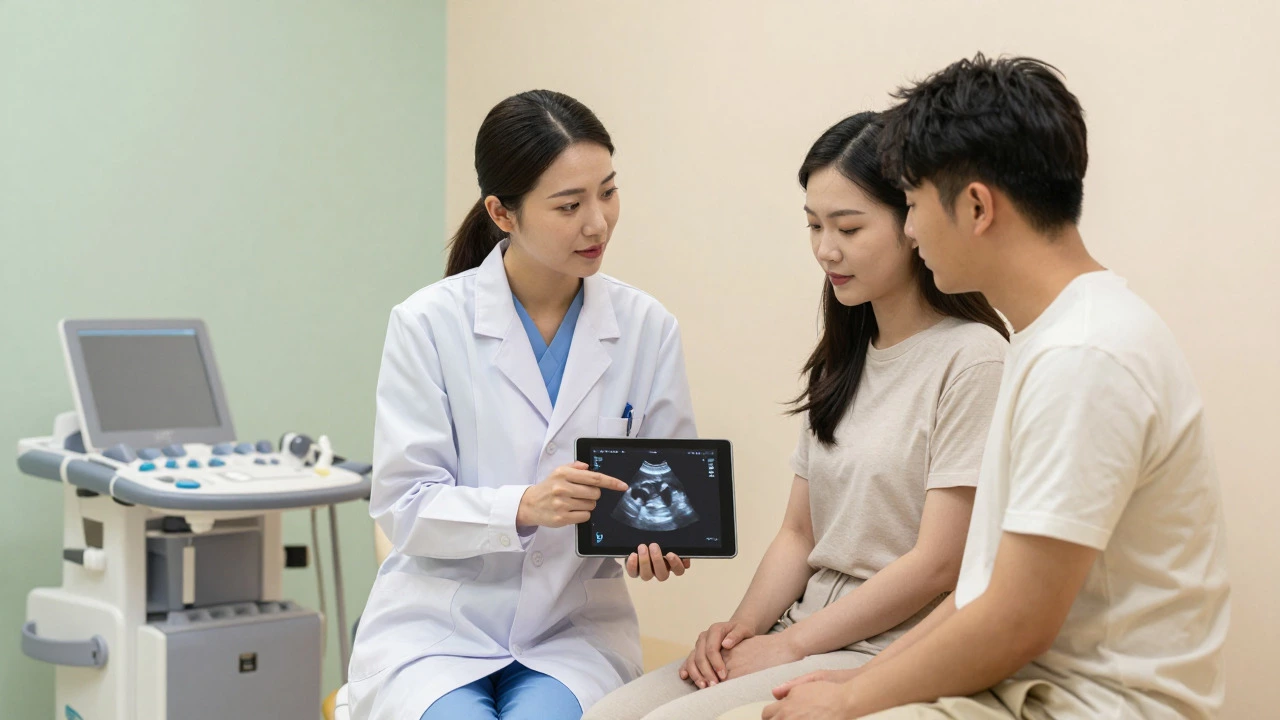
Before any medication or procedure begins, doctors need to identify the barrier to conception. This phase is critical because treating the wrong issue wastes time and money. The initial assessment typically involves blood tests, ultrasound imaging, and semen analysis.
For women, ovarian reserve testing measures the quantity and quality of remaining eggs, often assessed via Anti-Müllerian Hormone (AMH) levels and Antral Follicle Count (AFC). Low AMH does not mean you cannot get pregnant, but it suggests you may have a smaller window of opportunity. Doctors also check thyroid function and prolactin levels, as imbalances here can stop ovulation entirely. For men, a semen analysis evaluates sperm count, motility (movement), and morphology (shape). Roughly 40% of infertility cases involve male factors, making this test non-negotiable.
If structural issues are suspected, such as blocked fallopian tubes or uterine fibroids, an HSG (hysterosalpingogram) X-ray or saline sonogram may be performed. These diagnostic tools map out the physical landscape, ensuring that subsequent treatments target the actual problem.
Ovulation Induction: Jumpstarting the Cycle
If irregular ovulation is the primary issue, the first line of treatment is often ovulation induction. This involves using medications to stimulate the ovaries to produce mature eggs. The goal is to ensure that at least one egg is released during the cycle, increasing the chances of fertilization.
Clomiphene Citrate, commonly known by the brand name Clomid, is an oral medication that blocks estrogen receptors in the brain, tricking the body into producing more follicle-stimulating hormone (FSH) to encourage egg development. It is inexpensive and taken orally for five days early in the menstrual cycle. However, it can thin the uterine lining if used for too many cycles, potentially reducing implantation rates.
Another common option is Letrozole, which is an aromatase inhibitor originally developed for breast cancer that lowers estrogen production, thereby stimulating FSH release without thinning the uterine lining as much as Clomid. Many clinics now prefer Letrozole for women with Polycystic Ovary Syndrome (PCOS) due to its higher live birth rates in this specific demographic. Monitoring via transvaginal ultrasound ensures that the follicles are growing correctly and prevents the risk of ovarian hyperstimulation syndrome (OHSS), a rare but serious condition where the ovaries become swollen and painful.
Intrauterine Insemination (IUI): Bringing Sperm Closer
When ovulation is regular but other factors like mild male factor infertility, cervical mucus issues, or unexplained infertility exist, doctors may recommend Intrauterine Insemination (IUI). Often called "artificial insemination," IUI bypasses the cervix and places washed, concentrated sperm directly into the uterus.
The process usually follows a cycle of ovulation induction. Once the lead follicle reaches the appropriate size (typically 18-20mm), a trigger shot of human chorionic gonadotropin (hCG) is administered to mimic the natural LH surge, causing the final maturation and release of the egg within 36 hours. Approximately 24 to 36 hours later, the sperm sample undergoes "washing" in the lab. This process removes seminal fluid, dead sperm, and debris, leaving only the most motile sperm in a small volume of culture medium.
A thin catheter is then guided through the cervix into the uterus, and the sperm is injected. The procedure takes about five minutes and is generally painless, though some cramping may occur. Success rates for IUI vary widely, typically ranging from 10% to 20% per cycle, depending heavily on female age and sperm quality. Most patients try three to six cycles before moving to more advanced options.
In Vitro Fertilization (IVF): The Laboratory Phase
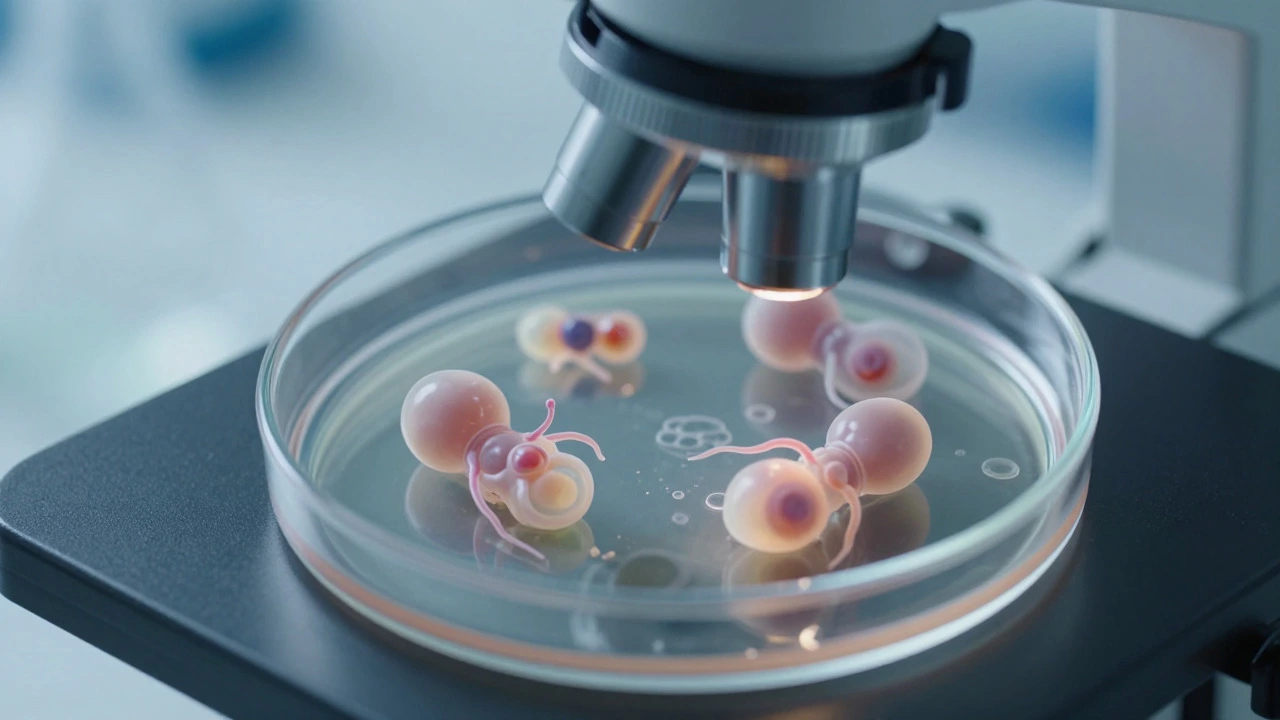
When simpler methods fail, or if there are severe factors like blocked tubes, severe male factor infertility, or diminished ovarian reserve, In Vitro Fertilization (IVF) becomes the standard of care. IVF is a multi-step process that moves fertilization outside the body.
The cycle begins with controlled ovarian hyperstimulation using injectable gonadotropins, such as FSH and LH analogs. Unlike oral medications, these injections allow for precise control over egg production, aiming to retrieve multiple eggs rather than just one. Daily monitoring via blood tests and ultrasounds tracks follicle growth. Once ready, the hCG trigger shot is given.
About 36 hours after the trigger, egg retrieval is performed under light sedation using a transvaginal ultrasound-guided needle to aspirate fluid from each follicle, collecting the eggs inside. This outpatient procedure takes about 20 minutes. Meanwhile, the male partner provides a sperm sample, or donor sperm is used.
In the embryology lab, fertilization occurs. Traditionally, sperm and eggs are placed together in a dish (conventional insemination). However, if sperm quality is poor, Intracytoplasmic Sperm Injection (ICSI) is used, where a single healthy sperm is micro-injected directly into the center of each mature egg to guarantee fertilization. The resulting embryos are cultured for 3 to 6 days. Day 5 embryos, known as blastocysts, have a higher chance of successful implantation because they have reached a more advanced developmental stage.
Embryo Transfer and Genetic Testing
The final step of IVF is the embryo transfer. One or more embryos are loaded into a soft catheter and gently placed into the uterus. This procedure is similar to IUI and requires no anesthesia. If extra viable embryos were created, they can be frozen for future use, a process called cryopreservation.
Increasingly, patients opt for Preimplantation Genetic Testing (PGT). Before transfer, a few cells are biopsied from the blastocyst. PGT-A screens for chromosomal abnormalities (aneuploidy), helping to select euploid embryos that are genetically normal and more likely to result in a healthy pregnancy. This is particularly valuable for women over 35 or those with recurrent miscarriages, as chromosomal errors are the leading cause of early pregnancy loss. While PGT adds cost and complexity, it can reduce the number of cycles needed to achieve a live birth by avoiding the transfer of non-viable embryos.
| Treatment Type | Invasiveness | Typical Success Rate (Per Cycle) | Best For |
|---|---|---|---|
| Ovulation Induction | Low (Oral meds) | 10-15% | Irregular ovulation, PCOS |
| IUI | Moderate (Minor procedure) | 10-20% | Unexplained infertility, mild male factor |
| IVF | High (Surgery & Lab) | 40-50% (under 35) | Blocked tubes, severe male factor, age-related decline |

Lifestyle and Adjunct Therapies
Medical intervention is only part of the equation. Your daily habits significantly influence treatment outcomes. Smoking, excessive alcohol consumption, and high caffeine intake can lower success rates. Studies suggest that maintaining a Body Mass Index (BMI) between 19 and 25 optimizes hormonal balance and response to medications.
Nutrition plays a supportive role. Diets rich in antioxidants, such as the Mediterranean diet, have been linked to improved egg and sperm quality. Supplements like Coenzyme Q10, Vitamin D, and Prenatal vitamins with Folic Acid are frequently recommended by reproductive endocrinologists to support cellular energy and neural tube development. While acupuncture is sometimes used for stress reduction and potential blood flow improvement to the uterus, evidence remains mixed, so it should be viewed as complementary rather than curative.
Emotional and Financial Considerations
Fertility treatment is emotionally taxing. The monthly cycle of hope, waiting, and potential disappointment can strain relationships and mental health. Counseling or support groups are highly recommended to navigate the psychological burden. Financially, costs vary drastically by region and insurance coverage. In many countries, including New Zealand and parts of the UK, public funding is limited, meaning private clinics charge significant fees per cycle. Understanding your financial exposure upfront prevents added stress during treatment.
How long does a typical IVF cycle take?
A full IVF cycle typically lasts about four to six weeks. This includes the initial stimulation phase (10-12 days), egg retrieval, laboratory fertilization and culture (5-6 days), and finally the embryo transfer. If genetic testing is included, the timeline extends by several weeks while embryos are frozen pending results.
Does fertility treatment hurt?
Most procedures involve minimal discomfort. Oral medications may cause mood swings or bloating. Injections can be slightly painful but are manageable with practice. Egg retrieval is performed under sedation, so you feel nothing during the procedure, though you may experience cramping afterward. IUI and embryo transfers are generally painless, similar to a pap smear.
What is the success rate of fertility treatments?
Success rates depend heavily on age. For women under 35, IVF success rates can exceed 50% per cycle. For women aged 40-42, rates drop to around 20-25%. IUI success rates are generally lower, averaging 10-20% per cycle regardless of age, provided ovulation is occurring. Always ask your clinic for their specific live birth rates, not just pregnancy rates.
Can lifestyle changes improve fertility naturally?
Yes, lifestyle modifications can significantly impact fertility. Quitting smoking, reducing alcohol intake, maintaining a healthy weight, and managing stress can improve both egg and sperm quality. While these changes may not resolve severe medical issues like blocked tubes, they optimize the body's environment for conception and improve the effectiveness of medical treatments.
Is Letrozole better than Clomid?
For women with PCOS, recent studies indicate that Letrozole may yield higher live birth rates and fewer multiple pregnancies compared to Clomid. Letrozole also tends to have a less negative effect on the uterine lining. However, Clomid remains effective for many women with unexplained infertility or mild ovulatory disorders. Your doctor will choose based on your specific diagnosis.
