 Nov, 1 2026
Trauma Center Level Estimator
Use this tool to understand which type of hospital is best suited for different types of emergencies. This is an educational guide, not a substitute for professional medical advice.
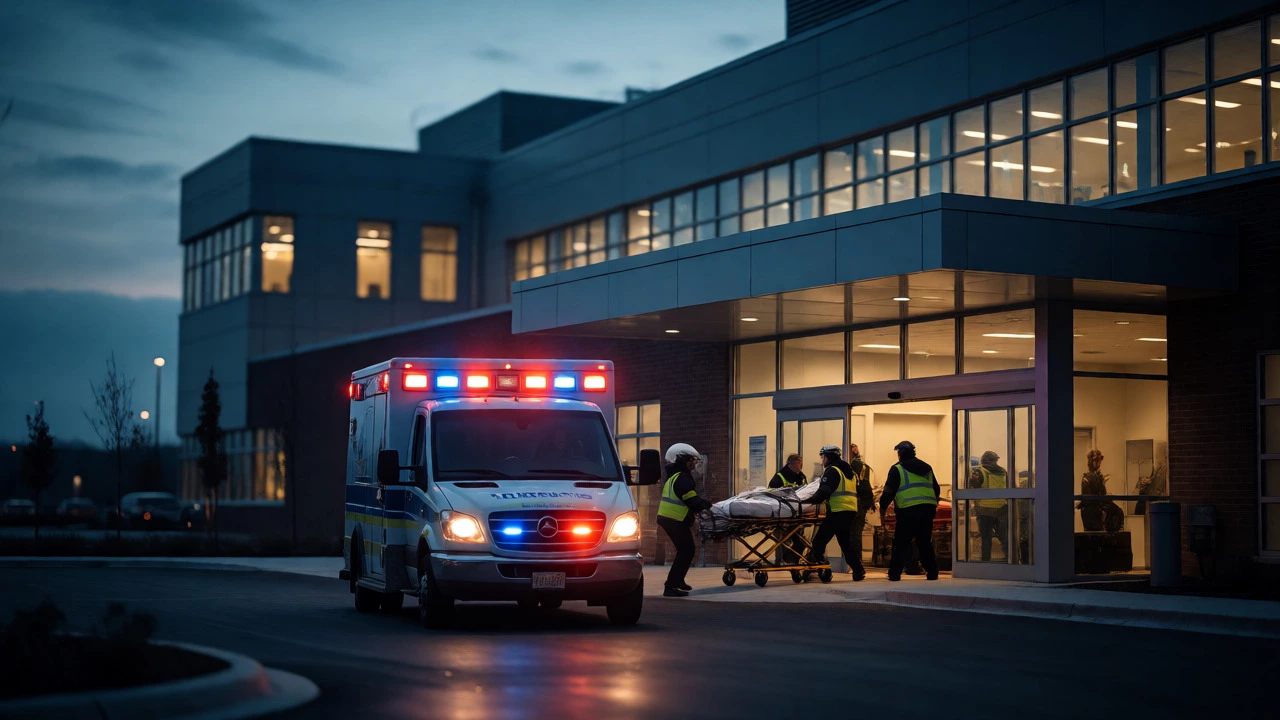
You’re driving down the highway when you see flashing lights. An ambulance rushes past, sirens wailing. You wonder: where are they taking that patient? If it’s a serious accident, they aren’t just heading to the nearest clinic with a bandage station. They are likely en route to a Level 3 hospital, which serves as a critical middle ground in the trauma care hierarchy. These facilities handle severe injuries but don’t always have the full arsenal of a top-tier university research center. Knowing what they do-and don’t-do can help you understand your local healthcare landscape better.
The American College of Surgeons (ACS) sets the standard here. They classify hospitals into five levels, from I to V. This isn’t about quality; it’s about capability. A Level 1 center has everything imaginable for trauma care, including specialized surgeons on-site 24/7. A Level 5 might only stabilize patients before transferring them elsewhere. So where does Level 3 fit? It’s the workhorse of regional trauma systems. It handles complex cases that smaller clinics can’t manage but doesn’t require the massive infrastructure of a Level 1 or 2 center.
The Core Definition of a Level 3 Facility
A Level 3 hospital is a regional trauma center that provides advanced resuscitation, surgery, intensive care, and other specialty services. Unlike lower-level centers, it must have a general surgeon available around the clock. This is non-negotiable. If you break both legs in a car crash, you need someone who can fix bones immediately, not wait until morning.
Think of it this way: if a Level 1 hospital is a full-service luxury hotel with every amenity, a Level 3 is a solid business hotel. It has all the essentials for comfort and safety, but maybe not the spa or the concierge team for every niche request. The key difference lies in the depth of specialization. Level 3 centers often rely on transfer agreements with Level 1 or 2 centers for highly complex cases, like severe brain injuries requiring neurosurgery that isn’t available on-site at night.
Key Staffing Requirements That Define the Level
Staffing is where the rubber meets the road. To earn Level 3 status, a hospital must meet strict personnel standards set by the ACS. You won’t find a rotating cast of interns handling emergencies here. The requirements are specific:
- General Surgery: A board-certified general surgeon must be physically present or immediately available within 15 minutes.
- Anesthesiology: An anesthesiologist or qualified nurse anesthetist must be available for immediate response.
- Emergency Medicine: Board-certified emergency physicians staff the ER 24/7.
- Nursing: Nurses trained specifically in trauma care must be on duty, not just general ward nurses.
This staffing model ensures that life-saving interventions happen fast. In trauma care, minutes matter. If a patient arrives with internal bleeding, the time between arrival and surgery determines survival rates. Level 3 centers are designed to minimize that delay for common severe injuries.
What Medical Services Are Available?
When you walk into a Level 3 emergency department, you’re accessing a suite of advanced diagnostic and treatment tools. These hospitals typically feature CT scanners, X-ray units, and ultrasound machines available 24 hours a day. But technology alone doesn’t make a trauma center. It’s about how quickly those tools can be deployed.
Common procedures performed at Level 3 hospitals include:
- Orthopedic Surgery: Fixing fractures, dislocations, and joint injuries.
- Abdominal Surgery: Removing spleens, repairing bowel injuries, or addressing appendicitis complications.
- Chest Tube Insertion: Treating collapsed lungs or fluid buildup after rib fractures.
- Intensive Care: Managing patients who need close monitoring but not multi-organ support.
However, there are limits. If a patient suffers a catastrophic spinal cord injury requiring specialized neurosurgery, or a complex cardiac event needing interventional cardiology that isn’t on-site, the Level 3 team will stabilize the patient and arrange a transfer to a higher-level facility. This triage process is efficient because it prevents overcrowding at major academic centers while ensuring patients get the right level of care.

How Level 3 Compares to Other Trauma Levels
Understanding the hierarchy helps clarify why transfers happen. Here’s a quick breakdown of how Level 3 stacks up against its neighbors.
| Feature | Level 1 | Level 2 | Level 3 | Level 4 |
|---|---|---|---|---|
| Surgeon Availability | In-house 24/7 | In-house 24/7 | Available within 15 mins | On-call |
| Specialists On-Site | All specialties | Most specialties | Limited (Gen Surg, Ortho) | Minimal |
| Research & Education | Required | Often present | Optional | Not required |
| Complex Cases | Handles all | Handles most | Stabilizes & Transfers | Stabilizes & Transfers |
Notice the shift in responsibility. Level 1 and 2 centers aim to keep patients. Level 3 aims to save lives first, then move patients if needed. This distinction is crucial for public health planning. It allows rural and suburban areas to have robust emergency care without the billion-dollar infrastructure of a university hospital.
Why You Might End Up at a Level 3 Hospital
If you live in a mid-sized city or a suburb surrounding a major metro area, a Level 3 center is probably your primary destination for serious accidents. Emergency medical services (EMS) protocols dictate transport based on severity. For example, a simple ankle sprain goes to a community clinic. A high-speed motorcycle crash with suspected internal bleeding goes to a Level 1 or 2. A fall from a ladder resulting in a broken femur? That’s classic Level 3 territory.
Insurance networks also play a role. Many private insurance plans contract with Level 3 hospitals because they offer a balance of cost and capability. They provide high-quality surgical outcomes without the premium pricing sometimes associated with large academic medical centers. For routine trauma-like gunshot wounds, stabbings, or blunt force trauma-they perform exceptionally well.
The Role of Transfer Agreements
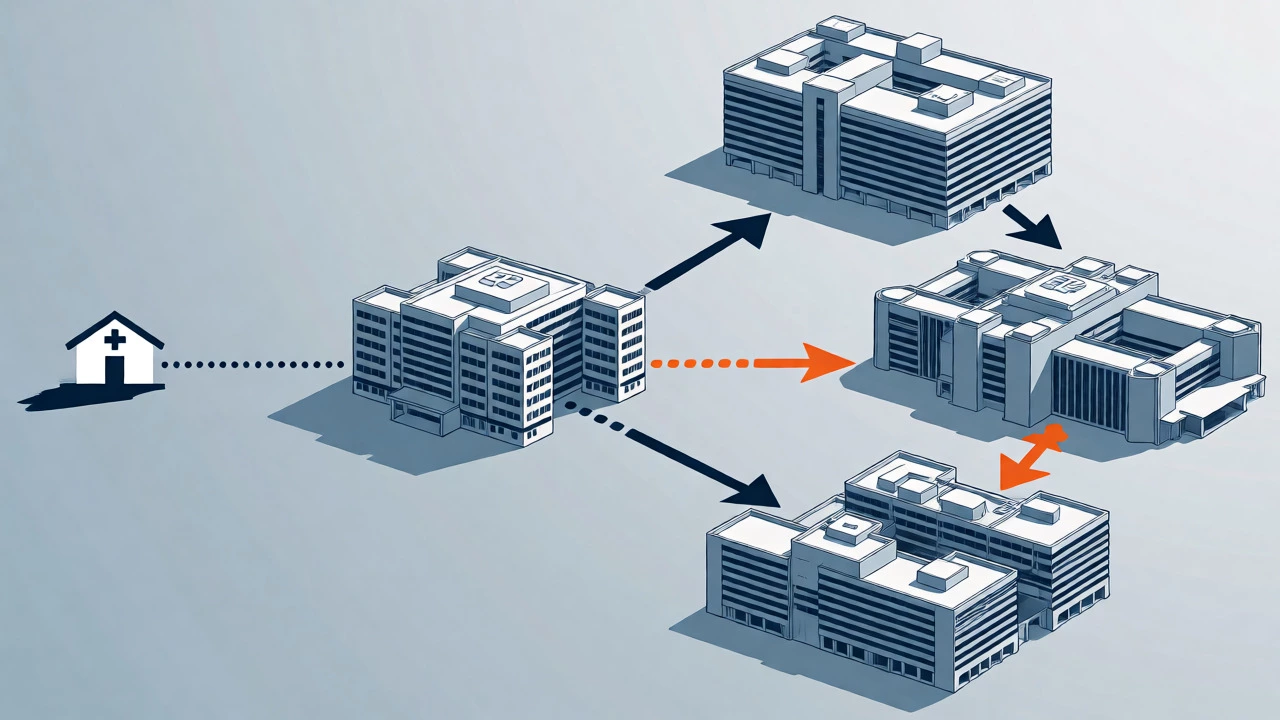
No hospital operates in isolation. Level 3 centers maintain formal transfer agreements with higher-level facilities. This means if your condition deteriorates unexpectedly, the logistics are already sorted. Helicopters or specialized ambulances can move you to a Level 1 center for neurosurgery or burn care.
This network effect strengthens the entire healthcare system. It prevents smaller hospitals from being overwhelmed by cases they aren’t equipped to handle, and it keeps major centers from clogging their beds with straightforward fractures. As a patient, this means faster access to appropriate care. You don’t wait three days for a bed at a prestigious university hospital when a local Level 3 center can fix your leg today.
Quality Metrics and Patient Outcomes
Don’t mistake "lower level" for "lower quality." Studies consistently show that for many trauma types, outcomes at Level 3 centers match or exceed those at larger institutions. Why? Because these hospitals focus intensely on core competencies. Their staff performs similar procedures frequently, leading to muscle memory and efficiency.
For instance, a study published in the Journal of Trauma found that mortality rates for isolated limb injuries were statistically identical across Level 1, 2, and 3 centers. The advantage of Level 1 appears mostly in rare, multi-system failures where rare specialists are needed. For the average person dealing with a bad accident, a Level 3 hospital is often the safest, fastest choice.
Is a Level 3 hospital good enough for heart attacks?
It depends. Most Level 3 hospitals can handle initial stabilization and administer clot-busting drugs. However, if you need a catheterization lab (cath lab) to open blocked arteries immediately, you might need a Level 1 or 2 center. Check if your local Level 3 has a cath lab; many do now, but some still transfer patients for this procedure.
Do Level 3 hospitals accept Medicaid?
Yes, under the Emergency Medical Treatment and Labor Act (EMTALA), any hospital with an emergency department must stabilize anyone regardless of ability to pay. Most Level 3 hospitals participate in Medicaid programs, but coverage specifics vary by state and plan. Always verify with the billing department post-treatment.
Can I choose my hospital after an accident?
Usually, no. EMS protocols prioritize proximity and capability. If you are unconscious or critically injured, paramedics follow strict guidelines to take you to the nearest appropriate trauma center. Once stabilized, you may have more say in transfers or follow-up care locations.
What happens if I go to a Level 3 for a brain bleed?
If the Level 3 lacks on-site neurosurgery, they will stabilize your airway and breathing, control bleeding, and rapidly transfer you to a Level 1 or 2 center with a neurosurgeon. The goal is to prevent secondary damage during transport, not necessarily to perform the surgery itself.
Are Level 3 hospitals part of big chains?
Many are. Large private healthcare groups often operate Level 3 facilities in suburban markets. Others are independent community hospitals. Being part of a chain can mean shared resources and standardized protocols, which often improves efficiency and consistency of care.
