 Mar, 1 2026
Medical Emergency Cost Estimator
Get an estimate of medical evacuation costs for your destination. This tool helps you understand why £5 million+ coverage is essential for overseas travel.
Estimated Emergency Costs
Warning: This estimate may be higher than your actual coverage. Many policies only offer £1 million coverage - far below the average evacuation cost.
If you’re traveling abroad and suddenly feel dizzy, chest pain, or break a bone, what happens next? For many UK travelers, the answer isn’t as simple as calling 999. The truth is, your NHS coverage doesn’t follow you overseas. Without the right preparations, a medical emergency abroad can turn into a financial disaster - and a logistical nightmare.
What Your NHS Coverage Does (and Doesn’t) Cover Overseas
The NHS is free at the point of use in the UK, but it doesn’t pay for emergency care in other countries. You can’t walk into a hospital in Spain, France, or Thailand and expect them to bill the NHS directly. There’s one exception: the European Health Insurance Card (EHIC), now replaced by the UK Global Health Insurance Card (GHIC). This card gives you access to state-provided healthcare in EU countries, Iceland, Liechtenstein, Norway, and Switzerland - but only at the same cost as a local resident. That means emergency care might be free or low-cost, but you’ll still pay for things like ambulance rides, private rooms, or follow-up treatments if they’re not covered by local systems.
Here’s the catch: GHIC doesn’t cover private hospitals, repatriation, or non-emergency care. If you need to be flown home because of a serious injury, that cost - often £10,000 or more - won’t be covered. And if you’re in a country without a reciprocal agreement with the UK, like the United States or Australia, you’re on your own unless you have travel insurance.
Why Travel Insurance Isn’t Optional - It’s Essential
Most UK travelers assume their credit card or package holiday includes medical coverage. It doesn’t. Basic travel insurance policies often cap medical expenses at £1 million, but some emergencies - like a spinal injury or severe stroke - can cost far more. A 2024 report from the Association of British Insurers found that the average cost of emergency medical evacuation from Southeast Asia was £18,500. From the U.S., it was £32,000.
Good travel insurance doesn’t just cover hospital bills. It includes:
- Emergency medical treatment up to £5 million
- Repatriation (flights home in a medical plane)
- 24/7 assistance hotlines
- Cover for lost or stolen prescription medications
- Extended stays if you’re too ill to fly
Don’t buy insurance the day before you leave. Policies bought after you’ve already traveled or after symptoms appear won’t cover you. The best time to get insured is when you book your trip.
What Happens When You Need Help Abroad
Let’s say you’re hiking in the Swiss Alps and fall, twisting your ankle badly. Here’s what actually happens:
- You call the local emergency number (144 in Switzerland). An ambulance arrives. You’re taken to the nearest hospital.
- You show your GHIC if you’re in the EU. If not, you’re asked to pay upfront - often £500-£2,000 depending on the treatment.
- You call your travel insurance provider’s 24/7 helpline. They verify your policy, coordinate with the hospital, and may pay the bill directly.
- If you’re stable enough, you’re flown home. The insurer arranges the flight and a medical escort.
- Back in the UK, you submit receipts for any out-of-pocket costs. Your insurer reimburses you.
Without insurance, you might be stuck in a foreign hospital until you can pay. Some clinics will release you once you settle the bill. Others will hold you until you do. That’s not a hypothetical scenario - it happens dozens of times a week.

What to Pack: The Emergency Kit You Can’t Forget
Most people pack chargers and adapters. Few pack what they really need:
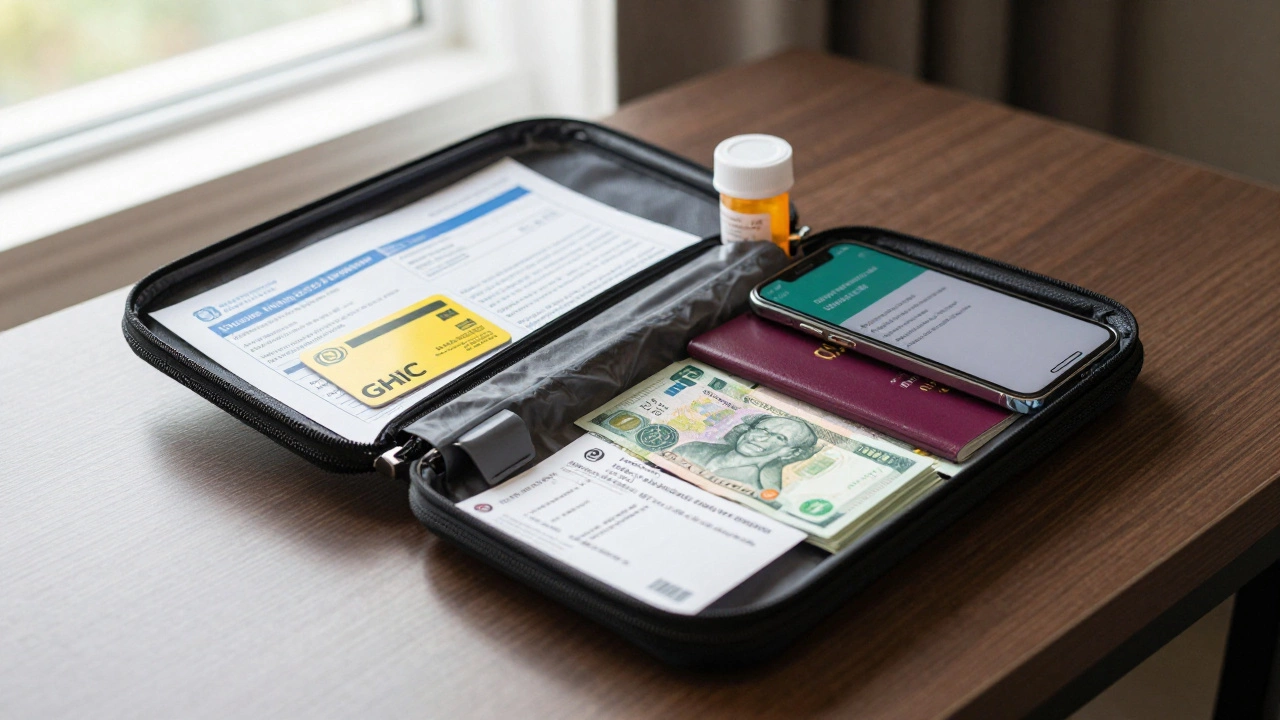
- Your GHIC card (if traveling in Europe)
- A printed copy of your travel insurance policy and emergency number
- A list of your medications with generic names (brand names vary globally)
- A small supply of essential prescriptions (in original containers)
- A note with your blood type, allergies, and emergency contacts
- A small amount of local currency for immediate costs
Keep all this in a waterproof pouch in your carry-on. If your checked luggage is lost, you’ll still have access to critical documents.
What to Do If You’re Denied Care
Some clinics abroad refuse to treat tourists without upfront payment. That’s legal - and common. But you still have rights:
- In EU countries, hospitals must stabilize you even if you can’t pay immediately.
- In the U.S., the Emergency Medical Treatment and Labor Act (EMTALA) requires hospitals to treat emergencies regardless of ability to pay - but you’ll still get billed afterward.
- Always ask for a written estimate before treatment.
- Contact your embassy. They can’t pay your bills, but they can help you find English-speaking doctors and contact your insurer.
Don’t assume you’ll be treated like a local. Always confirm coverage before accepting treatment.
What Happens If You Don’t Have Insurance?
People who skip travel insurance often think, “It won’t happen to me.” Then it does. In 2023, over 12,000 UK citizens were hospitalized abroad without adequate coverage. Many ended up in debt. One man from Manchester broke his leg while skiing in Austria. He didn’t have insurance. The hospital bill: £24,000. He had to take out a personal loan. His wife had to sell her car to pay it off.
The NHS won’t cover you. Your home insurance won’t cover you. Your credit card’s travel protection? It’s usually limited to $5,000 - nowhere near enough.
There’s no safety net. Only preparation.
How to Choose the Right Travel Insurance
Not all policies are equal. Here’s what to look for:
- Medical cover limit: Aim for at least £5 million. Some offer £10 million.
- Repatriation: Must be included. Don’t assume it’s there.
- Pre-existing conditions: Declare them. Some insurers offer coverage if you pay extra.
- Adventure sports: Skiing, scuba diving, hiking - check if they’re covered.
- Duration: Single trip vs. annual. If you travel more than twice a year, annual is cheaper.
Compare policies using comparison sites like Compare the Market or MoneySuperMarket. Read the fine print. Look for words like “emergency medical evacuation,” “repatriation,” and “24/7 assistance.” If they’re not mentioned, the policy isn’t good enough.
Final Checklist Before You Leave
Before you step onto the plane:
- ✅ Get travel insurance with £5 million+ medical cover and repatriation
- ✅ Apply for your GHIC if traveling in Europe (apply at nhs.uk/ghic)
- ✅ Print your insurance policy and keep it with your passport
- ✅ Save your insurer’s emergency number in your phone and on paper
- ✅ Pack essential meds in your carry-on with prescriptions
- ✅ Register with your country’s foreign travel advisory service (UK: foreign travel advice on gov.uk)
It takes 20 minutes. It could save you tens of thousands - or your life.
Do I still need travel insurance if I have a GHIC?
Yes. The GHIC only covers state-provided healthcare in certain countries. It doesn’t cover repatriation, private hospitals, lost medication, or medical evacuation. Travel insurance fills those gaps. Think of the GHIC as a bonus - not a replacement.
Can I use my UK health insurance abroad?
No. Private UK health insurance plans like Bupa or AXA only cover treatment within the UK. They don’t extend to overseas emergencies. You need separate travel insurance for that.
What if I have a pre-existing condition?
You can still get coverage - but you must declare it. Many insurers offer policies for conditions like diabetes, asthma, or heart disease. Premiums may be higher, but coverage is available. Don’t skip declaring it - if you don’t and you need treatment, your claim will be denied.
What happens if I need emergency care in the U.S.?
U.S. hospitals are required to treat emergencies under EMTALA, but you’ll be billed immediately. A single night in an ER can cost $10,000. Without insurance, you’ll owe that amount. Travel insurance with repatriation and medical coverage is the only way to protect yourself.
Is travel insurance cheaper if I book through my travel agent?
Not necessarily. Travel agents often sell basic policies with low limits. It’s better to compare standalone policies from insurers like Allianz, AXA, or LV= using comparison sites. You’ll usually find better coverage for less.
