 Jan, 5 2026
Most people think mental health is about fixing what’s broken. But real strength doesn’t come from fixing problems-it comes from building habits that keep you steady when life gets rough. The 5 C's of mental health aren’t a therapy technique or a clinical diagnosis. They’re practical, everyday habits used by therapists, coaches, and people who’ve learned how to stay grounded through job loss, grief, anxiety, or burnout. You don’t need a degree to use them. You just need to try them.
Connection: You’re Not Meant to Go It Alone
Loneliness isn’t just a bad feeling-it’s a biological risk factor. Studies show chronic loneliness increases your chance of early death as much as smoking 15 cigarettes a day. That’s not fearmongering. It’s data from the American Psychological Association. The first C is Connection. Not just having people around, but having real, honest conversations where you feel seen.
Think about the last time you said, “I’m fine,” when you weren’t. How did that make you feel afterward? Heavy? Empty? That’s your body telling you it needs connection. Start small. Text a friend: “Hey, I’ve been thinking about you. Want to grab coffee this week?” No agenda. No pressure. Just presence. If you’re shy, try joining a walking group, a book club, or a volunteer project. Shared activity builds trust faster than deep talks.
Connection isn’t about fixing your mood. It’s about reminding yourself you belong somewhere.
Control: Reclaiming Your Power, One Small Choice at a Time
When anxiety hits, it feels like everything’s spinning out of control. Your thoughts race. Your body tenses. You can’t sleep. The worst thing you can do? Try to control everything harder. That’s like trying to stop a tsunami with a bucket.
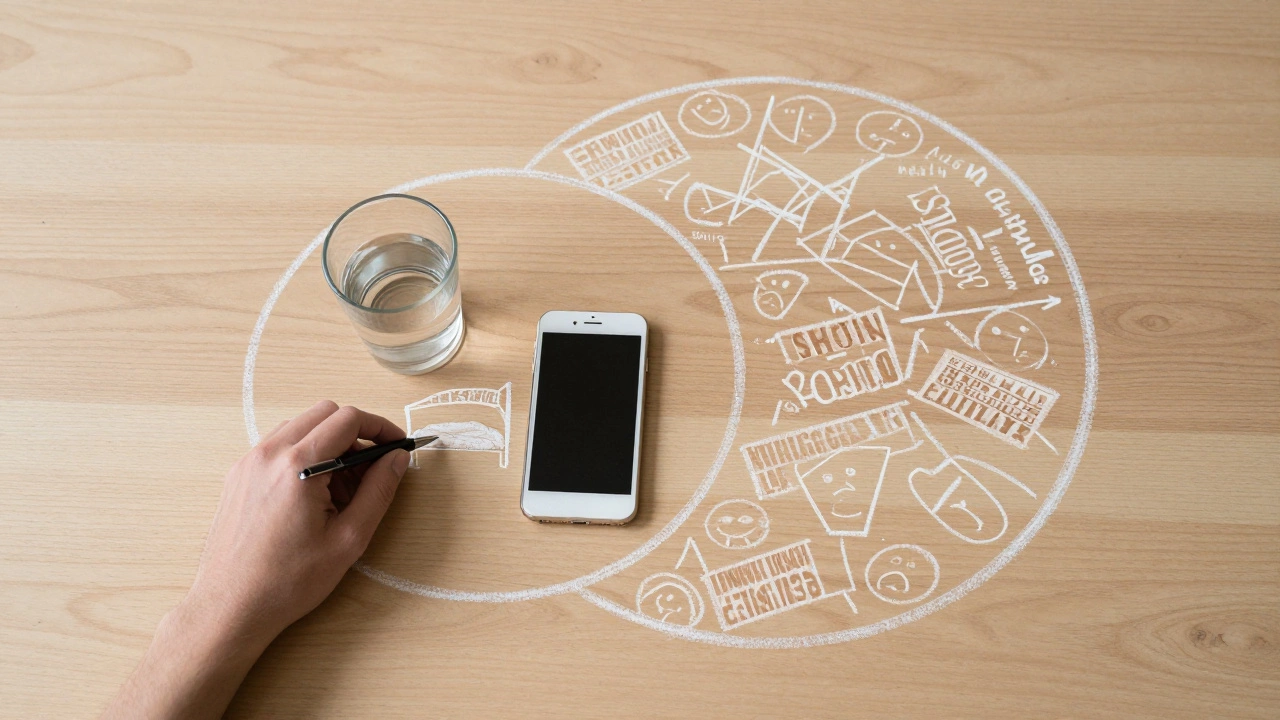
The second C is Control-but not the kind you think. It’s about focusing on what you actually can influence. Can you control your boss’s mood? No. Can you control how you respond to it? Yes. Can you control whether you eat three meals a day? Yes. Can you control whether you scroll for two hours before bed? Yes.
Therapists call this the “circle of control.” Draw two circles. Inside the small one, write things you can change: your sleep schedule, your water intake, your daily walk. Outside, write the rest: traffic, other people’s opinions, the news cycle. Spend your energy only on the small circle. Every time you make one small, intentional choice-like turning off notifications after 8 p.m.-you rebuild your sense of agency. That’s how you stop feeling helpless.
Competence: Small Wins Build Real Confidence
Depression doesn’t always look like crying. Sometimes it looks like sitting on the couch, staring at your phone, thinking, “I can’t do anything right.” That’s not laziness. That’s your brain telling you it’s tired of failure.
The third C is Competence. It’s not about being great at everything. It’s about proving to yourself that you can still do something-even if it’s tiny. Make your bed. Walk around the block. Cook a simple meal. Send one email. These aren’t chores. They’re evidence.
Every time you finish a small task, your brain releases a little dopamine. That’s not a reward. It’s a signal: “You still have power.” Over time, these micro-wins stack up. You stop believing you’re broken. You start believing you’re capable. That’s the foundation of mental resilience.
Don’t wait for motivation. Do it anyway. Then do it again tomorrow.
Character: Who You Are When No One’s Watching
Most mental health advice tells you to “be positive.” But what if you’re not feeling positive? What if you’re angry, scared, or numb? Trying to fake joy just makes you feel worse.
The fourth C is Character. It’s about staying true to your values-even when you don’t feel like it. Your values aren’t big slogans. They’re quiet, daily choices: honesty, kindness, patience, responsibility.
Maybe your value is fairness. So even when you’re exhausted, you listen to your partner without interrupting. Maybe your value is curiosity. So you read one page of a book instead of scrolling. Maybe your value is rest. So you say no to extra work-even if it means disappointing someone.
Character isn’t about being perfect. It’s about being consistent. When you act in line with your values, you build inner trust. You stop asking, “Who am I when I’m falling apart?” and start knowing: “I’m the person who shows up, even when it’s hard.”
Contribution: Why Your Presence Matters
When you’re struggling, it’s easy to feel like you’re a burden. That’s the lie depression tells you. But here’s the truth: you matter-not because of what you do, but because you’re here.
The fifth C is Contribution. It doesn’t mean saving the world. It means doing something, however small, that helps someone else. Making tea for a neighbor. Listening to a coworker vent. Holding the door for someone carrying too much. Writing a note to a friend who’s been quiet.
Research from the University of California shows that people who regularly contribute to others-even in tiny ways-report lower levels of anxiety and depression. Why? Because helping others reminds you that you’re not just a problem to be fixed. You’re a person with something to give.
Contribution isn’t about being heroic. It’s about being human. And when you’re feeling lost, that’s often enough to find your way back.

Putting It All Together: Your Daily Mental Health Routine
You don’t need to master all five C’s at once. Start with one. Pick the one that feels most missing in your life right now.
- Feeling isolated? Focus on Connection-reach out to one person this week.
- Feeling overwhelmed? Focus on Control-choose one small habit to stick to for seven days.
- Feeling worthless? Focus on Competence-do one thing you can check off, no matter how small.
- Feeling fake or disconnected? Focus on Character-act on one value, even if you don’t feel like it.
- Feeling invisible? Focus on Contribution-do one kind thing for someone else today.
Do that one thing every day for a week. Then add another. These aren’t quick fixes. They’re lifelong tools. The goal isn’t to be happy all the time. It’s to be steady. To know that even on your worst days, you still have power. You still have worth. You still belong.
Frequently Asked Questions
Are the 5 C's of mental health backed by science?
Yes. While the term "5 C's" isn’t an official clinical model, each component is rooted in evidence-based psychology. Connection is supported by studies on social support and longevity from the American Psychological Association. Control aligns with Cognitive Behavioral Therapy (CBT) principles around locus of control. Competence draws from self-determination theory and the power of small wins. Character is tied to values-based action in Acceptance and Commitment Therapy (ACT). Contribution is backed by research on prosocial behavior and reduced depression symptoms from the University of California. These aren’t just feel-good ideas-they’re tools therapists use daily.
Can I use the 5 C's if I'm on medication or in therapy?
Absolutely. The 5 C's aren’t a replacement for professional care-they’re a complement. Medication can help balance brain chemistry. Therapy can help you understand patterns. The 5 C's give you daily practices to build resilience between sessions. Many therapists encourage clients to use these tools as part of their recovery plan. They work best when combined with other supports, not instead of them.
What if I don’t feel like doing any of the 5 C's?
That’s normal. When you’re struggling, motivation disappears. That’s not weakness-it’s the illness talking. The trick isn’t to wait until you feel like it. It’s to act even when you don’t. Do the smallest version possible. If connection feels impossible, send a single emoji. If competence feels out of reach, just sit up in bed. If contribution feels pointless, smile at a stranger. Tiny actions still count. Progress isn’t loud. It’s quiet. It’s showing up, even when you’re exhausted.
How long until I see results from the 5 C's?
You’ll notice small shifts within a week-like sleeping a little better, feeling less overwhelmed, or having one moment where you don’t feel completely alone. Real change takes time. Think of it like building muscle. One push-up won’t change your body. But 30 days of one push-up a day? That changes everything. The 5 C's work the same way. Consistency beats intensity. Keep going, even if you don’t feel it yet.
Are the 5 C's only for people with diagnosed mental health conditions?
No. The 5 C's are for anyone who’s ever felt tired, overwhelmed, or disconnected. You don’t need a diagnosis to benefit from them. Life is hard. Everyone gets knocked down. These tools help you get back up-not because you’re broken, but because you’re human. Whether you’re dealing with stress at work, grief after a loss, or just the slow drain of daily life, the 5 C's give you a way to hold yourself together.
Next Steps
If you’re reading this and thinking, “I want to try this,” start today. Pick one C. Write it on a sticky note. Put it where you’ll see it-your mirror, your phone background, your coffee mug. Do one small thing that matches it. That’s it. No grand plan. No pressure. Just one step.
Tomorrow, do it again. And the next day. You’re not trying to fix yourself. You’re learning how to be kind to yourself-on the days you feel strong, and on the days you don’t.
