 Jul, 9 2026
Telehealth vs In-Person Cost Calculator
📱 Telehealth Visit
🏥 In-Person Visit
⚠️ Hidden Costs (In-Person Only)
Select which additional costs apply to your situation:
You have a sore throat, a rash that won’t go away, or just need a prescription refill. Your instinct might be to book an appointment with your local GP. But lately, you’ve seen ads for online doctor consultations, also known as telehealth, which promise convenience and lower prices. The big question on everyone’s mind in 2026 is simple: Is telehealth actually cheaper than going to the clinic?
The short answer is yes, usually. But it’s not always black and white. The savings depend heavily on your insurance plan, the type of care you need, and where you live. Let’s break down the real costs so you can stop guessing and start saving.
Why Virtual Visits Often Cost Less
To understand the price difference, you first need to look at what drives up the cost of a traditional in-office visit. When you walk into a doctor's office, you aren't just paying for the 15 minutes you spend talking to the physician. You are paying for the building, the electricity, the receptionist, the waiting room chairs, and the administrative staff who handle your paperwork. These are called overhead costs, and they are significant.
In contrast, a virtual consultation eliminates most of these physical expenses. The doctor doesn’t need to maintain a large clinic space to see you. They don’t need extra nurses to check your vitals if you’re just discussing a medication adjustment. This reduction in overhead allows providers to pass some of those savings on to you.
Think of it like buying coffee. Making it at home is cheap because you don’t pay for the shop rent. Buying it from a café is more expensive because you’re paying for the location and service. Telehealth is closer to making it at home-it strips away the "café" markup while keeping the core product (medical advice) intact.
Breaking Down the Prices: Out-of-Pocket Costs
If you pay cash without insurance, the difference is stark. In many regions, including parts of New Zealand and the US, a standard GP visit can range from $50 to $150 depending on the provider. A comparable telehealth appointment often sits between $30 and $75. Some digital-first clinics even offer subscription models where you pay a flat monthly fee for unlimited text-based advice and discounted video calls.
But most people use insurance. Here is where it gets tricky. Insurance companies love telehealth because it prevents unnecessary trips to the Emergency Room (ER). As a result, many plans now cover virtual visits at the same rate as in-person ones, meaning your co-pay is identical. However, some insurers incentivize you by offering a lower co-pay for telehealth-say, $10 for a video call versus $25 for an office visit.
You need to check your specific policy. Look for terms like "telemedicine parity" or "virtual care co-pays." If your insurer hasn’t updated its benefits recently, you might find that the direct-to-consumer price of a telehealth app is still cheaper than your high-deductible insurance co-pay.
| Service Type | Cash Price (No Insurance) | Typical Co-Pay (With Insurance) | Hidden Costs |
|---|---|---|---|
| In-Office GP Visit | $80 - $150 | $20 - $50 | Parking, travel time, missed work |
| Telehealth Video Call | $40 - $80 | $10 - $30 (or $0) | Internet data usage |
| Urgent Care Center | $150 - $300 | $50 - $100 | Long wait times, parking fees |
| Emergency Room | $500 - $3,000+ | $100 - $500+ | High stress, extensive testing |
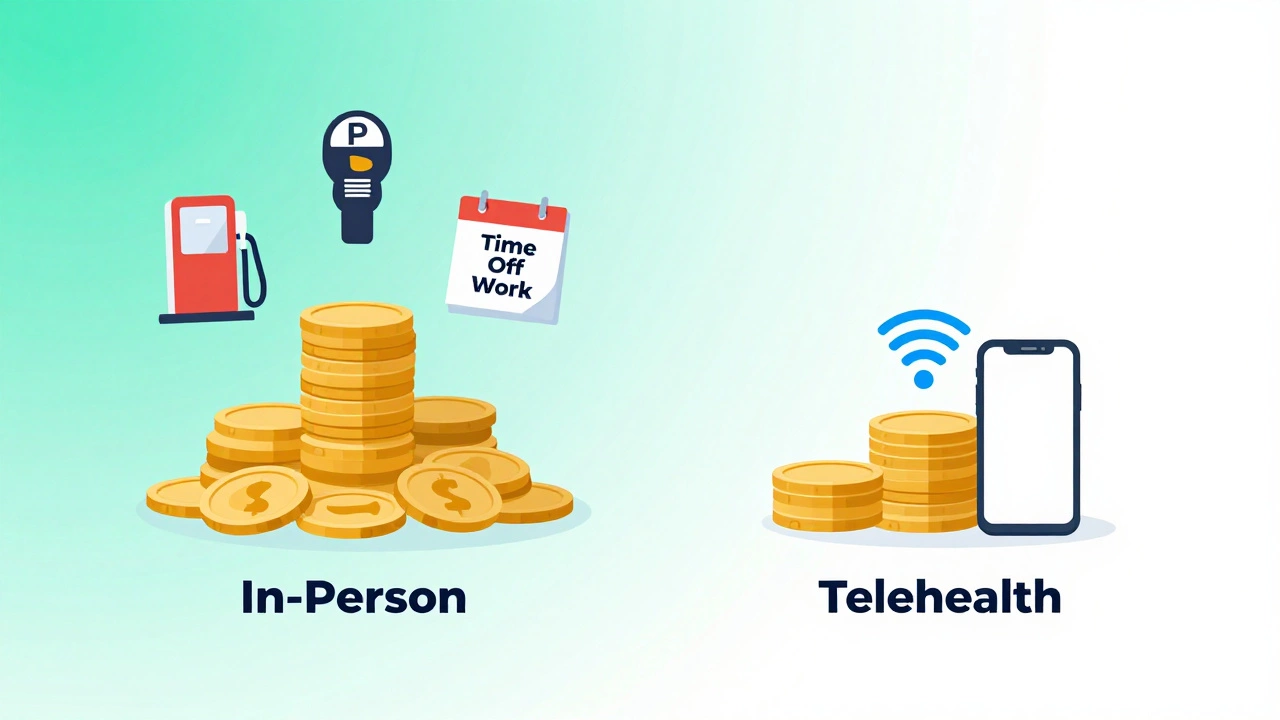
The Hidden Costs of Going to the Clinic
We often forget about the indirect costs of seeing a doctor in person. These are the expenses that don’t show up on your medical bill but definitely impact your wallet.
- Transportation: If you drive, you’re burning gas. If you take public transport, you’re paying fares. In cities with expensive parking, like Auckland or San Francisco, a single visit can add $20-$40 in parking fees alone.
- Time Off Work: Many jobs don’t allow flexible scheduling. Taking an hour off to sit in a waiting room might mean losing wages. For hourly workers, this can easily exceed the cost of the consultation itself.
- Childcare: If you have kids, you can’t just leave them at home. You might need to hire a babysitter for two hours, which adds another layer of expense that telehealth completely avoids.
- Contagion Risk: Going to a clinic when you’re sick exposes you to other illnesses. While not a direct financial cost, getting sick again means more days off work and potentially higher medical bills later.
When you add these hidden costs to the base price of an in-office visit, the gap widens significantly in favor of remote healthcare services.
When Telehealth Isn’t the Cheaper Option
It’s important to be realistic. Telehealth isn’t a magic bullet for every medical issue. There are scenarios where trying to save money with a virtual visit ends up costing you more in the long run.
First, consider conditions that require physical examination. If you have abdominal pain, a broken bone, or severe breathing difficulties, a doctor needs to touch you, listen to your lungs, or order immediate imaging. A telehealth doctor will likely tell you to go to an Urgent Care or ER. In this case, you’ve paid for a virtual visit AND an in-person emergency visit, doubling your costs.
Second, think about follow-up care. Sometimes, a quick virtual check-in is great, but if the problem persists, you’ll need to come in anyway. If you have a chronic condition like diabetes or hypertension, regular in-person monitoring of blood pressure and blood sugar levels is essential. Relying solely on remote checks might miss critical changes in your health.
Finally, technology barriers can create unexpected costs. If you don’t have a reliable smartphone or stable internet connection, you might struggle to connect. While rare, this could lead to failed appointments and rescheduling fees, or worse, delayed treatment that becomes more expensive to fix.

Insurance Coverage and Parity Laws
In 2026, the landscape of insurance coverage has shifted dramatically. During the pandemic, many governments temporarily required insurers to cover telehealth at the same rate as in-person care. In many places, these rules have become permanent.
This concept is known as telehealth parity. It means that if your insurance covers a mental health therapy session in person, it must also cover it via video call. This has been particularly beneficial for mental health services, which were historically underutilized due to stigma and access issues. Now, patients can see therapists from their living rooms without worrying about higher out-of-pocket costs.
However, not all insurers play fair. Some private plans may still exclude certain types of virtual care or require prior authorization. Always verify with your provider before booking. Ask specifically: "Does my plan cover telehealth for this specific condition, and is there a different co-pay?"
How to Choose: A Simple Decision Guide
So, how do you decide? Use this simple rule of thumb:
- Is it urgent and life-threatening? Go to the ER. Don’t risk it with a screen.
- Does it require hands-on treatment? (Stitches, X-rays, injections) Go to Urgent Care or your GP.
- Is it a minor illness, prescription refill, or mental health support? Use telehealth. It’s faster, safer, and almost always cheaper.
- Are you unsure? Try a low-cost telehealth triage service first. They can advise if you need to come in, saving you a wasted trip if you don’t.
By using telehealth for the right issues, you keep your healthcare spending down and your schedule open. It’s not just about saving a few dollars; it’s about taking control of your health management in a way that fits your modern life.
Is telehealth covered by Medicare or government health schemes?
In many countries, including New Zealand and the US, government health schemes have expanded coverage for telehealth. In the US, Medicare covers many telehealth services permanently. In New Zealand, some GP practices offer virtual visits covered by the standard subsidy, but this varies by practice. Always check with your specific provider to confirm if your virtual visit is subsidized.
Can I get a prescription from an online doctor?
Yes, for many common conditions. Online doctors can prescribe antibiotics for infections, refills for chronic medications, and treatments for allergies or skin conditions. However, they cannot prescribe controlled substances like opioids or ADHD medications in many jurisdictions without an initial in-person evaluation. The prescription is sent directly to your local pharmacy.
What if the telehealth doctor misdiagnoses me?
While less common, misdiagnosis can happen in any setting. Reputable telehealth platforms have licensed physicians who follow strict clinical guidelines. If you feel your symptoms are worsening or not improving after a virtual visit, you should seek in-person care immediately. Most platforms encourage this escalation if the virtual assessment is insufficient.
Do I need special equipment for a telehealth visit?
You generally only need a smartphone, tablet, or computer with a camera, microphone, and stable internet connection. Some advanced platforms may ask you to use connected devices like digital thermometers or blood pressure monitors, but these are optional and often rented or provided by the service if needed.
Is telehealth secure and private?
Legitimate telehealth providers use end-to-end encryption to protect your data, similar to banking apps. They must comply with strict privacy laws like HIPAA in the US or the Privacy Act in New Zealand. Avoid using informal methods like social media DMs or unsecured email for medical consultations.
