 Oct, 8 2026
Dental Implant Cost & Efficiency Estimator
Select your treatment scenario to estimate the number of implants required and the approximate private clinic costs in the UK.
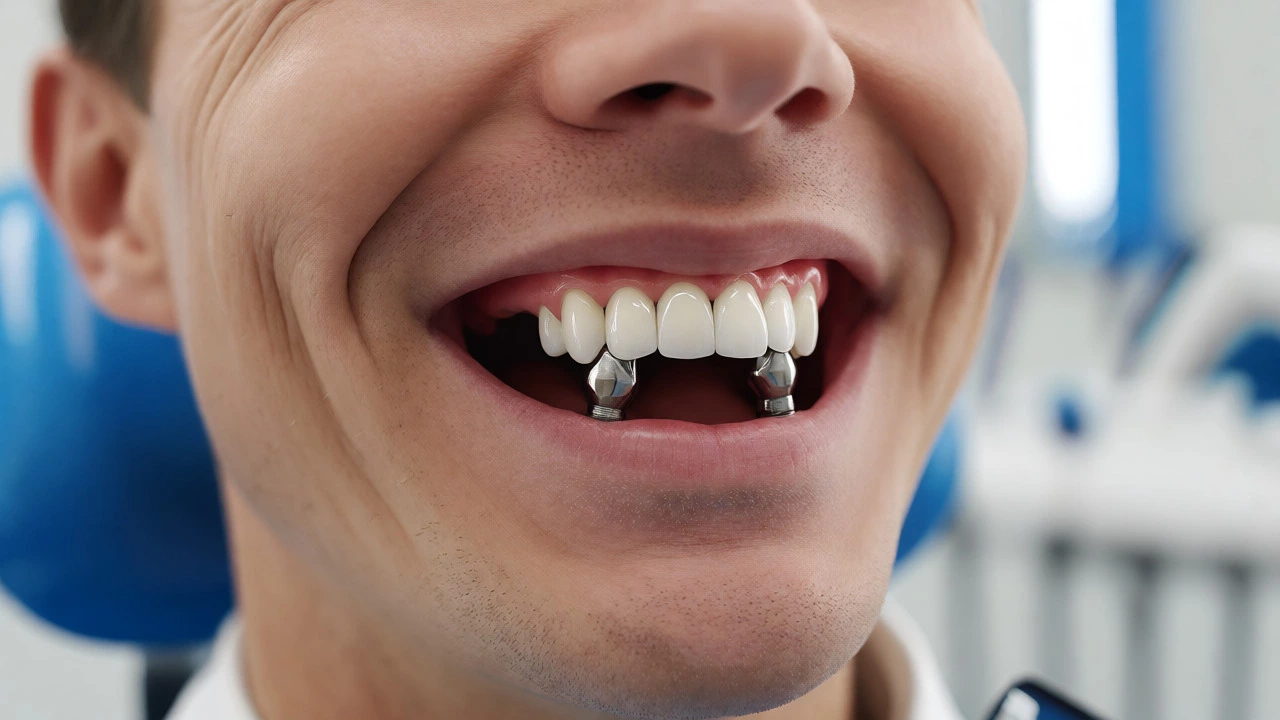
Imagine waking up with a gap in your smile that’s been bothering you for years. You visit a dentist in London or Manchester, and they suggest an implant. But then the question hits: "Wait, do I need one titanium screw for every single missing tooth?" It’s a common worry, especially when you see the price tags. The short answer is no. You absolutely do not need one implant per tooth. In fact, modern dentistry allows you to support multiple teeth with a single anchor. This isn’t just about saving money; it’s about preserving bone health and simplifying your recovery.
The number of teeth you can attach to one dental implant is a surgical component that interfaces with the bone of the jaw to support a dental prosthesis such as a crown, bridge, or denture depends entirely on the type of restoration you choose and the strength of your jawbone. Most patients are surprised to learn that a single implant can hold two or even three teeth if they are part of a bridge. For those missing an entire arch, just four to six implants can support a full set of 12 to 14 prosthetic teeth. Let’s break down exactly how this works so you can make a smart decision for your mouth and your wallet.
The Standard Rule: One Implant Per Tooth?
In traditional dentistry, the gold standard has long been the single-tooth implant. If you lose one molar, you get one implant post placed into the jawbone, topped with a custom-made crown. This setup mimics natural teeth most closely because each tooth moves independently under pressure. There is no transfer of force from one tooth to another, which reduces the risk of mechanical failure. However, this approach requires enough space and healthy bone volume at the specific site.
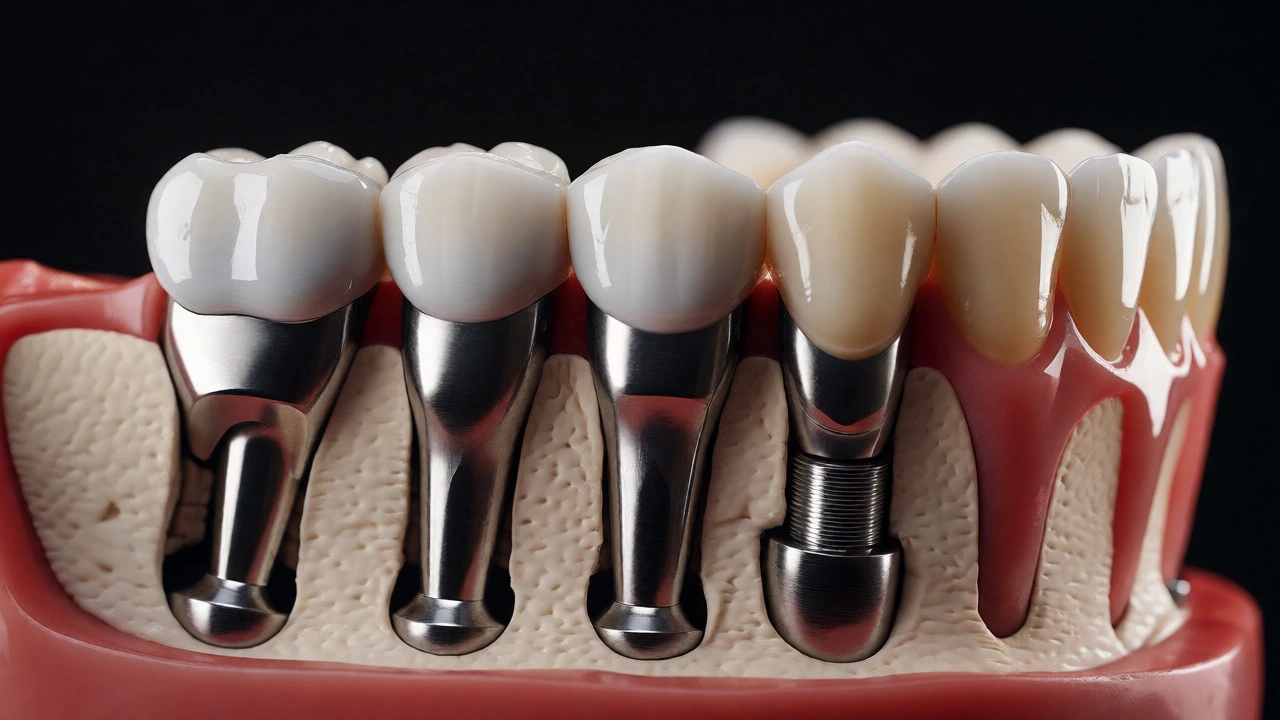
But what happens when you miss two or three adjacent teeth? Placing three separate implants might seem logical, but it’s often unnecessary and more expensive. Instead, dentists frequently use an implant-supported bridge a fixed dental restoration that replaces missing teeth by attaching artificial teeth to implants. Here, two implants act as pillars, holding up a pontic (the false tooth) in the middle. So, in this scenario, one implant effectively supports 1.5 teeth on average. This method is highly effective for replacing multiple consecutive missing teeth without drilling down neighboring healthy teeth, unlike traditional bridges.
All-on-4 and All-on-6: Full Arch Solutions
If you’ve lost most or all of your teeth in one jaw, placing an implant for every remaining socket would mean eight to ten screws per jaw. That’s a lot of surgery, healing time, and cost. Enter the All-on-4 a technique that uses only four implants to support a full arch of prosthetic teeth concept. Developed by Nobel Biocare, this procedure uses just four strategically angled implants to support a full upper or lower arch of 12 to 14 teeth. Two implants go straight into the front of the jaw, while the back two are tilted at 30-45 degrees to bypass areas with low bone density and avoid nerves or sinuses.
This tilt increases the surface area for contact with the bone, providing stability without needing bone grafts in many cases. The result? You leave the clinic with a full set of teeth in one day. Some clinics offer All-on-6 a variation using six implants for added stability in complex cases, which spreads the load even further across the jaw. These techniques revolutionized restorative dentistry in the UK, offering immediate function and aesthetics for patients who previously faced removable dentures.
Factors Determining How Many Teeth You Can Attach
You can’t just decide to hang five teeth off one screw. Physics plays a huge role here. Think of an implant like a flagpole. If you put a giant banner on a small pole in high winds, the pole bends or breaks. Your jawbone is the ground, and chewing forces are the wind. Several critical factors determine the safe limit:
- Bone Density and Volume: Hard, dense bone holds implants tighter. Soft bone may require fewer teeth per implant or longer posts.
- Implant Diameter and Length: Wider and longer implants have more surface area for osseointegration (fusion with bone), allowing them to support more weight.
- Chewing Habits: Do you grind your teeth (bruxism)? Heavy grinders put excessive stress on implants, limiting the span of a bridge they can safely support.
- Location in the Mouth: Front teeth handle less force than molars. A single implant can easily support a central incisor, but supporting a molar alone requires careful planning.
Comparing Restoration Options
To help you visualize the trade-offs, here’s a breakdown of common scenarios. Note that costs vary significantly across the UK depending on whether you’re using the NHS (rarely covers implants) or private clinics.
| Configuration | Implants Used | Teeth Replaced | Best For |
|---|---|---|---|
| Single Crown | 1 | 1 | Isolated missing tooth |
| Fixed Bridge | 2 | 3 | Two adjacent missing teeth |
| Cantilever Bridge | 1 | 2 | One missing tooth next to an implant |
| All-on-4 | 4 | 12-14 | Full arch restoration |
| Overdenture | 2-4 | Full Denture Set | Stabilizing loose dentures |
Risks of Overloading an Implant
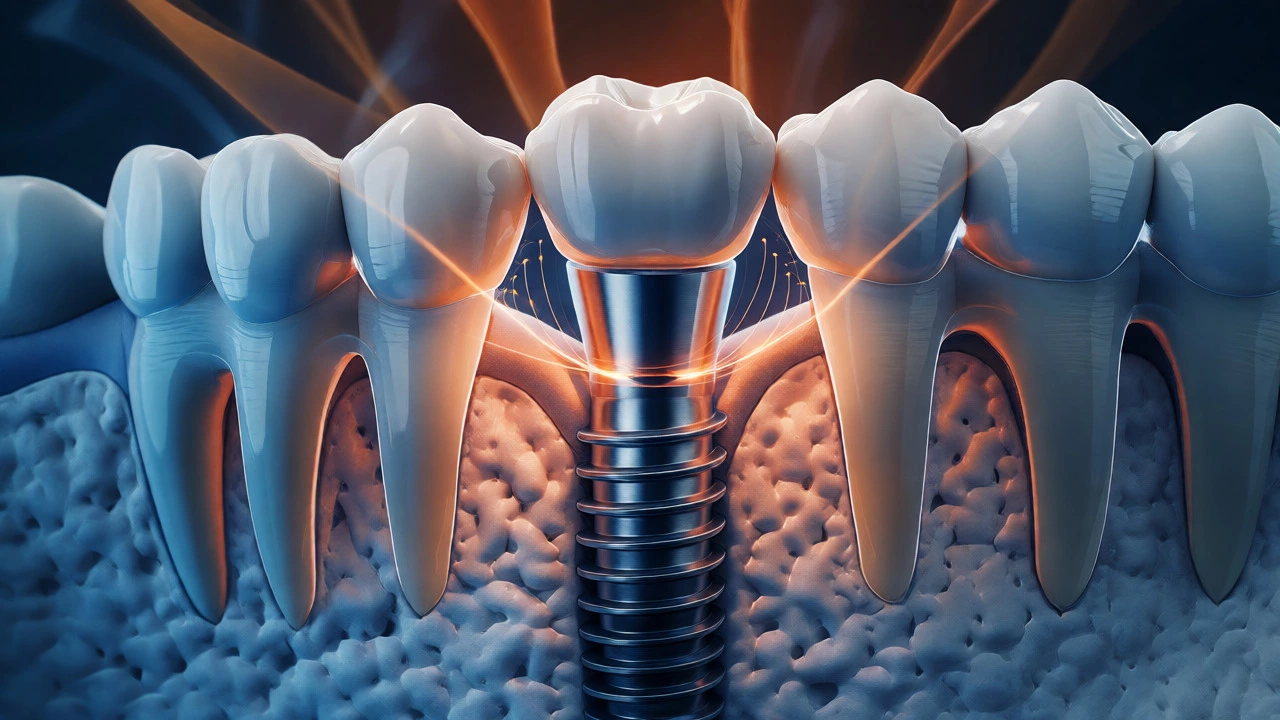
Why don’t we just put 20 teeth on one implant? Because of biomechanical limits. When too many teeth are attached to a single anchor, the leverage effect increases. This creates shear forces that can cause micro-movements. Even microscopic movement prevents proper healing and can lead to peri-implantitis-an inflammatory condition affecting the soft and hard tissues around the implant. Over time, this causes bone loss, leading to implant failure.
Symptoms of overload include pain when biting, loosening of the crown, or swelling of the gums. In severe cases, the implant itself fractures. That’s why your dentist will calculate the occlusal load-the amount of force exerted during chewing-before finalizing your treatment plan. They might recommend night guards if you clench your jaw, protecting your investment from nighttime stress.
Cost Implications in the UK
Let’s talk numbers. In the UK, a single dental implant typically ranges from £2,000 to £3,500 including the crown. If you needed three separate implants for three missing teeth, that’s £6,000 to £10,500. Using a two-implant bridge instead cuts the cost significantly, perhaps to £4,000-£7,000. For full arches, All-on-4 packages often range from £8,000 to £15,000 per jaw. While this seems high, compare it to ten individual implants costing £20,000+. Fewer implants mean less surgery, faster recovery, and lower overall expense. Always ask for a detailed breakdown of fees, including abutments, crowns, and follow-up visits, as hidden costs can add up.
Who Is Not a Candidate?
Not everyone can benefit from multi-tooth implants. Patients with uncontrolled diabetes, heavy smokers, or insufficient bone height may struggle with integration. Smoking restricts blood flow, delaying healing and increasing failure rates. If you smoke, quitting before surgery dramatically improves success odds. Also, certain medications like bisphosphonates (used for osteoporosis) can affect bone remodeling, requiring special clearance from your doctor. A thorough CBCT scan-a 3D X-ray-is essential to map out nerve positions and bone quality before deciding how many teeth to hang off each screw.
Maintenance Matters More Than Number
Whether you have one tooth on an implant or fourteen, hygiene is non-negotiable. Unlike natural teeth, implants don’t have periodontal ligaments to fight off bacteria. You must clean around the abutment carefully. Use interdental brushes, water flossers, and antibacterial rinses. Neglect leads to gum disease, which destroys the bone supporting the implant. Regular check-ups every six months allow your hygienist to monitor bone levels via X-rays. Catching issues early saves the implant; ignoring them means losing both the tooth and the anchor.
Can one dental implant replace two teeth?
Yes, through a cantilever bridge where one implant supports two teeth, or as part of a larger bridge structure. However, cantilevers place extra stress on the implant, so they are used cautiously and only when biomechanically sound.
How many implants are needed for a full mouth?
Typically, 4 to 6 implants per jaw are sufficient for a full arch using All-on-4 or All-on-6 techniques. Traditional methods might require 8-10 implants, but modern protocols optimize placement for efficiency and stability.
Are implant-supported bridges cheaper than individual implants?
Generally, yes. Replacing three missing teeth with two implants and a bridge is usually less expensive than placing three separate implants and three crowns. It also involves less surgical trauma and shorter healing times.
Does the number of teeth per implant affect longevity?
It can. Overloading an implant with too many teeth increases mechanical stress, potentially leading to screw loosening or bone loss. Proper planning ensures the implant size matches the load, maintaining longevity comparable to single-tooth implants.
What if I don't have enough bone for multiple teeth?
Bone grafting can augment the jaw to support more implants. Alternatively, tilted implants (as in All-on-4) utilize existing bone better, avoiding the need for extensive grafting in many cases.
