 Sep, 28 2026
Uninsured Health Risk Estimator
This tool estimates your relative risk profile if you were currently uninsured in the US, based on factors discussed in the article such as age, chronic conditions, and employment type.
Your Estimated Uninsured Risk Profile
Health Impact Analysis
Financial Exposure
*This is an educational estimation tool based on general trends cited in the article. It does not constitute medical or financial advice.
Imagine waking up with chest pains, knowing the ambulance ride alone could cost more than your monthly rent. For millions of people in the United States, this isn't a hypothetical scenario-it's a daily reality. When we ask how many people died without health insurance, we aren't just looking for a number. We're uncovering a systemic failure where financial barriers directly translate into lost lives. In 2024, studies estimated that lack of insurance contributed to roughly 50,000 preventable deaths annually in the US alone. That’s not just a statistic; it’s a community-sized population vanishing every year because they couldn't afford to see a doctor.
You might think, "Surely emergency rooms save everyone?" They don't. Emergency departments are designed to stabilize you, not to cure you. If you have cancer but no insurance, you might get painkillers in the ER, but you won't get chemotherapy until you've spent months begging for charity care or selling assets. By then, the disease has often progressed to a stage where treatment is less effective. This delay is the silent killer behind the numbers.
The Data Behind the Deaths
To understand the scale, we need to look at the intersection of poverty and healthcare access. A landmark study published in the American Journal of Public Health found that uninsured adults had a 40% higher risk of death compared to those with employer-sponsored coverage. Why such a huge gap? It comes down to prevention. Insured people get screenings. They catch high blood pressure before it causes a stroke. They detect melanoma when it's a spot on their back, not when it's spread to their lungs.
Let's break down who is most at risk. Young adults aged 18-34 have the highest uninsured rates in the US, hovering around 16%. But here’s the twist: while they die less from chronic diseases like heart failure, they suffer disproportionately from injuries and mental health crises. An uninsured young person with a broken leg might walk on it for weeks because they can't afford the cast. That leads to permanent disability. An uninsured person with severe depression might not seek therapy until a crisis lands them in jail rather than a hospital ward.
Why Emergency Rooms Aren't Enough
A common myth is that hospitals must treat everyone regardless of ability to pay. Under the Emergency Medical Treatment and Labor Act (EMTALA), yes, they must stabilize you. But "stabilize" does not mean "treat." If you have a non-life-threatening infection that requires antibiotics, an ER might send you home with a prescription you can't afford to fill. You return three days later, septic and critically ill. Now, the treatment is ten times more expensive, and your chances of survival drop significantly.
Consider diabetes. An insured diabetic gets regular check-ups, insulin, and education on diet. Their life expectancy is nearly normal. An uninsured diabetic skips appointments, rationing insulin to make it last. They develop neuropathy, lose sensation in their feet, get a small cut, and end up with a foot ulcer. Without timely specialist care, that ulcer becomes gangrene. Amputation follows. Then, complications from surgery or immobility lead to early death. The root cause wasn't the biology; it was the bill.
The Ripple Effect on Families
When someone dies without insurance, the trauma doesn't stop at the grave. Medical debt is the leading cause of bankruptcy in the United States. Even if the patient survives, the family often faces financial ruin. This stress impacts the health of surviving spouses and children. Studies show that children in households with significant medical debt have higher rates of anxiety and missed school days due to untreated minor illnesses. The cycle continues: poor health leads to poor work performance, which leads to lower income, which perpetuates the lack of insurance.
This isn't just a US problem. While countries like New Zealand and the UK have universal public systems, gaps still exist. In New Zealand, ACC covers accidents, and the public system covers serious illness, but dental care and elective surgeries often require private cover. If you live in Auckland and wait two years for a hip replacement because you're in the public queue, your quality of life suffers. If you fall and break that hip during the wait, ACC steps in. But if you have a chronic condition that worsens slowly, the public system may prioritize acute cases, leaving you to manage symptoms with over-the-counter meds until it becomes an emergency.

Comparing Healthcare Models
It helps to see how different systems handle these risks. The table below compares the US model against systems with broader coverage, highlighting how insurance status affects outcomes.
| System Type | Primary Barrier | Preventive Access | Financial Risk | Mortality Impact |
|---|---|---|---|---|
| US Employer-Based | Job loss / High premiums | High if employed | High (deductibles/copays) | Moderate for low-income |
| US Uninsured | Cost of all services | Very Low | Catastrophic | High (preventable deaths) |
| UK NHS | Wait times | Universal | Low (free at point of use) | Low (acute care focus) |
| NZ Public + ACC | Elective waits / Dental | High for serious conditions | Low for covered services | Low for accidents/serious illness |
Notice the difference in "Financial Risk." In the US, being uninsured means every visit is a gamble with your savings. In the UK or NZ, the risk shifts to time. Waiting is frustrating, but waiting rarely kills you in the same way that skipping insulin does. However, long waits for elective procedures can lead to deterioration, proving that even universal systems have flaws that affect longevity and quality of life.
Who Is Most Vulnerable?
If you want to predict who is at highest risk of dying without adequate care, look at three factors: race, geography, and employment type.
- Racial Disparities: Black and Hispanic populations in the US are disproportionately uninsured. This isn't just about culture; it's about structural economic barriers. These groups face higher rates of hypertension and diabetes, making the lack of insurance even more deadly.
- Rural vs. Urban: Rural areas have fewer doctors. If you're uninsured in rural Mississippi, your nearest specialist might be two hours away. Add the cost of gas and lost wages for a day off work, and many simply don't go. Urban uninsured patients have better access to clinics but often face longer waitlists and overcrowded facilities.
- Gig Economy Workers: Freelancers, Uber drivers, and contract workers often miss out on employer-sponsored plans. They earn too much for Medicaid subsidies but too little to afford robust private plans. They are the "invisible middle," falling through the cracks of both safety nets.
These groups don't die because they ignore their health. They die because the system demands they choose between eating and seeing a doctor. And often, they choose eating.
What Can Be Done?
Solving this isn't just about politics; it's about practical steps individuals can take. If you find yourself in a coverage gap, here is what works:
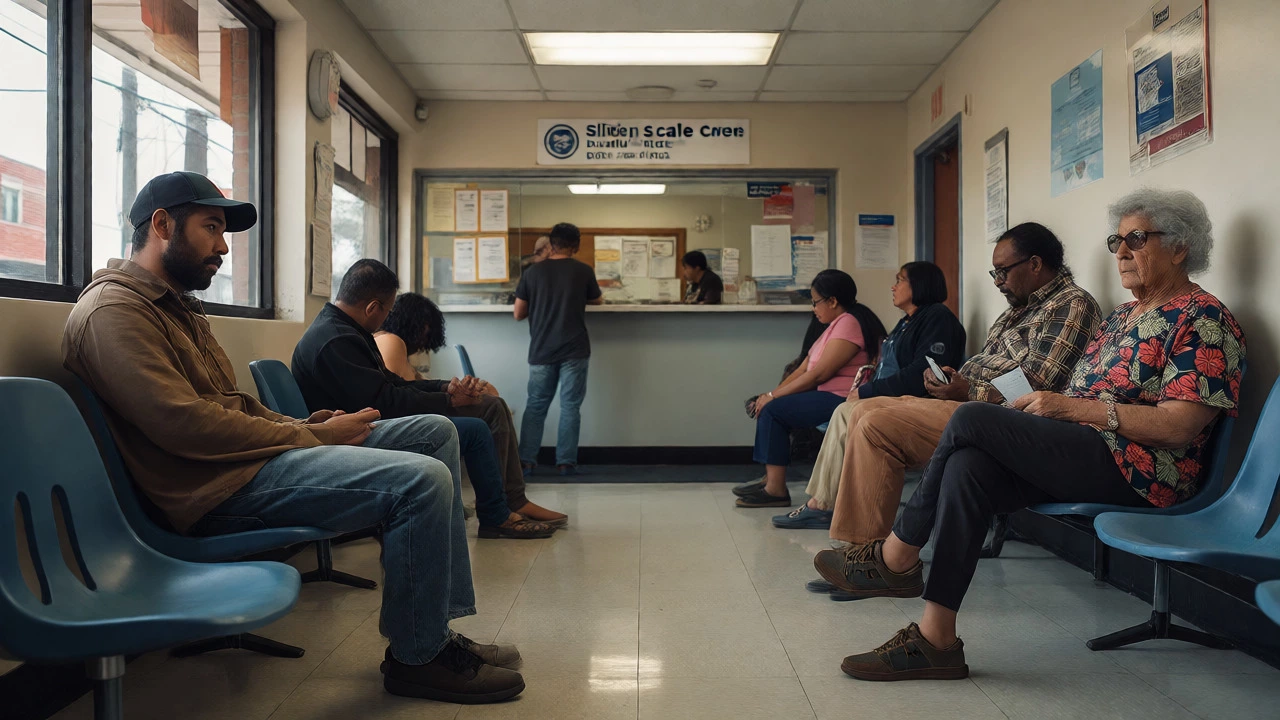
- Use Community Health Centers: These centers charge based on sliding scales. You pay what you can afford, sometimes as little as $10 for a visit. They provide primary care, prescriptions, and referrals.
- Negotiate Bills: Never accept the first invoice. Hospitals often offer discounts for cash payments or set up interest-free payment plans. Ask for the "financial counselor" immediately.
- Generic Drugs: Always ask for generic versions. Brand-name drugs can cost 80% more. Apps like GoodRx help find coupons, reducing costs further.
- Telehealth for Minor Issues: Online consultations are cheaper than office visits. For rashes, colds, or follow-ups, a $40 telehealth call beats a $200 urgent care copay.
For policymakers, the solution lies in expanding preventive care access. If we caught cancers earlier and managed diabetes proactively, the 50,000 annual deaths would shrink dramatically. It’s cheaper to keep people healthy than to fix them after they break.
Frequently Asked Questions
Do hospitals turn away uninsured patients?
No, under federal law (EMTALA) in the US, hospitals cannot turn away patients experiencing a medical emergency, regardless of insurance status. However, they can and do refuse non-emergency elective procedures if the patient cannot pay upfront or arrange financing. This distinction is crucial: you will be stabilized, but you may not receive comprehensive treatment.
Is medical debt a direct cause of death?
Medical debt itself doesn't kill you, but the behavior it triggers does. Fear of bills leads people to skip medications, avoid check-ups, and delay necessary surgeries. This delay allows manageable conditions like hypertension or early-stage cancer to progress into fatal stages. Therefore, while debt is a financial state, its consequence is often a physiological decline leading to premature death.
How does New Zealand compare to the US regarding uninsured deaths?
New Zealand has a universal public healthcare system, so very few people die strictly due to "lack of insurance" in the American sense. Most residents have free access to public hospital and GP services. However, gaps exist in dental care, physiotherapy, and elective surgeries. Deaths related to healthcare access in NZ are more often linked to wait times or geographic isolation rather than outright inability to pay for essential emergency care.
Can I buy health insurance after I get sick?
In the US, thanks to the Affordable Care Act (ACA), insurers cannot deny you coverage or charge you more because of pre-existing conditions. However, there are enrollment periods. If you miss the open enrollment window, you generally need a qualifying life event (like marriage or job loss) to sign up. Getting sick is not typically a qualifying event, meaning you might have to wait months for coverage to start, during which time your condition could worsen.
Does having Medicaid guarantee good health outcomes?
Medicaid provides coverage, but access varies by state. Some states have strict limits on which doctors accept Medicaid, leading to "underinsurance" where you have a card but can't find a provider. Additionally, administrative hurdles can interrupt coverage. While Medicaid significantly reduces mortality compared to being uninsured, it does not always match the outcomes of employer-sponsored plans due to network limitations and lower reimbursement rates for providers.
