 Dec, 1 2025
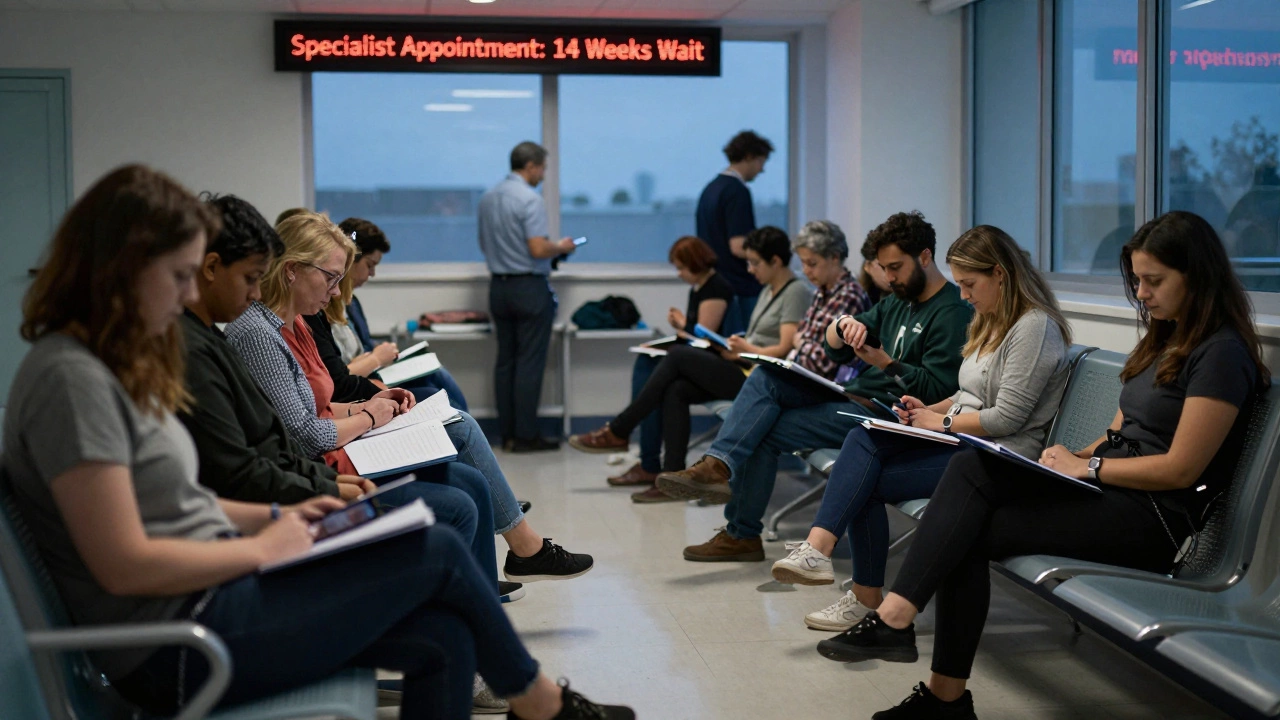
If you’ve ever needed an NHS appointment and felt like you’re stuck in a never-ending loop of phone calls and online forms, you’re not alone. In 2025, the average wait for a routine specialist appointment in England is 14 weeks. For non-urgent surgery, it’s closer to 20 weeks. And for mental health services? Some patients wait over six months just for their first assessment. These aren’t rare cases - they’re the new normal.
What’s Really Happening Behind the Numbers
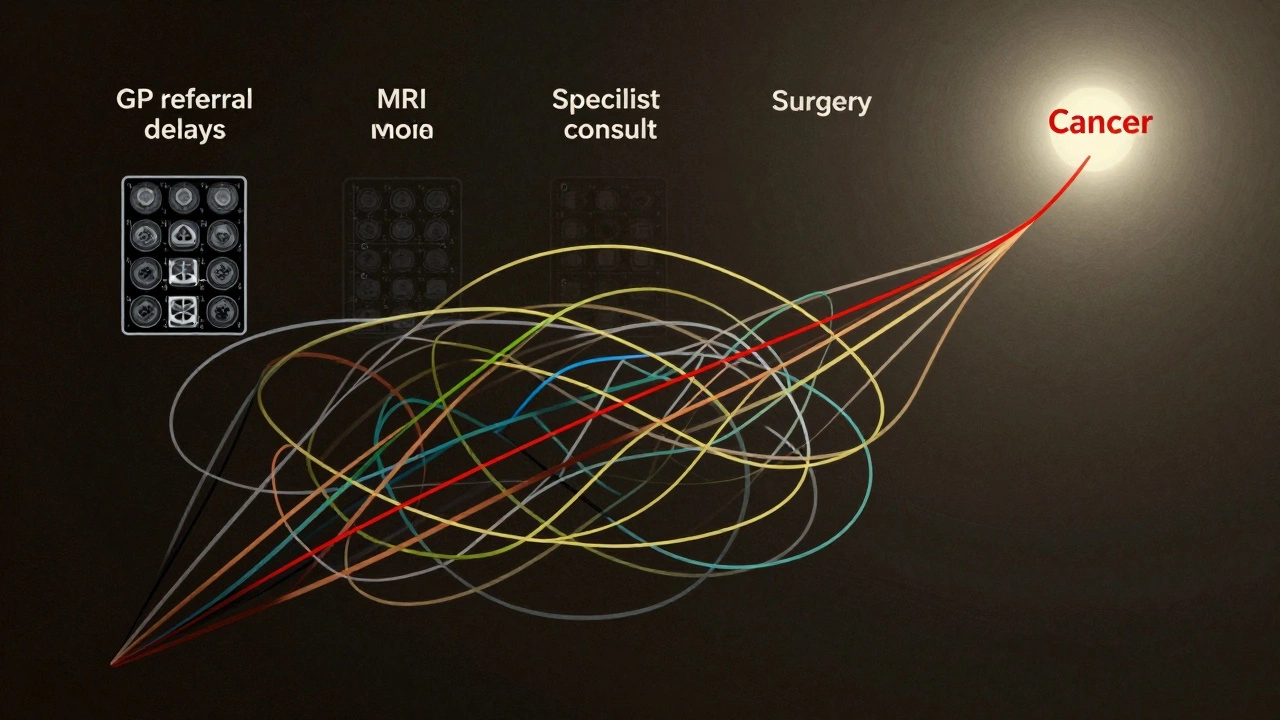
The NHS doesn’t have a single waiting list. It’s a web of overlapping delays: GP referrals, diagnostic scans, specialist consultations, and then surgery or therapy. Each step adds time. A patient with back pain might wait 6 weeks to see a GP, then another 8 weeks for an MRI, then 12 weeks for an orthopaedic appointment. By the time they get treatment, it’s been six months - and their pain has gotten worse.
In 2024, over 7.3 million people in England were waiting for routine hospital care. That’s more than the population of Scotland. And while the NHS aims to treat 92% of patients within 18 weeks, only 68% actually made it in time last year. The gap isn’t getting smaller. It’s growing.
Why the Wait Is So Long
It’s not just about staff shortages - though there are 120,000 fewer NHS workers than needed. It’s also about what happens after someone gets a referral. Hospitals are running at 98% capacity. Operating theatres are booked solid, often with emergency cases pushing elective surgeries further back. Diagnostic equipment like MRI and CT scanners are in short supply. One hospital in Manchester reported a 22-week wait just for an MRI scan.
And then there’s the backlog. During the pandemic, over 5 million planned operations were canceled or delayed. Three years later, those delays are still echoing through the system. Many patients who were put on hold in 2020 are still waiting. Some have been waiting since before the pandemic even started.
How Long Do You Wait for Different Treatments?
Waiting times vary wildly depending on what you need. Here’s what real patients are experiencing in late 2025:
- GP appointment: 3-7 days for urgent issues, 14-21 days for routine ones
- Specialist referral: 8-14 weeks (up from 4-6 weeks in 2020)
- Elective surgery (hip/knee replacement): 18-26 weeks
- Diagnostic scan (MRI/CT): 10-20 weeks
- Psychological therapy (IAPT): 12-28 weeks
- Cancer treatment start: 62 days from urgent referral (NHS target), but 1 in 5 patients wait longer
These aren’t averages - they’re the median waits. That means half of patients wait even longer. And if you live in a rural area or a region with fewer hospitals, your wait could be 30% longer than someone in a big city.
Who Gets Priority?
The NHS doesn’t treat everyone in first-come, first-served order. Patients are triaged by urgency. A cancer patient with a suspected tumour gets seen within two weeks. Someone with a broken ankle gets priority over someone with mild arthritis. But here’s the catch: many people don’t know how to prove their condition is urgent.
Patients with chronic pain, mental health issues, or rare conditions often get stuck in the middle. Their symptoms are real, but not immediately life-threatening. So they’re pushed to the back of the queue. A 2025 survey found that 41% of patients waiting over 12 weeks for mental health care said their condition had worsened during the wait.
What Can You Do While You Wait?
Waiting doesn’t mean doing nothing. Here’s what actually helps:
- Ask for a discharge summary - If you’ve been seen before, get a copy of your notes. Many GPs don’t have full records, and having your own can speed things up.
- Request a second opinion - If your GP refers you to a specialist but you’re told to wait 16 weeks, ask if you can be referred to another hospital. Some areas have multiple providers with shorter waits.
- Use NHS Pathways - This online tool helps you assess your symptoms and can sometimes fast-track you to urgent care if your case meets certain criteria.
- Join a patient advocacy group - Groups like Patients Association or Healthwatch can help you navigate the system and push for faster access.
- Track your symptoms - Keep a daily log of pain levels, mobility, mood, or other symptoms. This gives doctors concrete data to argue for urgency.
One woman in Birmingham waited 18 months for a knee replacement. She started a symptom journal, showed it to her GP, and asked to be placed on a waiting list at a nearby private hospital that partners with the NHS. She got her surgery in 9 weeks.

Is Private Care Faster?
Yes - but it’s not a simple fix. Private healthcare can cut your wait from months to weeks. A hip replacement through a private provider might take 3-6 weeks. But the cost? £10,000-£15,000. Most people can’t afford that upfront.
There’s a middle ground: NHS-funded private treatment. If you’ve waited over 18 weeks, you’re legally entitled to be referred to a private provider at no cost. But few patients know this exists. And even when they do, the referral process can take another 4-8 weeks. So while it’s an option, it’s not easy to access.
What’s Changing in 2025?
The government launched the NHS Elective Recovery Plan in early 2025. It’s aiming to clear 1.5 million of the 7.3 million people waiting. So far, they’ve opened 40 new treatment hubs, hired 5,000 additional staff, and started using mobile MRI units in rural areas. But progress is slow.
Some hospitals are now using AI to predict which patients are most likely to deteriorate while waiting. Those patients get bumped up the list. Others are using text reminders to reduce no-shows - which used to waste 12% of appointment slots.
But none of this fixes the root problem: not enough staff, not enough beds, not enough scanners. Until those are solved, waits will keep creeping up.
What This Means for You
If you’re waiting for NHS care right now, you’re not failing. You’re not being lazy. You’re caught in a system that’s stretched beyond its limits. But you’re not powerless.
Know your rights. Ask questions. Document everything. Push for referrals to alternative providers. And don’t accept silence as an answer. The NHS was built on the idea that care should be free and available to all - but that promise only works if people speak up when it’s broken.
Waiting too long isn’t just inconvenient. It can turn a manageable condition into a crisis. A small joint problem can become permanent damage. Mild anxiety can turn into severe depression. Early intervention saves lives - and money. The longer you wait, the harder it gets for everyone.
How long is the average wait for an NHS GP appointment in 2025?
For urgent issues, most patients get seen within 3 to 7 days. For routine appointments, the average wait is 14 to 21 days. In rural areas or high-demand practices, it can stretch to 3 weeks or more.
Can I pay to skip the NHS waiting list?
You can’t just pay to jump ahead in the NHS queue. But if you’ve waited over 18 weeks for treatment, you have the legal right to be referred to a private provider at no cost to you. This is called NHS-funded private treatment. You still need a referral from your GP, but the NHS pays for it.
Why are mental health waits so long on the NHS?
There’s a severe shortage of mental health professionals - only 1 in 4 people who need therapy get seen within the 18-week target. Demand has surged since the pandemic, but funding hasn’t kept up. Many services are still using outdated referral systems, and some patients wait over 6 months for their first session.
Are NHS waiting times worse in some parts of the UK?
Yes. Waiting times are consistently longer in Northern England, Wales, and rural Scotland compared to London and the South East. Hospitals in deprived areas often have fewer staff, older equipment, and higher patient loads. For example, an MRI scan in parts of Wales can take 25 weeks, while in London it’s closer to 12.
What should I do if I’m waiting more than 18 weeks?
Contact your GP and ask for a referral to an alternative provider under the NHS’s right-to-treat policy. You can also call the NHS Non-Emergency Number (111) and ask for help navigating your options. Keep records of all your communications - they can help you push for faster action.
Can I get a second opinion on my NHS referral?
Absolutely. You have the right to ask your GP for a second referral to a different specialist or hospital. Some hospitals have shorter lists. Don’t be afraid to ask - many patients who do this cut their wait time in half.
