 Aug, 31 2026
NHS vs Private Dental Implant Cost Estimator
Why use this tool? The NHS rarely covers implants, but they do cover bridges and dentures (Band 3). This estimator helps you compare the upfront cost of a private implant against the recurring replacement costs of NHS alternatives over time.
Key Insights from the Article
- NHS Coverage: Rarely covers implants unless due to congenital defects, severe trauma, or cancer-related surgery.
- Long-Term Value: Implants preserve jawbone structure, preventing facial collapse associated with dentures/bridges.
- Bone Grafting: If your jawbone has shrunk, add £500–£1,000 to your private quote.
You walk into your local dentist’s office with a missing tooth, hoping for a quick fix. You expect the NHS to cover it like they do with fillings or extractions. But then comes the shock: the dentist says implants aren’t covered. Is that true? Are you stuck paying thousands out of pocket, or is there a loophole you’re missing?
The short answer is frustratingly simple: generally, no. The National Health Service does not routinely fund dental implants for cosmetic reasons or even for most functional replacements. However, "generally" is doing a lot of heavy lifting here. There are specific clinical exceptions where the NHS will step in, and understanding them could save you a significant amount of money. Let’s break down exactly what the rules are, why they exist, and what your actual options are if you need an implant.
The Hard Truth About NHS Coverage
It helps to understand how the NHS categorizes dental treatments. They use a banding system (Band 1, 2, and 3) to determine costs and coverage. Implants don’t fit neatly into this traditional model because they are considered high-cost, elective procedures rather than essential emergency care. For the vast majority of patients, an implant is viewed as a way to replace a tooth that has been lost, but the NHS provides cheaper alternatives-like bridges or dentures-to achieve the same goal.
Think of it this way: if you lose a key to your house, the NHS will give you a lockbox to store your keys safely (a bridge or denture). They won’t necessarily pay for a brand-new smart lock installation (an implant) unless losing that key poses a severe medical risk. This distinction between "essential function" and "optimal restoration" is the core reason most people end up paying privately.
When Does the NHS Actually Pay?
So, when do you get lucky? The NHS funds implants only in rare cases involving congenital defects or severe trauma. These are strictly regulated by commissioning groups, meaning the criteria can vary slightly depending on where you live in England, Scotland, Wales, or Northern Ireland. If you fall into one of these categories, you might qualify for fully funded treatment.
The primary scenarios include:
- Congenital Absence: If you were born without certain teeth, such as lateral incisors, and have a condition like ectodermal dysplasia.
- Severe Trauma: If you lost teeth due to a road traffic accident or assault, and standard dentures would cause significant psychological or physical distress.
- Cancer Treatment: Patients who have had jaw surgery following cancer removal often require implants to restore basic oral function.
- Mucosal Disease: Conditions like lichen planus or mucous membrane pemphigoid where wearing a denture causes pain or ulceration.
If you think you fit one of these descriptions, don’t just assume. Ask your dentist for a referral to a specialist oral surgery unit. They assess whether your case meets the specific clinical guidelines set by NHS England or your devolved nation’s health board.
The Cost Reality: Private vs. NHS
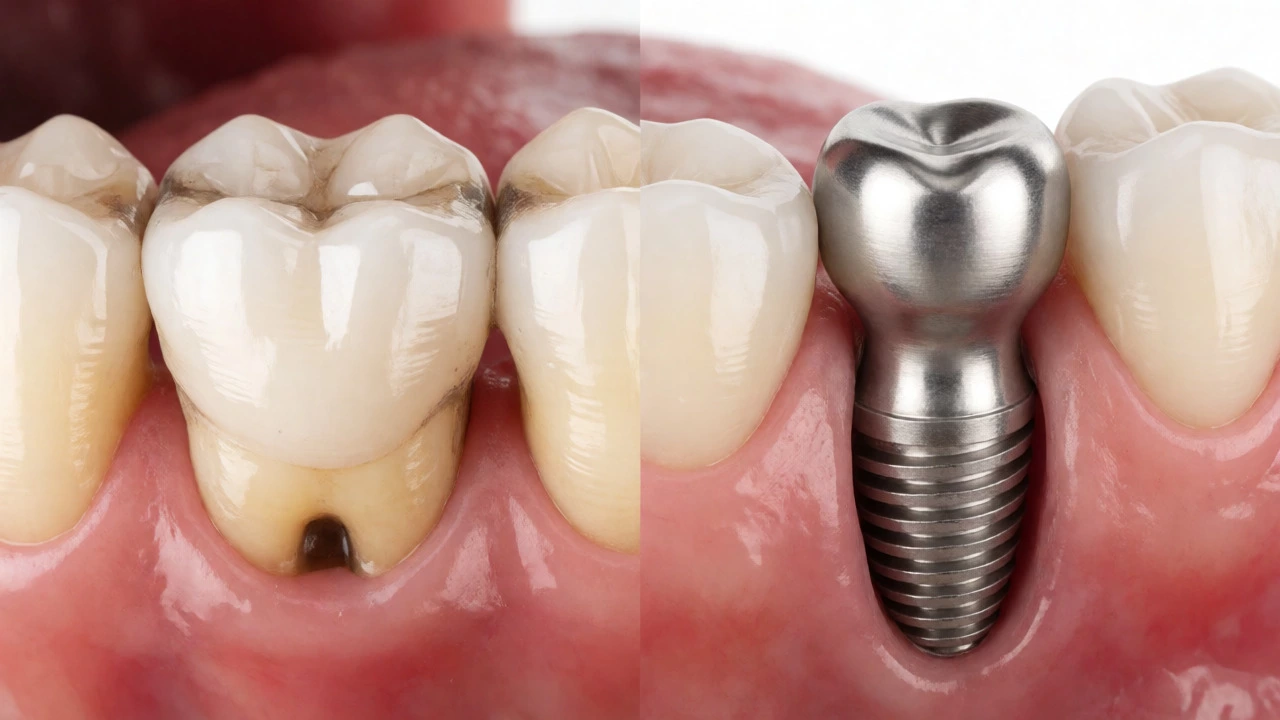
If you don’t meet those strict criteria, you’re looking at private costs. And let’s be honest, they aren’t cheap. A single dental implant in the UK typically ranges from £2,500 to £4,500. This price tag usually includes the titanium post, the abutment, and the crown. But wait-there’s more. You might also need bone grafts if your jawbone has shrunk since the tooth was lost, which can add another £500 to £1,000 to the bill.
Compare this to NHS Band 3 treatment, which covers crowns, bridges, and dentures. As of recent updates, Band 3 costs around £306.80 in England (prices fluctuate slightly across regions). That’s a massive gap. Why pay ten times more? Because implants preserve the jawbone, don’t rely on neighboring teeth for support, and last significantly longer than bridges.
| Treatment Type | Average Cost (UK) | Lifespan | Bone Preservation |
|---|---|---|---|
| NHS Bridge | £306.80 (Band 3) | 10-15 years | No (bone resorbs) |
| NHS Denture | £306.80 (Band 3) | 5-10 years | No (bone resorbs) |
| Private Implant | £2,500 - £4,500 | 20+ years / Lifetime | Yes (stimulates bone) |
Why Implants Are Worth the Wait (and the Wallet)
You might be thinking, "Can I just get a bridge? It’s way cheaper." Sure, you can. But consider the long-term math. A bridge requires grinding down two healthy adjacent teeth to act as anchors. Those teeth are now vulnerable. If one fails, you might need to replace the whole bridge. An implant stands alone. It doesn’t touch its neighbors. If you maintain good hygiene, it can last a lifetime.
Furthermore, implants prevent facial collapse. When you lose a tooth, the bone beneath it starts to dissolve because it’s no longer stimulated by chewing forces. Over time, this changes your face shape, making you look older. Bridges and dentures sit on top of the gum; they don’t stop this process. Implants go into the bone, acting like a real root. This isn’t just vanity-it’s structural health.
How to Get Help with Costs
Staring at a £3,000 quote can be daunting. But you don’t always have to write a check upfront. Several pathways can ease the financial burden.
First, check your dental insurance. Many policies exclude routine implants but cover them if they result from an accident. Read the fine print carefully. Some insurers offer "implant-only" plans specifically for this scenario.
Second, consider dental tourism. Countries like Hungary, Turkey, and Poland offer high-quality implants for 50-70% less than UK prices. Just ensure the clinic is accredited by the General Dental Council (GDC) equivalent standards and ask about aftercare logistics. If something goes wrong, who fixes it when you’re back home?
Third, look into payment plans. Most private practices offer interest-free credit over 12-24 months. Spreading £3,000 over two years makes it manageable for many households.
Common Pitfalls to Avoid
Don’t let a sales pitch rush you. One common mistake is assuming all "cheap" implants are created equal. Titanium grade matters. Surface texture affects healing speed. A £1,500 implant from a discount chain might use lower-grade components compared to a £3,500 implant from a specialist surgeon. Always ask for the brand and warranty details.
Another trap is ignoring pre-existing conditions. Gum disease must be treated before placing an implant. If you skip this step to save money, the implant may fail within months, costing you double in the long run. Treat the foundation first, then build the house.
Does the NHS cover dental implants for elderly patients?
Not automatically. Age alone isn't a criterion. Elderly patients still need to meet the strict clinical guidelines regarding congenital defects, trauma, or severe mucosal diseases. Otherwise, they will likely be offered dentures under Band 3 treatment.
Can I claim dental implants on tax in the UK?
Generally, no. Unlike some countries, the UK does not allow individuals to deduct dental expenses from their income tax unless the treatment is medically necessary for a disability-related issue, which is rare for standard implants.
Are dental implants covered by PIP (Personal Independence Payment)?
PIP itself doesn't pay for treatments directly. However, if you receive PIP, you might qualify for the HC2 certificate, which covers NHS dental costs. But remember, NHS dental costs rarely include implants unless you meet the specific surgical criteria mentioned earlier.
What is the success rate of dental implants?
With proper care, dental implants have a success rate of over 95% after ten years. Factors like smoking, uncontrolled diabetes, and poor oral hygiene can lower this percentage significantly.
How long does the implant process take?
Typically 3 to 6 months. This includes the initial consultation, the surgical placement of the titanium post, a healing period for osseointegration (bone fusing to the implant), and finally fitting the crown.
