 Jul, 20 2026
UK Healthcare Cost Estimator
Your Situation
Estimated Total Cost
Based on 1 year stay
Breakdown
Imagine you’ve just landed in London. You have a job offer, a lease signed, and your bags are unpacked. Then, you get sick. A simple fever turns into a worry: will this cost me a fortune? For decades, the answer was a reassuring "no." The National Health Service (NHS) was free at the point of use for everyone. But the rules changed. Today, if you are not a British citizen or an EU national with settled status, the short answer is yes-you likely pay. But it’s not a bill handed to you after every doctor's visit. It’s a system built on upfront fees and residency status.
Understanding how NHS charges work for non-residents can feel like navigating a maze. One wrong turn means unexpected bills. This guide cuts through the confusion. We’ll look at who pays what, when you might be charged, and how to protect yourself financially while living or visiting the UK.
The Core Rule: Ordinary Residence
The entire system hinges on one concept: Ordinary residence. If you are ordinarily resident in the UK, you get free NHS care. If you are not, you generally do not. So, what does "ordinarily resident" mean? It doesn’t just mean you’re currently in the country. It means you are living here lawfully, voluntarily, and for a settled purpose. It implies you intend to stay for a significant period.
If you are a tourist, a student on a short-term visa, or someone working temporarily without long-term rights, you are usually considered a visitor. Visitors are not ordinarily resident. Therefore, they are subject to charges for most NHS services. This distinction is critical because it determines whether you pay a flat annual fee or face per-service billing.
| Status | Payment Method | Key Requirement |
|---|---|---|
| British Citizens | Tax-funded (Free) | Resident in UK |
| EU/EEA/Swiss Nationals | GHIC/EHIC Card or Settled Status | Valid card or immigration status |
| Long-term Visa Holders | Immigration Health Surcharge (IHS) | Visa duration > 6 months |
| Short-term Visitors/Tourists | Direct Billing (150% rate) | Travel Insurance recommended |
The Immigration Health Surcharge (IHS)
For most people moving to the UK for work, study, or family reasons, the primary way they "pay" for healthcare is through the Immigration Health Surcharge (IHS). Introduced in 2015, this is a mandatory fee paid upfront when applying for a visa that lasts longer than six months. Think of it as a pre-paid access pass to the NHS. Once you’ve paid it, you are treated exactly like a British resident. You register with a GP, see specialists, and get emergency care without additional charges.
As of 2024, the standard rate for most applicants is £1,035 per year. Students and those under 18 pay a reduced rate of £776 per year. While this sounds expensive compared to the old system, it provides certainty. You won’t get surprise bills for routine check-ups or chronic condition management. However, there are gaps. The IHS covers NHS services, but it doesn’t cover private healthcare, dental treatments beyond basic emergencies, or prescriptions in England (though Scotland, Wales, and Northern Ireland have different prescription policies).
It’s important to note that paying the IHS doesn’t guarantee immediate access. You still need to register with a local General Practitioner (GP). Without a GP, accessing secondary care (like hospitals) can be difficult unless it’s an emergency. Make sure to book an appointment with a GP soon after arriving. Many surgeries require proof of address and your visa documents.
What If You Don’t Have a Long-Term Visa?
If you’re visiting the UK for less than six months-whether for tourism, business meetings, or short courses-you don’t pay the IHS. Instead, you fall into the "overseas visitor" category. Here, the NHS operates on a chargeable basis. Most hospital treatments are billed at 150% of the standard NHS tariff. Why 150%? The extra 50% is meant to cover the administrative costs of charging overseas patients.
This includes:
- Emergency department visits (unless it’s a true life-threatening emergency)
- Outpatient appointments
- Inpatient stays
- Surgeries
However, some services remain free regardless of your status. These include:
- A&E (Accident & Emergency) treatment for urgent conditions
- Family planning services
- Treatment for certain infectious diseases (like TB)
- Compulsory psychiatric treatment
Even if you get free A&E treatment, you might still be billed for follow-up care or medications provided during that visit. The hospital will ask for your passport details upon arrival. They will determine your eligibility for free care. If you’re deemed chargeable, they may ask for a deposit before non-urgent treatment begins.

Prescription Costs and Dental Care
Even if you pay the IHS, you aren’t entirely shielded from out-of-pocket costs. In England, each prescription item costs £9.90 (as of 2024). This applies to everyone, including British citizens. If you take multiple medications, this adds up quickly. Some groups are exempt, such as children under 16, seniors over 60, and people with specific medical conditions. Check if you qualify for exemptions via a Prescription Prepayment Certificate (PPC), which caps your annual spending.
Dental care is another area where costs vary. NHS dentistry has three bands of charges. Band 1 (examination, diagnosis, prevention) is around £26. Band 2 (fillings, root canals) is approximately £73. Band 3 (crowns, dentures) is roughly £316. However, finding an NHS dentist who accepts new adult patients is notoriously difficult in many parts of the UK. Many foreigners opt for private dental care, which offers faster appointments but higher prices.
Travel Insurance: Your Safety Net
If you’re a short-term visitor, travel insurance isn’t just a recommendation-it’s essential. The NHS charges can escalate rapidly. A single night in a hospital bed can cost hundreds of pounds. Surgery can run into thousands. Travel insurance should cover:
- Medical repatriation (flying you home if needed)
- Private hospital treatment (to avoid NHS queues and charges)
- Pre-existing conditions (check policy terms carefully)
When buying insurance, ensure it explicitly covers UK healthcare. Some generic policies exclude countries with high medical costs. Also, keep digital copies of your policy and emergency contact numbers. If you’re hospitalized, the hospital will contact your insurer directly in some cases, but having the details handy speeds up the process.
Special Cases: EU Citizens and Reciprocal Agreements
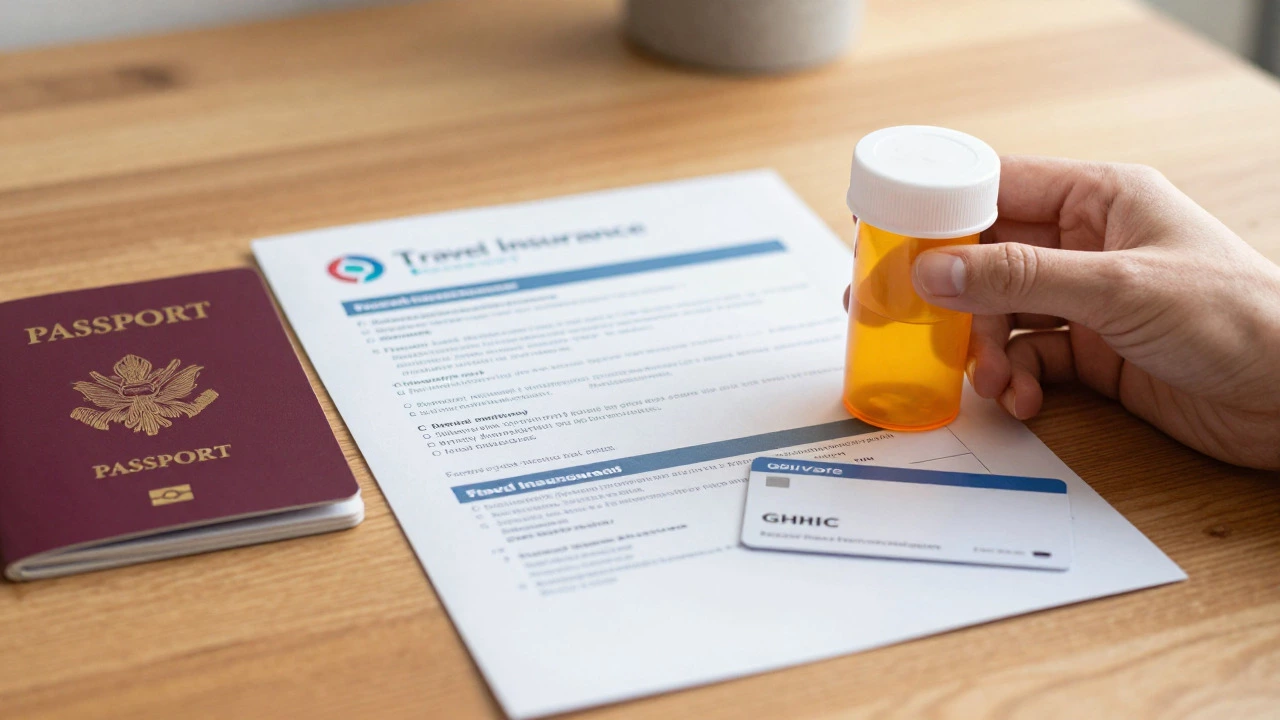
Post-Brexit, the rules for EU citizens changed. If you have Settled or Pre-Settled Status under the EU Settlement Scheme, you are treated as ordinarily resident and get free NHS care. No IHS required. If you’re visiting temporarily, you can use a Global Health Insurance Card (GHIC) or an expired European Health Insurance Card (EHIC) to get necessary state healthcare during your stay. This covers public healthcare but not private care or mountain rescue services.
The UK also has reciprocal healthcare agreements with several other countries, including Australia, New Zealand, Canada, and Israel. If you’re from one of these nations, you might be eligible for free or discounted NHS care during temporary visits. Check the specific agreement for your country before traveling. Always carry proof of your citizenship and any relevant cards.
How to Register with a GP
Whether you pay the IHS or rely on travel insurance, registering with a GP is crucial. GPs act as gatekeepers to specialist care. To register:
- Find a local surgery using the NHS website.
- Check if they are accepting new patients.
- Bring proof of identity (passport) and address (utility bill, tenancy agreement).
- Complete the registration form.
If you’re newly arrived, some surgeries may allow you to register even without proof of address initially, especially if you’re in temporary accommodation. Be proactive. Don’t wait until you’re sick to find a doctor. Building a relationship with a GP ensures better continuity of care and easier access to referrals.
Common Pitfalls to Avoid
Mistakes happen, and they can be costly. Here are common errors foreigners make:
- Assuming all A&E visits are free. Urgent but non-life-threatening issues may incur charges.
- Ignoring prescription costs. Budget for medication separately.
- Not disclosing visa status. Hospitals verify eligibility; hiding information can lead to larger bills later.
- Relying solely on credit cards for emergencies. Credit card coverage varies and may not apply to NHS facilities.
Another pitfall is assuming that private health insurance replaces the need for NHS registration. Private insurance is excellent for speed and choice, but it doesn’t cover everything. Severe accidents or complex conditions often require NHS infrastructure. Having both private insurance and NHS access (via IHS) is the safest approach for long-term residents.
Next Steps for Different Scenarios
Your next move depends on your situation:
- Long-term movers: Pay the IHS with your visa application. Register with a GP within two weeks of arrival. Consider a PPC for prescriptions if you take regular meds.
- Short-term visitors: Buy comprehensive travel insurance. Carry your GHIC/EHIC if applicable. Know the location of the nearest A&E.
- Students: Pay the reduced IHS rate. Check if your university offers health advice services. Register with a GP immediately.
Healthcare in the UK is accessible, but it requires preparation. By understanding your status, paying the right fees, and securing appropriate insurance, you can navigate the system with confidence. Don’t let fear of costs delay seeking help. Early intervention is always cheaper and safer than waiting until a minor issue becomes major.
Is the NHS completely free for foreigners?
No. Only those who are "ordinarily resident" get free care. Most foreigners must either pay the Immigration Health Surcharge (IHS) or be billed directly for services. Short-term visitors should have travel insurance.
How much is the Immigration Health Surcharge in 2026?
Rates change annually. As of recent updates, the standard rate is £1,035 per year, and the student/youth rate is £776 per year. Always check the official UK government website for the current year's rates before applying.
Can I be denied NHS treatment if I can't pay?
Urgent and immediate treatment cannot be delayed due to inability to pay. However, for non-urgent elective procedures, hospitals may require a deposit or payment plan before proceeding.
Does travel insurance cover NHS charges?
Yes, if you have comprehensive travel insurance, it should cover NHS charges incurred during your stay. Ensure your policy explicitly includes medical expenses and check for exclusions related to pre-existing conditions.
Do I need private health insurance if I pay the IHS?
It’s not mandatory, but it’s highly recommended. The IHS gives you access to the NHS, but waiting times can be long. Private insurance allows you to bypass queues for non-emergency treatments and choose your consultants.
