 May, 25 2026
Immediate Load Implant Eligibility Checker
Are You a Candidate for One-Day Teeth?
Answer these questions to get an instant preliminary assessment of your suitability for immediate load implants.
You sit in the dentist’s chair, dreading the thought of months with no front teeth. Then you hear a phrase that sounds too good to be true: "One-day teeth." It promises a full smile in a single visit. No temporary dentures. No awkward gap periods. Just walk in missing teeth and walk out with a new grin. But does it actually work? Or is it just marketing hype designed to get your credit card out?
The short answer is yes, but with major caveats. You can leave the clinic with teeth on the same day as surgery, but those teeth are not permanent. They are provisional. And while the concept is revolutionary, it isn’t right for everyone. Understanding the difference between getting *teeth* in one day versus having *healed implants* in one day is crucial before you book an appointment.
What Exactly Are One-Day Teeth?
When clinics advertise full dental implants in one day, they are referring to a technique called Immediate Load Implants, also known as Teeth in a Day. This procedure allows surgeons to place titanium posts into your jawbone and attach a temporary bridge of teeth within hours.
Here is how the timeline actually breaks down:
- Day 1 (Surgery): Your natural teeth are extracted if necessary. Titanium implants are screwed into the jawbone. A pre-fabricated temporary acrylic bridge is attached immediately. You go home looking normal.
- Months 3-6 (Healing): You wear the temporary bridge. During this time, a biological process called osseointegration occurs. Your bone fuses with the titanium implants. This is the critical phase. If you chew hard foods or bite too hard, the implants can fail.
- Final Restoration: Once healing is complete, you return to have the temporary bridge removed. A custom-made, permanent porcelain or zirconia bridge is fitted over the healed implants.
So, you get teeth in one day, but you don't get your *final* result in one day. The "one-day" part refers to the elimination of the edentulous (toothless) period, not the entire treatment journey.
The All-on-4 Technique: How It Works
The most common method used for full-arch immediate loading is the All-on-4 Technique. Developed by Nobel Biocare, this protocol uses only four implants to support a full arch of teeth.
Why four? Why not eight or ten?
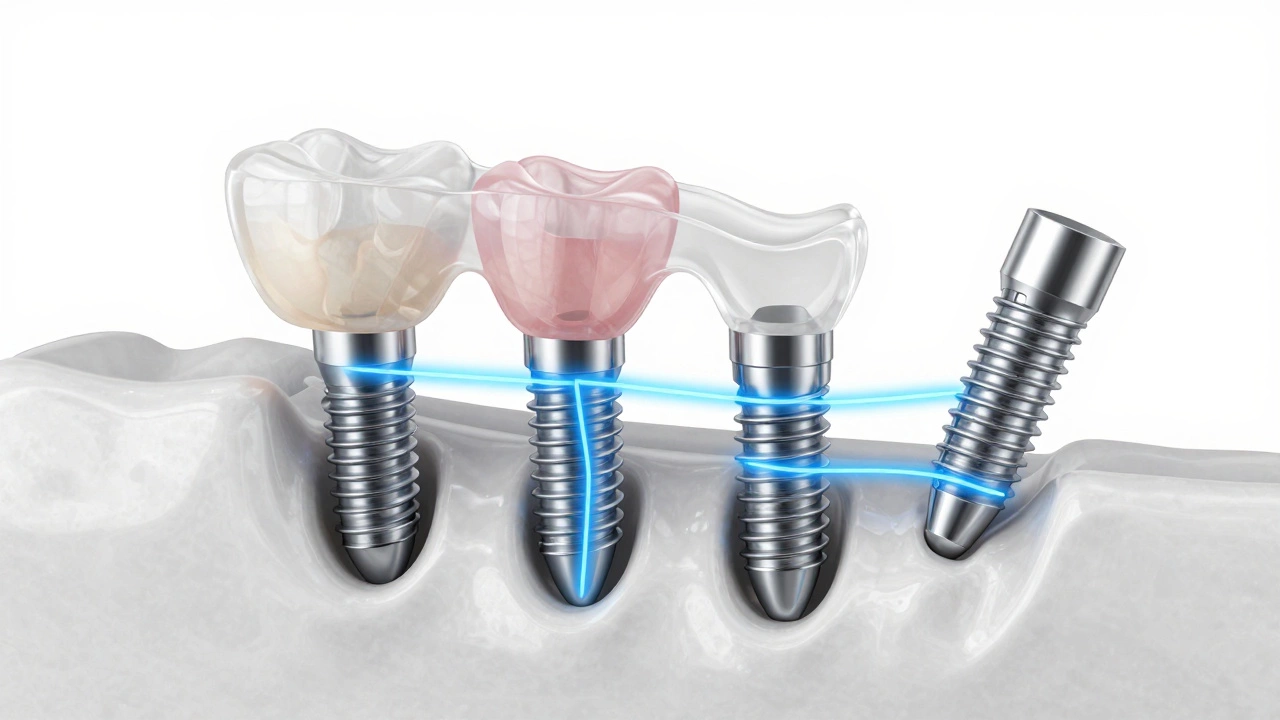
Traditional wisdom suggested you needed one implant per tooth. That would mean 14 implants for a full lower jaw. That is expensive, invasive, and often unnecessary. The All-on-4 approach changes the geometry. Two implants are placed vertically at the front of the jaw, where bone density is usually highest. The two posterior implants are angled backward at 30 to 45 degrees.
This angulation serves two purposes:
- Avoids Sinus Cavities: In the upper jaw, the sinus cavities often encroach on the available bone. Angling the implants allows them to bypass the sinus without needing a painful and costly sinus lift graft.
- Maximizes Bone Contact: By angling the back implants, the surgeon can use more of the existing bone structure, providing better primary stability. Primary stability is the mechanical grip the implant has when first placed. Without this, immediate loading is impossible.
This technique has become the gold standard for full mouth rehabilitation because it reduces surgery time, avoids bone grafting in many cases, and lowers overall costs compared to placing individual implants for every missing tooth.
Who Is Actually Eligible?
Not everyone can walk away with a new smile in 24 hours. The success of immediate load depends entirely on the quality and quantity of your jawbone. Think of the implant like a screw going into wood. If the wood is solid oak, the screw holds tight. If it’s rotten pine, the screw spins loose.
Your jawbone is the wood. Here is what surgeons look for:
| Factor | Requirement for Success | If Not Met |
|---|---|---|
| Bone Density | High (Type I or II bone) | Requires bone grafting; cannot load immediately |
| Bone Volume | Sufficient height and width | May need sinus lift or block graft |
| Gum Health | No active periodontal disease | Infection must be treated first |
| Smoking Status | Non-smoker or willing to quit | High failure rate due to reduced blood flow |
| Medical History | No uncontrolled diabetes or bisphosphonate use | Healing complications likely |
If you have been wearing dentures for years, your jawbone may have resorbed (shrunk). This is common. When bone volume is low, surgeons often have to perform bone grafting first. Grafting adds 4 to 6 months to your timeline before implants can even be placed, let alone loaded. In these cases, "one-day teeth" is off the table until the bone is rebuilt.
Risks and Complications
Immediate loading puts stress on the implant-bone interface during the most fragile stage of healing. If the implant micromoves too much, fibrous tissue forms instead of bone, leading to implant failure. This is called peri-implantitis or simply loosening.
Common risks include:
- Implant Loosening: Caused by biting too hard on the temporary bridge. Patients are strictly put on a soft-food diet for weeks.
- Nerve Damage: Rare, but possible if implants are placed too deep in the lower jaw, affecting lip sensation.
- Infection: As with any surgery, post-operative infection can delay healing.
- Temporary Bridge Breakage: The acrylic bridges used initially are brittle. They often chip or crack, requiring repairs.
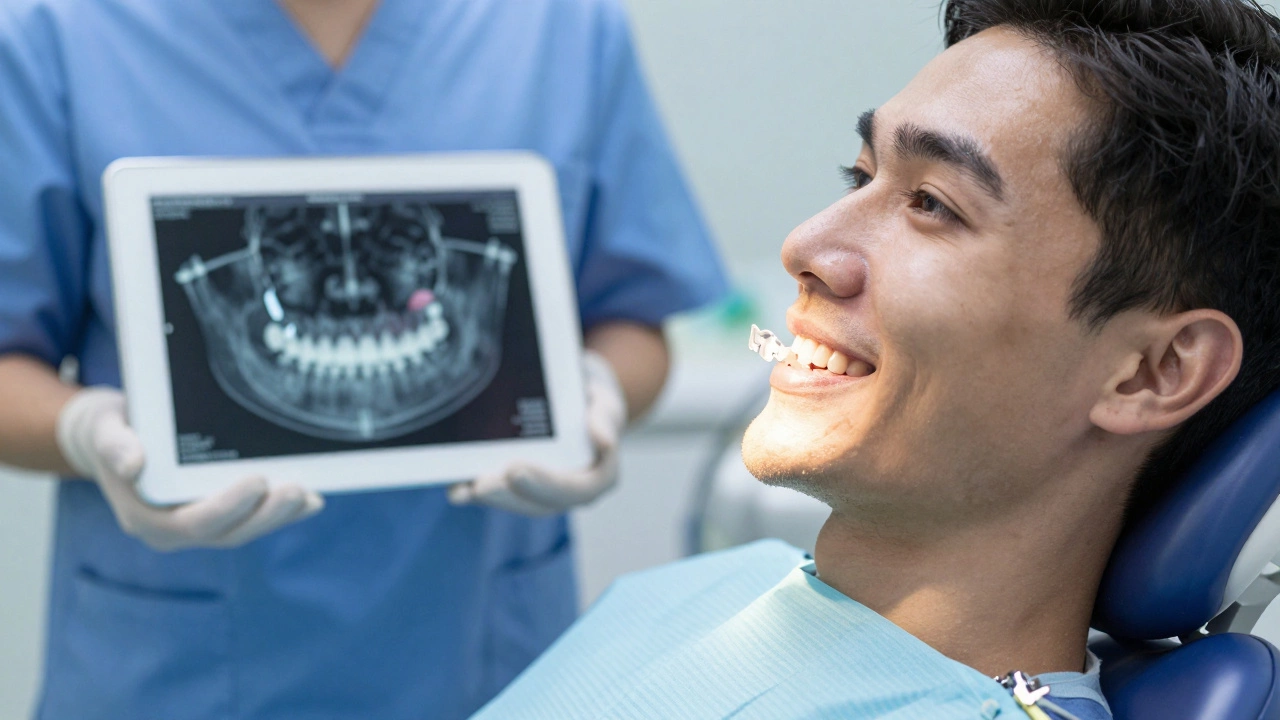
To mitigate these risks, reputable clinics will take CT scans (CBCT) before surgery to map your anatomy precisely. They will also use surgical guides to ensure millimeter-perfect placement. If a surgeon offers one-day implants without a 3D scan, run the other way.
Cost Considerations in the UK
Price is a significant factor. In the UK, a full set of All-on-4 implants typically ranges from £8,000 to £15,000 per arch. This varies based on the surgeon's expertise, the location of the clinic (London prices are higher), and the materials used for the final restoration.
Compare this to traditional dentures, which might cost £500 to £1,500. However, dentures degrade, require adhesives, and accelerate bone loss. Implants preserve bone and function like real teeth. While the upfront cost is high, the longevity often makes them more cost-effective over a lifetime.
Many UK clinics offer finance plans. Be wary of "too good to be true" deals from overseas dental tourism hubs. If an implant fails abroad, follow-up care is difficult and expensive. Local accountability matters.

Recovery: What to Expect
The first 48 hours are uncomfortable. You will experience swelling, bruising, and some pain. Painkillers and anti-inflammatories manage this well. The biggest shock is the dietary restriction.
For the first 2 to 4 weeks, you eat only liquids and very soft foods. Think soups, yogurts, smoothies, and mashed potatoes. No apples. No crusty bread. No steak. Chewing forces can disrupt the osseointegration process. After 4 weeks, you can gradually introduce softer solids, but caution remains for up to 3 months.
Oral hygiene is strict. You must clean around the temporary bridge daily using water flossers and antibacterial rinses. Plaque buildup around the gum line is the enemy of implant success.
Alternatives to One-Day Implants
If you are not a candidate for immediate loading, or if the cost is prohibitive, there are alternatives:
- Conventional Implants: Place implants, wait 3-6 months for healing, then attach teeth. More predictable, slightly cheaper, but involves a longer period with no teeth or temporary dentures.
- Implant-Supported Dentures: Two to four implants hold a removable denture in place. Cheaper than fixed bridges, but still requires removal for cleaning.
- Traditional Removable Dentures: The lowest cost option, but least stable and most prone to causing bone loss.
Choosing the right path depends on your bone health, budget, and patience. There is no shame in taking the slower, conventional route if it ensures long-term stability.
Frequently Asked Questions
Does one-day implant surgery hurt?
The surgery itself is painless because you are under local anesthesia or sedation. However, once the anesthesia wears off, you will experience discomfort, swelling, and bruising for several days. Most patients manage this with prescribed painkillers and ice packs. The pain is comparable to a complex tooth extraction, not unbearable.
How long do the temporary teeth last?
The temporary acrylic bridge lasts for the healing period, typically 3 to 6 months. It is not meant to be permanent. It protects the gums and implants while bone fusion occurs. Eventually, it is replaced with a durable, aesthetic permanent bridge made of zirconia or porcelain-fused-to-metal.
Can I smoke after getting one-day implants?
Smoking is strongly discouraged, especially in the first few weeks. Nicotine constricts blood vessels, reducing blood flow to the gums and bone. This significantly increases the risk of implant failure and infection. Many surgeons require patients to quit smoking entirely for the duration of the healing process.
What happens if an implant fails?
If an implant becomes loose or infected, it may need to be removed. The site is then cleaned and allowed to heal. In some cases, a new implant can be placed later. If bone loss occurred, grafting may be required. This extends the treatment time and cost. Choosing an experienced surgeon minimizes this risk.
Is NHS funding available for one-day implants?
Generally, no. The NHS rarely funds cosmetic or elective dental implants unless there is a medical necessity, such as trauma or cancer reconstruction. Most patients seeking All-on-4 or immediate load implants pay privately. Check with your specific GP or dentist for rare exceptions.
