 Feb, 22 2026
NHS Dental Eligibility Checker
Check Your Eligibility
NHS Dental Costs
Band 1 (£26.80):
Examination, diagnosis, X-rays
Band 2 (£73.50):
Band 1 + fillings, extractions, root canals
Band 3 (£319.10):
Band 1-2 + dentures, bridges, complex procedures
Note: These fees are the same across England as of 2023. Costs may vary slightly in Scotland, Wales, and Northern Ireland.
Results
Enter your information above to check your eligibility
Your estimated NHS dental costs based on eligibility
If you’re wondering whether you can get your teeth fixed for free in the UK, you’re not alone. Many people assume dental implants or major repairs are out of reach without paying thousands - but that’s not always true. The truth is more complicated than a simple yes or no. What you can get for free depends on your situation, your location, and whether you qualify under the NHS. Let’s break it down plainly - no jargon, no fluff.
What the NHS Actually Covers
The NHS doesn’t offer free dental implants for most adults. That’s the hard truth. But it does cover essential dental treatment if it’s clinically necessary. This includes fillings, extractions, root canals, dentures, and sometimes bridges - but not implants, unless there’s a very specific medical reason.
For example, if you lost teeth due to cancer treatment, a severe accident, or a congenital condition that affects your ability to eat or speak, you might qualify for NHS-funded implants. These cases are rare. Most people seeking implants for cosmetic reasons - like replacing a missing front tooth for a better smile - won’t get it for free.
What you can get for free or at low cost under the NHS is treatment that restores basic function. If a tooth is beyond repair and needs pulling, that’s covered. If you need a denture to chew properly, that’s covered. The goal isn’t perfection - it’s function.
How NHS Dental Charges Work
The NHS has three bands of dental charges in England. These apply to all treatments, whether it’s a check-up or a crown.
- Band 1: £26.80 - covers an examination, diagnosis, and basic treatment like X-rays or advice.
- Band 2: £73.50 - includes everything in Band 1, plus fillings, root canals, and extractions.
- Band 3: £319.10 - covers everything in Bands 1 and 2, plus dentures, bridges, and other complex procedures.
These fees haven’t changed since 2023. They’re not free, but they’re heavily subsidized. A private dentist might charge £2,000-£3,500 for a single implant. The NHS Band 3 fee is still less than half that - and you get a full course of treatment, not just one tooth.
Who Gets Free Dental Care?
You don’t have to pay anything at all if you qualify for NHS cost exemptions. These include:
- Children under 18 (or under 19 and in full-time education)
- Pregnant women or those who’ve had a baby in the last 12 months
- People receiving certain benefits like Income Support, Universal Credit (with low household income), or Pension Credit Guarantee Credit
- Patients in NHS hospital care (if dental treatment is part of their hospital care)
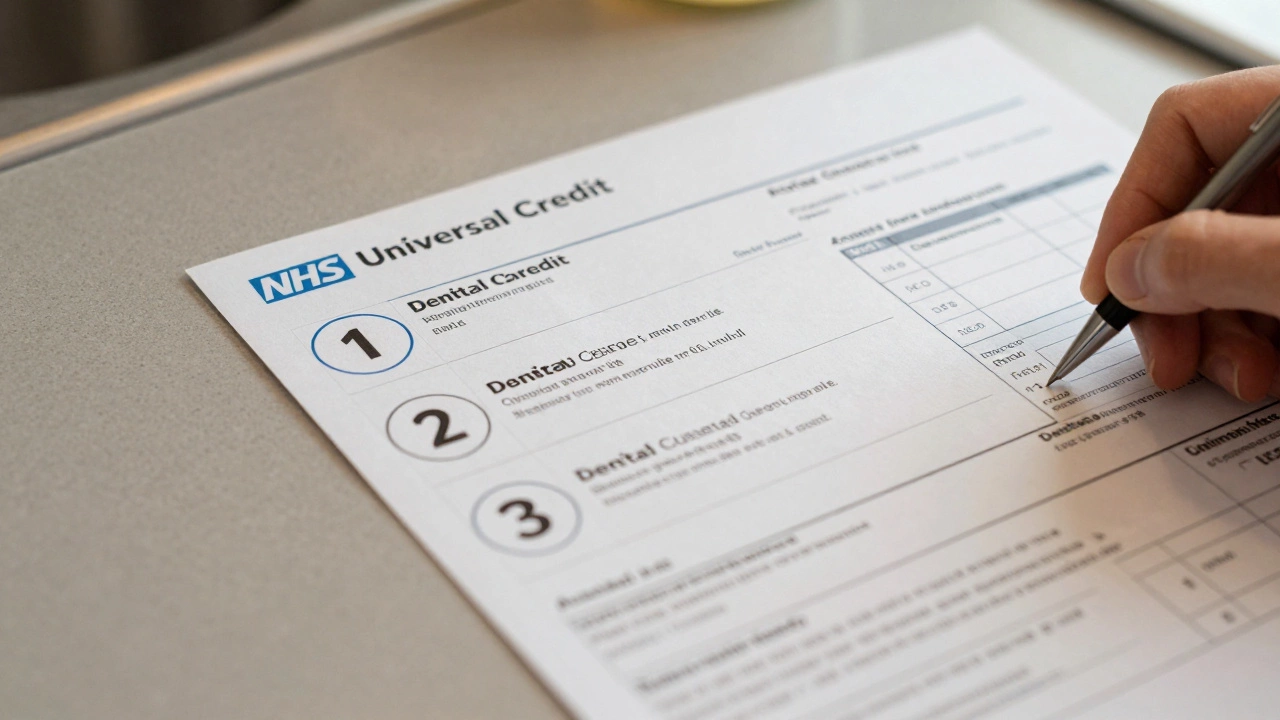
If you’re on Universal Credit, your eligibility depends on your household income. You might qualify if your monthly take-home pay is under £935 (after tax and deductions). It’s not automatic - you need to apply for an HC2 certificate through the NHS Low Income Scheme. This gives you full help with dental costs.

Why Implants Are Rarely Free
Dental implants are expensive because they involve surgery, specialist training, and high-tech materials. The NHS prioritizes treatments that help people eat, speak, and stay healthy. An implant might be considered elective if it’s replacing a tooth that doesn’t affect your ability to chew or speak.
One real-world example: a man in Manchester lost his front teeth in a fall. He couldn’t eat solid food and avoided social situations. His dentist applied for NHS funding because the loss affected his nutrition and mental health. He got two implants covered - not because he asked for them, but because his case met the NHS’s clinical need criteria.
Most people don’t get this far. The NHS has limited budgets for implants. They’re reserved for extreme cases - not for people who just want to upgrade their smile.
Alternatives to Implants on the NHS
If you don’t qualify for implants, the NHS will still help. Here’s what’s often available instead:
- Dentures: Full or partial, made from acrylic or metal. They’re durable, functional, and covered under Band 3.
- Bridges: If you have healthy teeth on either side of a gap, a bridge can be fitted. It’s anchored to your natural teeth - not bone like an implant.
- Removable partials: A cheaper option than implants, these clip onto existing teeth and are easy to clean.
These alternatives aren’t as permanent as implants, but they’re reliable. Many people use dentures for decades with no issues. They don’t look perfect, but they work.
What About Private Dental Clinics?
Some private clinics advertise ‘free dental implants’ - but there’s always a catch. These are usually part of clinical trials, where you get an implant at no cost in exchange for letting the clinic use your case for research. You’ll be monitored for years, and you might not get to choose the type or timing.
Other clinics offer ‘£99 implant deals’. These are misleading. That price covers only the post - not the crown, the surgery, the X-rays, or the follow-ups. The full cost often ends up being £2,000+.
There are also charity programs, like the Dental Health Foundation or local NHS trust outreach programs. They sometimes help low-income adults with emergency extractions or dentures. But implants? Almost never.
How to Check Your Eligibility
If you think you might qualify for free or reduced dental care:
- Visit your nearest NHS dentist. Not every dentist accepts NHS patients - ask before booking.
- Ask for an NHS examination. They’ll assess your needs and tell you what’s covered.
- If you’re on benefits, ask about the NHS Low Income Scheme. Fill out form HC1 - it’s free and can be done online.
- Get your HC2 certificate if approved. Show it at every appointment.
- If you’re denied implants, ask for a written explanation. You can appeal if you believe your case meets clinical need.
Don’t assume you’re not eligible. Many people miss out because they don’t ask.
What to Do If You Can’t Get Help
If you don’t qualify for NHS help and can’t afford private treatment, here’s what you can do:
- Delay non-urgent work: If a tooth isn’t causing pain, you might be able to wait. Keep it clean. Use salt water rinses. Avoid sugary foods.
- Use a dental plan: Some private insurers offer monthly plans starting at £10/month. They cover check-ups and discounts on treatments.
- Look for dental schools: Universities like King’s College London or the University of Manchester have teaching clinics. Students perform treatments under supervision - at lower prices.
- Apply for hardship grants: Local charities like the British Dental Health Foundation or Community Dental Services sometimes offer small grants for emergency care.
Ignoring dental problems only makes them worse - and more expensive later. Even small steps matter.
Final Reality Check
Can you get your teeth fixed for free in the UK? Yes - if you need basic repairs, are under 18, pregnant, or on qualifying benefits. But if you’re asking about implants, the answer is almost always no - unless your life is seriously affected by missing teeth.
The NHS gives you a functional mouth, not a perfect one. If you want implants for confidence or aesthetics, you’ll likely need to pay. But that doesn’t mean you’re out of options. There are affordable paths - you just have to know where to look.
Start with your NHS dentist. Ask the questions. Fill out the forms. You might be surprised what you’re entitled to.
Can I get free dental implants on the NHS in the UK?
No, dental implants are not routinely available for free on the NHS. They’re only funded in rare cases where there’s a clear medical need - such as after cancer treatment, serious injury, or congenital conditions that affect eating or speaking. For most people, implants are considered cosmetic and are not covered.
What dental treatments are free on the NHS?
Basic treatments like check-ups, fillings, extractions, root canals, and dentures are covered under NHS dental charges. You pay a set fee based on the treatment band - but if you qualify for exemptions (like being under 18, pregnant, or on certain benefits), you won’t pay anything at all.
How much does a dental implant cost privately in the UK?
A single dental implant in the UK typically costs between £2,000 and £3,500. This includes the implant post, abutment, and crown. Some clinics advertise lower prices, but those often exclude X-rays, consultations, or follow-up care. Always ask for a full breakdown.
Can I get help with dental costs if I’m on Universal Credit?
Yes. If you’re on Universal Credit and your household income is below £935 per month after tax and deductions, you may qualify for full help through the NHS Low Income Scheme. Apply online using form HC1 - once approved, you’ll get an HC2 certificate that covers all NHS dental costs.
Are there any free dental implant programs in the UK?
There are no nationwide free implant programs. Some dental schools or research clinics offer implants at low or no cost as part of clinical trials. These require participation in long-term studies and aren’t available to everyone. Be cautious of clinics advertising ‘free implants’ - they often have hidden costs or strict eligibility rules.
