 Jun, 18 2026
Prescription Savings Calculator
Enter the details below to see if using a discount coupon (like GoodRx) or paying with insurance is cheaper for you.
Comparison Result
Best Deal
Save $0$0.00
Description of why this is better.
Alternative Option
$0.00
Description of alternative.
Have you ever stood at the pharmacy counter, heard the total, and felt that familiar drop in your stomach? You’re not alone. Prescription costs have become a daily stressor for millions of people, often forcing tough choices between filling a medication or paying other bills. But here is the good news: you don’t have to accept the first price quoted to you.
The pharmaceutical market is surprisingly opaque. Two pharmacies down the street from each other can charge vastly different amounts for the exact same pill. Why? Because insurance plans negotiate complex rates with Pharmacy Benefit Managers (PBMs), and those negotiated prices aren't always the lowest option available. This is where prescription price comparison apps change the game. These digital tools cut through the confusion, showing you exactly what you will pay before you even step foot in a store.
How Prescription Price Comparison Apps Work
At their core, these apps are search engines for drug pricing. When you enter your medication name, dosage, and quantity, the app queries a database of local pharmacies. It then displays a list of prices, usually sorted from lowest to highest. But it’s not just about finding the cheapest dollar amount; it’s about understanding the structure of drug pricing.
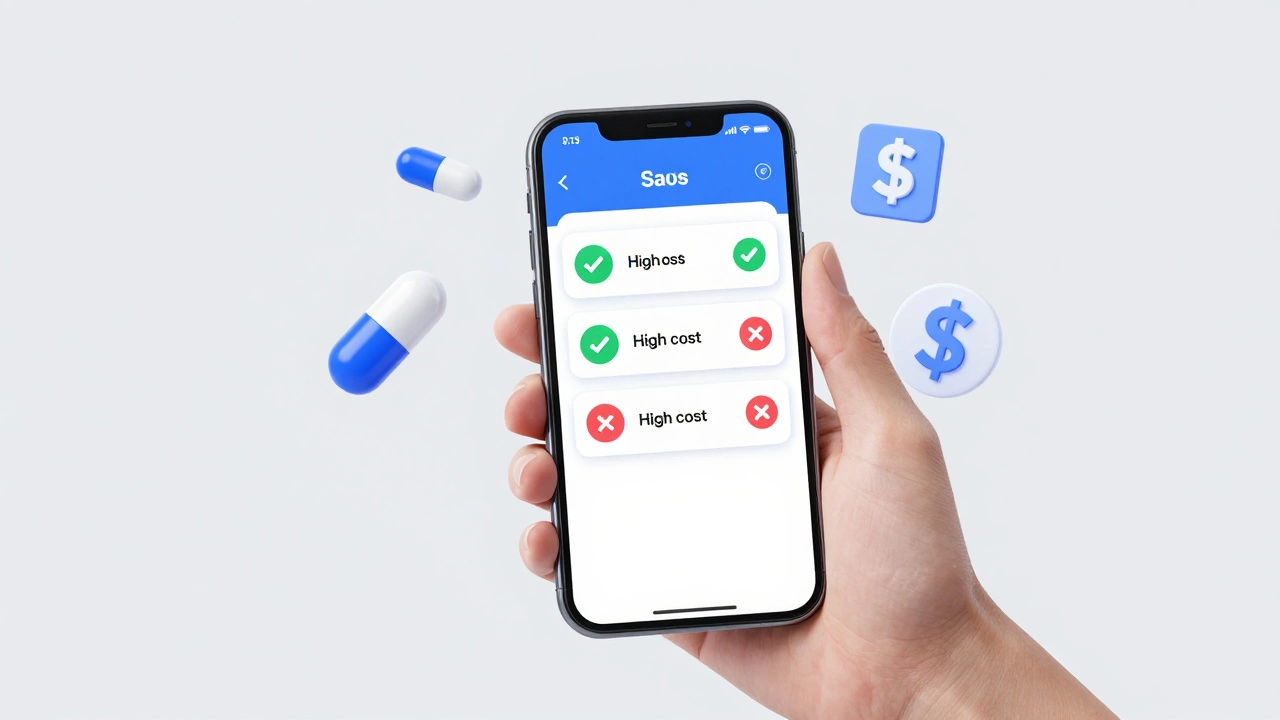
Most of these platforms operate by offering discount cards or coupons. If you are paying out-of-pocket, the pharmacy applies this coupon to lower the cash price. If you have insurance, the app calculates whether using your insurance results in a lower copay than using the discount card. In many cases, especially for generics, the discount card beats the insurance copay. The app does the math instantly, saving you time and money.
| App Name | Primary Function | Insurance Integration | Delivery Options |
|---|---|---|---|
| GoodRx | Price comparison & coupons | Yes (Copay vs. Cash) | Partnered delivery services |
| RxSaver | Unlimited generic discounts | Yes | No direct delivery |
| SingleCare | Free discount cards | Yes | Pharmacy network dependent |
| Mark Cuban Cost Plus Drugs | Direct-to-consumer sales | No (Cash only) | Mail order shipping |
Top Apps for Comparing Drug Prices in 2026
Not all apps are created equal. Some focus on simple price lookup, while others offer integrated mail-order services or specialized support for chronic conditions. Here are the most reliable options currently dominating the market.
GoodRx is the industry standard for prescription savings. It has the largest network of participating pharmacies, meaning you are likely to find a nearby location that accepts its coupons. The interface is clean and fast. You can scan your prescription bottle directly with your phone camera, which eliminates manual entry errors. GoodRx also offers a premium subscription service that provides additional savings on certain high-cost medications and access to telehealth consultations for minor ailments.
RxSaver is a strong alternative focused on unlimited generic savings. Unlike some competitors that limit how many times you can use a coupon per month, RxSaver allows unlimited use of its discount codes for generic drugs. This makes it particularly attractive for patients managing multiple chronic conditions who need refills every month. The app is straightforward, with less clutter than GoodRx, making it easy for older adults or those less tech-savvy to navigate.
SingleCare is another robust option providing free discount cards. SingleCare partners with major pharmacy chains like CVS, Walgreens, and Walmart. Its strength lies in its customer support and detailed breakdowns of why a drug costs what it does. They provide educational content alongside pricing data, helping users understand the difference between brand-name and generic formulations.
A newer player changing the landscape is Cost Plus Drugs, founded by Mark Cuban. While not a traditional comparison app, it operates as a transparent online pharmacy. Instead of negotiating hidden rebates with PBMs, they sell drugs at a fixed markup (18% above acquisition cost) plus a flat dispensing fee. For many common generics, this model undercuts both insurance copays and discount coupons. It ships directly to your door, adding convenience to the savings.
Why Your Insurance Might Not Be the Cheapest Option
This is the most counterintuitive part of modern healthcare. You might assume that because you pay premiums, your insurance plan always gives you the best rate. That is rarely true for cash-pay scenarios or high-deductible health plans (HDHPs).
When you use insurance, the pharmacy submits a claim to the PBM. The PBM pays the pharmacy a negotiated rate, and you pay your copay. However, if your deductible hasn't been met yet, you may be responsible for the full negotiated price, which can be exorbitant. Discount apps bypass the PBM entirely. They negotiate cash prices directly with pharmacies. Often, this "cash" price is significantly lower than the "insured" price because it avoids the administrative bloat and rebate structures inherent in the insurance system.
For example, a common blood pressure medication might have a $45 copay with insurance but cost only $4 with a GoodRx coupon. Using the coupon means the payment doesn't count toward your deductible, which is a trade-off you need to consider. If you are close to meeting your deductible, using insurance might be smarter. If you are far from it, the discount app wins.
Strategies to Maximize Your Savings
Finding an app is step one. Using it strategically is step two. Here are practical ways to get the most out of these tools:
- Check Multiple Apps: Prices fluctuate daily. A drug might be cheaper on GoodRx today and on RxSaver tomorrow. Spend five minutes comparing the top three apps for expensive medications.
- Look Beyond Big Chains: Independent local pharmacies often have lower overhead and can match or beat big-box prices. Apps allow you to filter by independent pharmacies, which are sometimes overlooked.
- Consider Mail-Order: For maintenance medications (like those for cholesterol or hypertension), mail-order services can offer 90-day supplies at a fraction of the retail price. Both GoodRx and Cost Plus Drugs facilitate this.
- Ask About Generics: If the app shows a high price for a brand-name drug, ask your doctor if a generic equivalent exists. Generic versions are bioequivalent but often cost 80-85% less.
- Use Manufacturer Assistance Programs: For specialty drugs, apps may link to manufacturer patient assistance programs (PAPs). These can reduce costs to zero for eligible low-income patients.
Pitfalls to Avoid When Using Price Comparison Tools
While these apps are powerful, they are not foolproof. Awareness of their limitations prevents frustration at the pharmacy counter.
Price Validity: The price shown in the app is an estimate. Pharmacies reserve the right to change prices without notice. Always confirm the final price with the pharmacist before handing over your payment method. Some apps display "member prices" that require signing up for the pharmacy's loyalty program, which adds an extra step.
Inventory Issues: An app might show a low price at a specific location, but that store might be out of stock. This is common with newly released medications or during supply chain disruptions. Call ahead to verify availability.
Specialty Medications: Most comparison apps work best for generic and common brand-name drugs. Specialty medications (used for cancer, HIV, or rheumatoid arthritis) often require prior authorization and specialized handling. Standard discount coupons rarely apply here. For these, rely on manufacturer assistance programs or specialty pharmacy networks rather than general comparison apps.
The Future of Prescription Transparency
The landscape is shifting. Federal legislation like the No Surprises Act has expanded to include more transparency requirements for drug pricing. By 2026, we are seeing more states mandate that insurers disclose out-of-network rates. Apps are evolving to incorporate these new data streams, providing even more accurate predictions.
We are also seeing integration with electronic health records (EHRs). Imagine your doctor’s office automatically checking these prices when prescribing, suggesting the most affordable option based on your specific insurance profile. This proactive approach reduces the burden on patients and helps prevent non-adherence due to cost.
As technology advances, artificial intelligence may soon predict price trends, alerting you when to fill your prescription for the lowest cost. For now, however, the power lies in your hands-or rather, in your pocket. Taking ten minutes to compare prices can save hundreds, if not thousands, of dollars annually.
Are prescription price comparison apps safe to use?
Yes, reputable apps like GoodRx and RxSaver are safe. They do not process your payment or handle sensitive medical data beyond what is necessary to generate a quote. They act as intermediaries, providing discount codes that you present at the pharmacy. Always download apps from official app stores to avoid malware.
Can I use a discount app if I have Medicare?
Generally, no. Medicare Part D plans prohibit the use of third-party discount cards for covered drugs. However, if a drug is not covered by your plan, you might be able to use a discount card for the cash price. Always check with your plan administrator first to avoid complications with your coverage.
Do these apps work for controlled substances?
Most discount apps do not cover controlled substances (Schedule II-V drugs) due to strict regulatory requirements and varying state laws. Prices for these medications must typically be paid through insurance or cash at the pharmacy's posted rate. Check the specific app's terms of service for exclusions.
Why is the price different at two pharmacies next to each other?
Pharmacies set their own cash prices based on local competition, overhead costs, and contracts with wholesalers. One pharmacy might lose money on a generic drug to attract customers into the store for higher-margin items, while another maintains a standard markup. This lack of standardized pricing is exactly why comparison apps are valuable.
Is it better to use my insurance or a discount coupon?
It depends on your deductible. If you have already met your annual deductible, your insurance copay is likely lower. If you haven't met your deductible, the discount coupon often provides a lower upfront cost. Use the app to compare both options side-by-side before deciding.
