 Apr, 13 2026
Online Pharmacy Legitimacy Checker
Answer the following questions based on the service you are considering to see its risk level.
Online prescriptions legal status depends entirely on how the medicine is prescribed and who is doing the prescribing. If a licensed medical professional conducts a proper consultation and sends a digital order to a certified pharmacy, it is perfectly legal. However, if a site asks you to fill out a three-question survey and immediately offers you a bottle of medication without a doctor's oversight, you've entered the danger zone.
The Quick Rundown: Legitimate vs. Illegal
Before we get into the weeds, here are the main takeaways to help you spot the difference between a legal service and a scam.
- Legal: Licensed doctors, verified identities, integration with official pharmacy networks, and clear pricing.
- Illegal: "No prescription needed" claims, payments only via crypto or untraceable methods, and shipping from countries with zero regulation.
- The Red Flag: Any site that promises a specific medication (like a strong sedative or a specific brand-name drug) before you've even spoken to a provider.
How the Legal Process Actually Works
To understand why some services are legal, you have to look at the Telemedicine is the distribution of health-related services and information via electronic information and communication technologies framework. In a legal scenario, the process isn't just "buying a pill"; it's a medical encounter that happens to be remote.
First, you undergo a consultation. This could be a video call, a phone call, or a secure messaging thread. The doctor uses this to gather your medical history, check for drug interactions, and determine if the medication is appropriate. Once they decide it's a match, they generate an E-prescription is a digital version of a prescription that is sent directly from the healthcare provider to the pharmacy. This is far more secure than a paper slip because it cannot be easily altered or lost.
The medication is then dispensed by a Licensed Pharmacy is a retail or clinical establishment authorized by a government body to dispense medications. This ensures the drug is genuine and stored at the correct temperature. When these three pieces-licensed doctor, digital prescription, and certified pharmacy-link up, the process is 100% legal.
Comparing Telemedicine Models
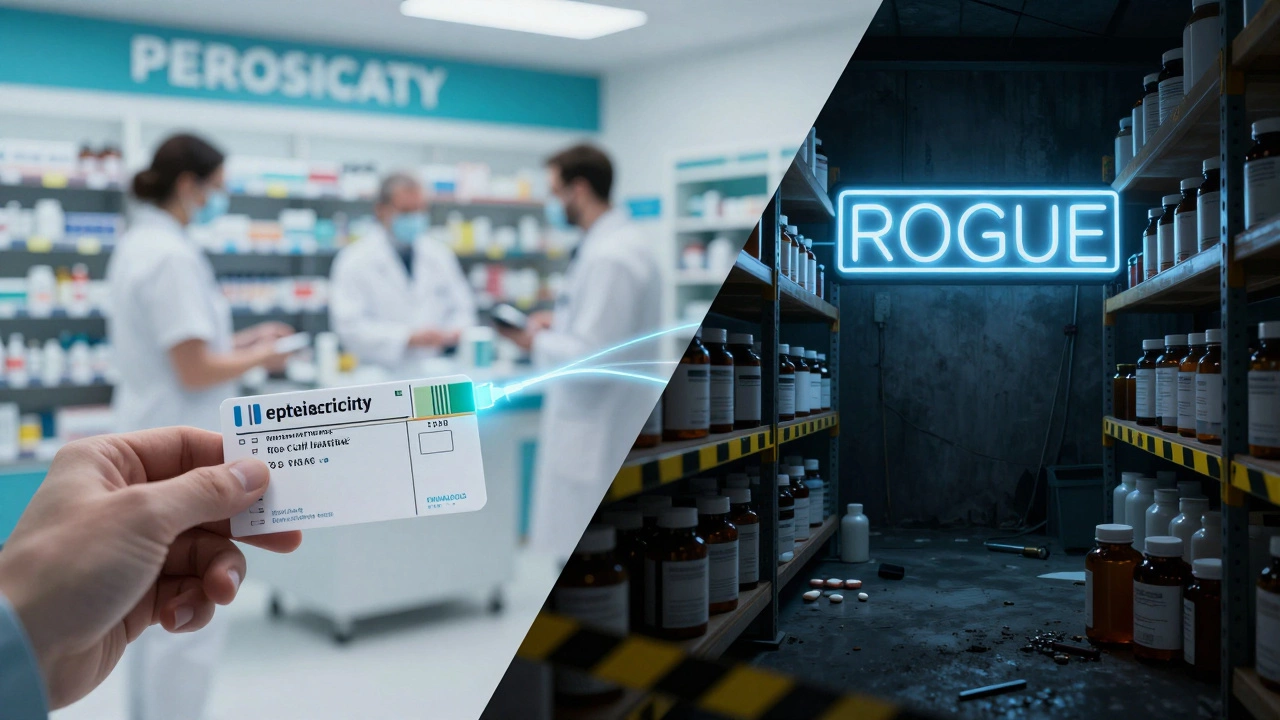
| Feature | Legal Telemedicine | Rogue Online Sites |
|---|---|---|
| Medical Review | Comprehensive doctor consultation | Simple online form or no review |
| Doctor Credentials | Verified by state/national boards | Hidden or fake credentials |
| Medication Source | Accredited pharmacies | Unregulated overseas warehouses |
| Payment Method | Standard credit/insurance | Often crypto or wire transfers |
The Danger of "No Prescription Required" Sites
You've probably seen ads for sites claiming they can get you medications without a prescription. These are not just "gray area" sites; they are operating illegally. When you bypass a doctor, you're removing the safety valve. For example, taking certain blood pressure meds if you already have low blood pressure can be catastrophic. Or, taking an antibiotic for a viral infection doesn't just fail to work-it contributes to global antibiotic resistance.
Beyond the health risk, there is the quality risk. Rogue sites often sell counterfeit drugs. These might contain the wrong dosage, no active ingredient at all, or even dangerous fillers like lead or floor wax. Because they operate outside the law, you have zero recourse if the medicine makes you sick. You can't sue a ghost company in a country you can't find on a map.
Controlled Substances and the Extra Rules
Now, it gets a bit more complicated when we talk about Controlled Substances is drugs that are regulated by the government due to their potential for abuse or addiction. In many regions, laws are much stricter for these. For instance, the Ryan Haight Act is a US federal law that generally requires at least one in-person medical evaluation before a controlled substance can be prescribed (though some exceptions were made during the pandemic).
If you're looking for medications for ADHD, anxiety, or chronic pain, be wary. Many legal telemedicine platforms will refuse to prescribe these without an initial face-to-face visit. If a site offers you a high-dosage stimulant or a benzodiazepine after a five-minute chat, be extremely cautious. They are likely skirting the law, and the prescription may not even be valid at your local pharmacy.
How to Verify a Service Before You Pay
Don't take a website's "Trust Badge" at face value. Anyone can download a "Secure Site" image and paste it on their homepage. Instead, do a bit of detective work.
- Check for the Pharmacy Certification: In the US, look for the VIPPS (Verified Internet Pharmacy Practice Sites) seal or the .pharmacy domain extension.
- Verify the Provider: Ask for the doctor's name and license number. You can usually verify these through a government medical board website in a few clicks.
- Analyze the Price: If the price is too good to be true (e.g., a $500 medication for $20), it's likely a fake.
- Read the Privacy Policy: Legal sites have strict data protection rules because they handle sensitive health info. If the policy is vague or written in broken English, run.
The Future: From Paper to Pixels
The shift toward digital health isn't just a trend; it's a systemic change. We're seeing more integration between Electronic Health Records is digital versions of patients' paper charts, allowing real-time access to patient data and pharmacies. This means your doctor can see exactly when you last filled a script, reducing the risk of over-prescription.
In some countries, the government is now issuing digital IDs that link directly to health prescriptions, making the process seamless and impossible to forge. This transition makes the "legal" version of online prescriptions safer than the old paper system ever was. The goal is to make healthcare accessible without sacrificing the rigorous safety checks that keep patients alive.
Can I get a prescription online without seeing a doctor?
No, not legally. A legitimate prescription requires a medical assessment by a licensed professional. Any site claiming to sell "prescription-free" medication is operating illegally and selling potentially dangerous products.
Are online pharmacies legal in my country?
Most countries allow online pharmacies, provided they are licensed and the medication is prescribed by a registered doctor. The legality depends on the pharmacy's license and the doctor's registration in a recognized jurisdiction.
What should I do if I suspect an online pharmacy is a scam?
Stop using the service immediately and do not provide any more payment or personal information. You should report the site to your national health authority or consumer protection agency to prevent others from being victimized.
Can I use my health insurance for online prescriptions?
Yes, many insurance providers now cover telemedicine visits and the resulting prescriptions. However, you should check with your provider first to ensure the specific platform you are using is in their network.
Are e-prescriptions safer than paper ones?
Generally, yes. E-prescriptions eliminate handwriting errors, are harder to forge, and allow for immediate checks of drug-drug interactions through the pharmacy's software.
Next Steps for Your Health
If you're looking to move your care online, start by checking if your current primary care doctor offers a telehealth option. This is the safest route because they already know your history. If you're using a new service, spend ten minutes verifying their licenses. It's a small price to pay for the peace of mind that the medicine you're putting in your body is real and safe.
